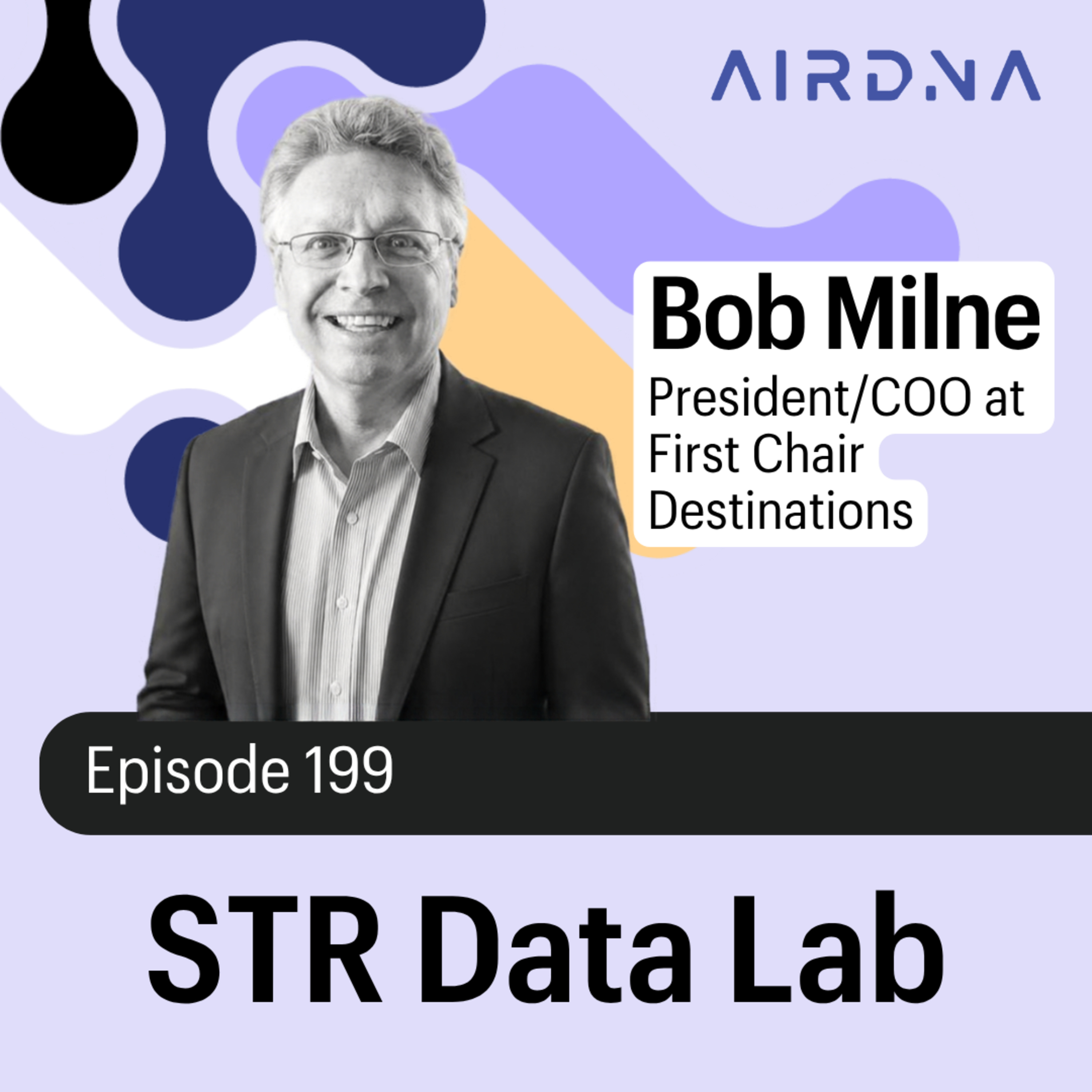
Episode #199
From Vacasa to First Chair: Lessons in Scaling Vacation Rentals
What happens when a vacation rental executive who has experienced the industry at virtually every level decides to go back to the basics? In this episode of The STR Data Lab, Jamie Lane sits down with Bob Milne, CEO and President of First Chair Destinations, to unpack decades of lessons from building, scaling, and reshaping vacation rental management businesses. From running thousands of homes in Steamboat to navigating Wyndham and Vacasa, Bob shares why he believes vacation rentals are ultimately a hospitality and relationship business—not simply a technology business. The conversation explores the tradeoffs between scale and local operations, what can—and can't—be centralized, the challenges of proprietary technology, and what Bob learned from Vacasa's rapid growth and transition to a more localized model. He also dives into why ski destinations offer opportunities beyond the traditional winter season, how events and summer demand can reshape seasonality, the role professional managers can play in local regulation, and why First Chair is pursuing moderate, deliberate growth rather than growth for growth's sake. You don’t want to miss this episode! Key Takeaways Why vacation rental management is fundamentally a people and hospitality business, and where technology can—and can't—replace local expertise. Which parts of a vacation rental business actually benefit from scale, from technology and marketing to operations and owner communications. What the transition from Vacasa's national model to more localized operations reveals about the importance of boots-on-the-ground teams. How ski destinations can reduce seasonality by tapping into summer travel, weddings, events, outdoor recreation, and improved air access. Why sustainable growth may require a different approach than rapid expansion, particularly when balancing owner retention, local relationships, and operational quality. Sign up for AirDNA for FREE https://bit.ly/4j6s6qy ————— Connect with Jamie on social media LinkedIn: https://www.linkedin.com/in/jamiehlane/ Twitter: https://twitter.com/Jamie_Lane ————— Bob Milne, President/COO at First Chair Destinations LinkedIn: https://www.linkedin.com/in/robertemilne/ Website: https://www.firstchair.com/ ————— Connect with AirDNA on social media: Instagram: https://instagram.com/airdna.co LinkedIn: https://www.linkedin.com/company/airdna/ Twitter: https://twitter.com/airdna TikTok: https://www.tiktok.com/@airdna.co ————— Episode 199