Do you collapse after a grueling shift, too drained to enjoy dinner with family, or struggle to comfort a coworker after a tough call? As a retired first responder with 25+ years in traumatic stress, I understand. I’ve helped thousands navigate high-pressure jobs without treating life like a 911 call. Each week, you’ll hear unfiltered stories from those who’ve faced loss, trauma, and burnout yet found hope. Together, we’ll cover resilience, stress management, peer counseling, and more to help you thrive—on and off duty. Ready to reclaim energy and joy? Hit play, and let’s dive in.
Pitch Analysis
Required Pod Score for this show. PitchCentric checks your profile against host openness, topical fit, and audience signals before you generate a pitch.
Contact path
Verified email
Booking probability
21%
Guest openness
Selective
Verified email on file
80/100
Required Score
Sign up to generate a grounded pitch for Surviving Your Shift, Building Responder Wellness.
What is Surviving Your Shift, Building Responder Wellness?
Surviving Your Shift, Building Responder Wellness is a health podcast hosted by Dr. Bart J. Leger, with 30 episodes on record and a Required Pod Score of 80.
About the host
Dr. Bart J. Leger hosts Surviving Your Shift, Building Responder Wellness, a health show with 30 episodes published.
Our AI reads these to draft pitches. Use them as grounding for a pitch that cites a real guest and a specific topic.
Episode #56
The Signs of Compassion Fatigue Every Peer Supporter Needs to Know
Apr 23, 202615 min
Peer supporters carry the weight of other people's worst days, and that caring comes at a cost. This episode walks through the warning signs of compassion fatigue and gives you a reset routine you can use after a draining conversation. When's the last time someone checked in on you? Not the hallway version. The kind of check-in you give the people you support.If you're a peer supporter, you know this work comes at a cost. You take the calls. You carry pieces of people's worst days. You do it because you care, and that caring is exactly what puts you at risk. Compassion fatigue isn't a character flaw. It's what happens when you absorb emotional weight faster than you can process it.In this episode, Dr. Bart Leger walks through where compassion fatigue comes from, how it's different from burnout, and why peer supporters carry a particular kind of risk that clinical professionals are partly protected from. He names the warning signs to watch for in yourself, gives you a reset routine you can use after a hard week, and covers what to do if you see these signs in someone else on your team.BY THE TIME YOU FINISH LISTENING, YOU'LL LEARN: The difference between burnout and compassion fatigue, and why the response to each is different Six warning signs of compassion fatigue to watch for in yourself A practical reset routine you can use after a draining conversation or a hard week How to check in on a teammate you're worried about without making it weird If this episode helped you, share it with someone on your peer support team. Putting the right information in front of someone at the right time is often the most useful thing you can do. Share this episode: https://www.survivingyourshift.com/56 Connect with Bart LinkedIn: linkedin.com/in/bartleger Facebook Page: facebook.com/survivingyourshift Website: www.survivingyourshift.com Want to find out how I can help you build a peer support program in your organization or provide training? Schedule a no-obligation call or Zoom meeting with me here .
How to Support a Peer Who's Struggling with Substance Use
Jan 29, 20269 min
Substance use is real in first responder culture. Learn how to support a struggling peer, without enabling, judging, or ignoring the signs. What do you do when someone you trust starts spiraling, and you suspect it’s more than just stress? Substance use in first responder culture is more common than we want to admit. But it’s not always easy to talk about. The signs aren’t always obvious. The conversations can feel awkward. And when you’re close to the person, it’s hard to know what to say—or when to say it. This episode is a practical, honest look at how to support a peer who may be struggling with substance use. You’ll learn what to look for, how to approach them without judgment, and when to bring in professional help. And if it’s you who’s quietly struggling, we’ll talk about that too, with zero shame. BY THE TIME YOU FINISH LISTENING, YOU’LL LEARN: Signs and symptoms of substance use among first responders How to start a conversation with a peer without making it worse When peer support is enough, and when it’s time to refer What to do if you’re the one struggling You don’t have to be a counselor to help. You just need to care and know how to step in wisely. Share This Episode: https://www.survivingyourshift.com/55 First Responder Treatment Facilities: Unified Wellness Center: https://unifiedwellnesscenter.com Throttle and Thrive: https://throttleandthrive.com First Responder Wellness: https://frhealth.com Chateau Health & Wellness: https://www.chateaurecovery.com After Action: https://afteraction.care IAFF Center of Excellence for Behavioral Health Treatment and Recovery: https://www.iaffrecoverycenter.com Connect with Bart LinkedIn: linkedin.com/in/bartleger Facebook Page: facebook.com/survivingyourshift Website: www.survivingyourshift.com Want to find out how I can help you build a peer support program in your organization or provide training? Schedule a no-obligation call or Zoom meeting with me here .
How to Support a Peer Who's Struggling with Moral Injury
Jan 22, 202617 min
Discover the invisible wounds of moral injury and learn how to support peers struggling with it. This episode of Surviving Your Shift explores the differences between moral injury and PTSD, common scenarios in public safety, and practical steps for listening, validating, and referring. Are you supporting a peer who's struggling with moral injury, but you're not sure what it is or how to help? Moral injury is a hidden wound that affects many first responders and healthcare workers. It's different from PTSD, and it requires a unique approach to support. BY THE TIME YOU FINISH LISTENING, YOU'LL LEARN: What moral injury is and how it differs from PTSD Common moral injury scenarios in public safety How to listen and validate without judgment or fixing When to suggest professional help or spiritual support How to support yourself when you're the one struggling with moral injury Use this episode to enhance your peer support skills, improve your team's well-being, and create a safer, more compassionate work environment. Share it with your colleagues, and start conversations about moral injury in your department. Share This Episode: https://www.survivingyourshift.com/54 Connect with Bart LinkedIn: linkedin.com/in/bartleger Facebook Page: facebook.com/survivingyourshift Website: www.survivingyourshift.com Want to find out how I can help you build a peer support program in your organization or provide training? Schedule a no-obligation call or Zoom meeting with me here .
How to Build a Peer Support Team in a Small Department
Jan 15, 202620 min
Learn how to build a peer support team in a small department, with practical tips for rural first responders, fire, EMS, and police. Discover right-sized peer support looks like. What do you say when you hear, “We’re too small for peer support”? Many small departments struggle with the same question: “How can we start peer support when we’re already short on people and time?” In this episode, we dive into how to build a peer support team in a small department, making it realistic and practical for rural first responders, fire, EMS, and police. BY THE TIME YOU FINISH LISTENING, YOU’LL LEARN: What “right-sized” peer support looks like in a 20–50 person department How to pick the first 2–3 people for your team Simple policies you actually need for a small department How to partner with nearby agencies, chaplains, or EAP to extend your reach What to do in the first 90 days to ensure team effectiveness and longevity Use this episode with your peer support team, leadership, or at your next shift meeting to start or improve peer support in your small department. Share it with other small agencies struggling with the same question. Share this episode https://www.survivingyourshift.com/53 Connect with Bart Email: bart@survivingyourshift.com LinkedIn: linkedin.com/in/bartleger Facebook Page: facebook.com/survivingyourshift Website: www.survivingyourshift.com Want to find out how I can help you build a peer support program in your organization or provide training? Schedule a no-obligation call or Zoom meeting with me here .
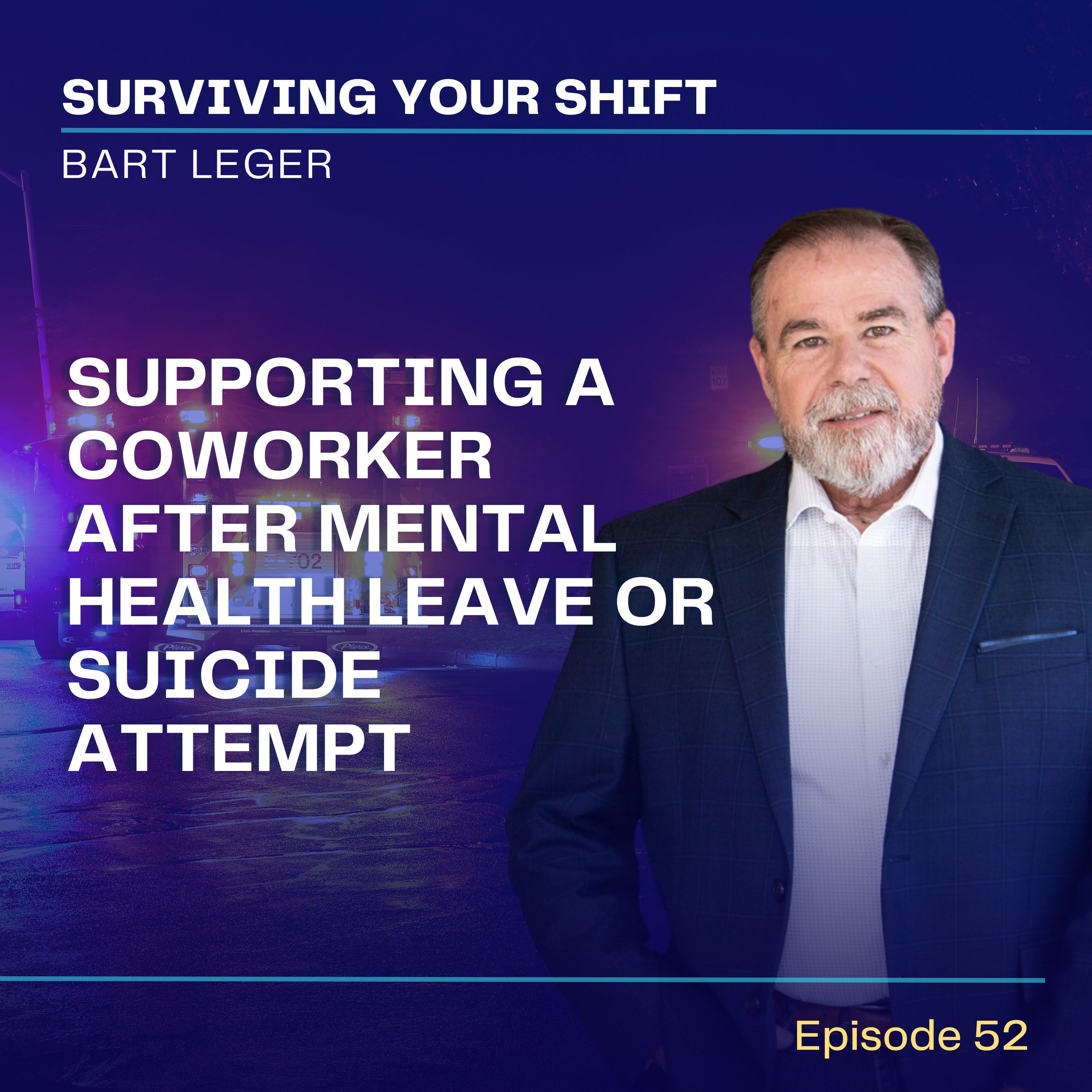
Supporting a Coworker Returning After Mental Health Leave or a Suicide Attempt
Jan 8, 202618 min
How do you support a coworker coming back after mental health leave or a suicide attempt without making it weird? This episode will give you practical language and steps to reduce stigma and welcome them back well. What do you say when a coworker returns after mental health leave or a suicide attempt—without making it awkward or piling on more stigma? Many responders either avoid the person completely, crack the wrong joke, or pry for details, and the coworker ends up feeling like a problem instead of part of the team. In this episode, you’ll get clear, practical peer support skills to welcome them back, support their reintegration, and know when to step in or back off. BY THE TIME YOU FINISH LISTENING, YOU’LL LEARN: Simple, respectful phrases you can use when a coworker returns after a suicide attempt or mental health crisis Common mistakes to avoid so you don’t increase shame, stigma, or workplace awkwardness How to support their safe reintegration at work while protecting your own boundaries as a peer supporter Use this episode with your peer support team, your shift, or your leadership group to set a healthier standard for how your agency handles return-to-work after a mental health crisis. Share This Episode: https://www.survivingyourshift.com/52 Connect with Bart LinkedIn: linkedin.com/in/bartleger Facebook Page: facebook.com/survivingyourshift Website: www.survivingyourshift.com
Every question we get asked before someone starts their trial.
If you have a concern about deliverability, AI quality, data privacy, or whether this will actually work for your specific situation, it's probably answered below.
What is the difference between Founder Solo and Founder Pro?
Founder Solo gives you 50 AI pitches per month using the credit model (Standard pitches cost 1 credit, Enriched pitches cost 2). Founder Pro raises that to 200 credits per month and adds full Booking Probability access, unlimited Magic Match, Apollo enrichment credits, and data export capabilities. Both plans use the same credit system, so you can stretch your monthly budget further by using Standard-mode drafting.
How do agency tiers work?
Agency tiers have no base fee. You pay per managed client and per talent profile. Agency Standard is $199 per client per month; Agency Pro is $399 per client per month. Both add $39 per talent profile per month. Your own team's user seats are always free.
What is a talent profile?
A talent profile represents one person (founder, executive, or spokesperson) you are booking onto podcasts. It includes their bio, topics, headshots, and outreach history. Team plans include 5 profiles; agency plans are pay-as-you-go.
Can I switch plans later?
Yes, at any time. Upgrades take effect immediately; downgrades apply at the end of the current billing period. Contact support if you need help migrating between plan families.
Do you offer a free trial?
Every paid plan includes a 15-day free trial. Your card is saved at signup but you will not be charged until day 16. Cancel any time from your dashboard.
What happens if I cancel?
You keep access until the end of your current billing period. No charges after that. Your data is retained for 30 days in case you reactivate.
Is the 20% annual discount automatic?
Yes. Select Annual on the pricing toggle and the discounted price is applied automatically at checkout. The annual price shown is the full year cost.
What if I have more than 50 profiles or 20 clients?
That is our Enterprise tier. Contact our sales team and we will build a custom plan with volume pricing, a dedicated account manager, and SLA guarantees.