Are you concerned about the Earth's future? Are you interested in what is being done in Northern California and the world to address environmental issues? Do you want to act? Then tune in every other Sunday to Sustainability Now! on KSQD.org. SN!! was launched on KSQD in 2019 by Ronnie Lipschutz. The show features interviews with activists, scholars, scientists, authors, philosophers, and others on a range of topics and issues that address the relationships among humans and nature, including life, death, taxes, biodiversity, energy, electricity, climate change, nuclear matters, animal rights, environmental activism, books, articles and many others. If you have a question, we have a podcast for you! SN! is broadcast on KSQD every two weeks, on Sundays, from 5-6 PM. Archives for shows beginning in 2019 are here and other podcast sites. Sustainability Now! is underwritten by the Sustainable Systems Research Foundation in Santa Cruz, California.
Pitch Analysis
Required Pod Score for this show. PitchCentric checks your profile against host openness, topical fit, and audience signals before you generate a pitch.
Contact path
Verified email
Booking probability
39%
Guest openness
Selective
Verified email on file
80/100
Required Score
Sign up to generate a grounded pitch for Sustainability Now! on KSQD.org.
Our AI reads these to draft pitches. Use them as grounding for a pitch that cites a real guest and a specific topic.
Episode #192
Fire and Ice on the Roof of the World, with Jonathan Mingle, Independent journalist and science writer
Sep 27, 202652 min
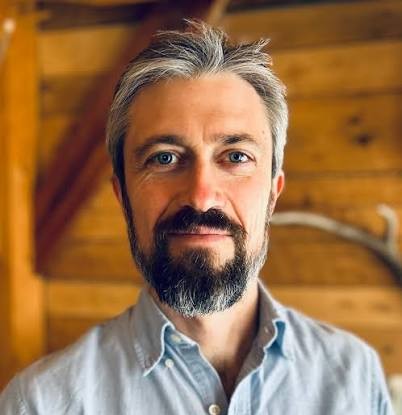
We’ve all heard about the terrible Himalayan flash flood that traveled nearly 100 km down the Lende Kholā and Trishuli̇̄ Kholā rivers on the Nepal-Chinese border, devastating towns and villages along the way, killing at least 1,250 people and leaving more than 5,000 missing in the two countries. The causes remain under investigation, but climate change appears to have played a major role in the disaster. Join host Ronnie Lipschutz for a conversation with Jonathan Mingle , an independent journalist and author whose reporting and writing is focused on the science and politics of climate change, energy, health, and technology. In 2015, he published Fire and Ice: Soot, Solidarity, and Survival on the Roof of the World , in which he reported about the shrinking glaciers across the Himalayas and California, the role of black carbon in that shrinkage and the impacts on the people and nature who live there. More recently, he published an essay, Mountains are Coming Undone ," in The New York Times (August 29, 2026). For a detailed analysis of the disaster, see: "Rapid warming in the Himalaya exacerbates geohazard cascades beyond adaptation limits," (WWA scientific report No. 92) World Weather Attribution. DOI: 10.25560/136420.
Rancho Coyote Viejo--A Pilot Land Access Project for Farmers, with Josefina Lara Chavez, Executive Director of RegenerationLA
Sep 14, 202650 min
Local food systems are of great importance to the Monterey Bay Region and, indeed, to California, and there is a growing number of small farms across the state supplying these systems. Join Ronnie Lipschutz for a conversation with Josefina Lara Chavez , Executive Director of RegenerationLA , the Latine Alliance in Agroecology and the Food System, which has just launched Rancho Coyote Viejo in south San Benito County. The Rancho is a 25-acre pilot land access farm for beginning farmers practicing regenerative and organic agriculture, along with a demonstration farm to support RegenerationLA’s educational and technical assistance activities. The farm is an experimental collaboration with Paicines Ranch, south of Hollister, California, which owns the property. Regeneration LA seeks to strengthens networks of Latine farmers, food workers, and agricultural professionals through education and capacity building to create a robust food and farming system.
Speculations on Conjunctural Futures: What Might We Expect, What Must We Do? With Kim Stanley Robinson, author of The Ministry for the Future
Aug 30, 202654 min
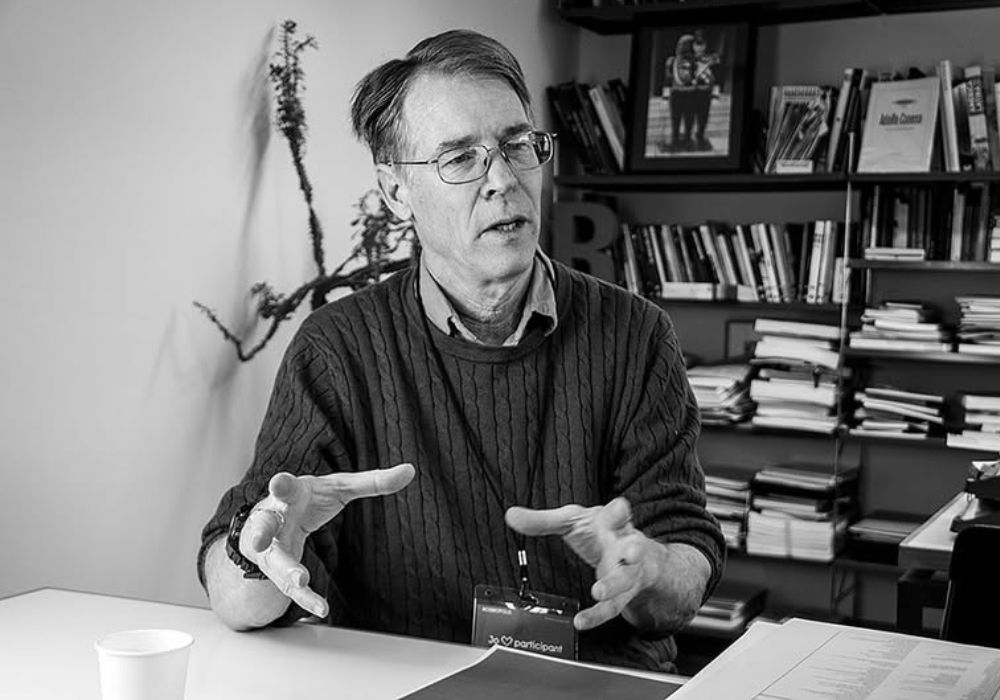
There are lots of dystopian futures floating around in the air and on the air. Imagining the future is never really about the future; it’s more like commentary about the present. “Conjunctural futures” extrapolate from the present: they are not-so-distant, generational futures that could or might be. What might those conjunctural futures look like? Can we imagine a positive one? And what must we do to get there? Join host Ronnie Lipschutz for a conversation with Kim Stanley Robinson , author, visionary and “conjunctural futurist,” for a conversation about his work, his philosophy and his speculations on the conjunctural future. Robinson is best known for his 2020 book, The Ministry for the Future . Robinson has written more than 20 books , many of them science fiction and others not. He has received many honors both for his writing and his struggle on behalf of nature. His most recent book is The High Sierra: A Love Story .
Plutonium Pit Production--The Risks and Costs of US Plans to Build New Nuclear Weapons with Dr. Dylan K. Spaulding of the Union of Concerned Scientists
Aug 16, 202654 min
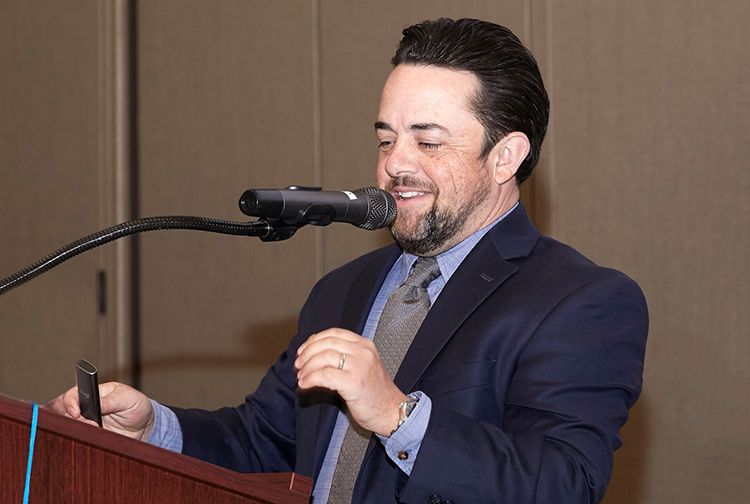
Nuclear weapons have been with us for 80 years . There are fewer today than was the case at the height of the Cold War, but there are more countries with nukes than ever before. Some heads of state have been, of late, threatening to use them . If you’ve seen Kathryn Bigelow’s recent film, “House of Dynamite,” you’ll know that human psychology is the linchpin on which the entire system of nuclear deterrence rests: would the President (or Premier or whatever) exchange their capitals for others? Trade Washington, DC for Moscow or Beijing? There is reason to be concerned about this question: The United States is planning a $1.7 trillion overhaul of its entire nuclear arsenal, designing new warheads and investing in new bombers, missiles, and submarines to carry them, all in the name of “modernization.” It’s not that the current generations of platforms and warheads won’t work; it’s more that Admirals, Generals and Presidents don’t trust devices put into operation when they were very young and that there is a lot of money and prestige in having the latest generation of gadgets and lording that over the competing services. Oh, and new weapons are “manlier” than the old ones. Join host Ronnie Lipschutz for a conversation with Dr. Dylan K. Spaulding a senior scientist in the Global Security Program of the Union of Concerned Scientists . His work focuses on technical issues related to nuclear stockpile stewardship and policies that can reduce the threat posed by nuclear weapons. He recently authored a UCS report entitled “Plutonium Pit Production--The Risks and Costs of US Plans to Build New Nuclear Weapons.” Its focus is on the stuff that makes warheads go “boom” but along the way, Spaulding covers a lot of other ground and the report is a good primer on nuclear weapons.
Trump’s War on California’s Environment, with Jason Rylander and Hollin Kretzmann from the Center for Biological Diversity
Aug 2, 202654 min
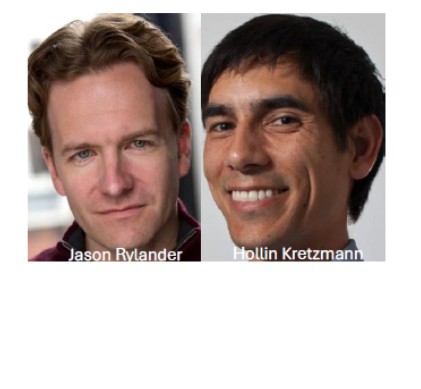
The Trump Administration has declared war on California and is hell-bent on eliminating any and all of the state’s environmental protections. As part of its “drill baby, drill” strategy, it is moving to open the California Coast to oil drilling and to increase exploration and extraction on BLM lands across the state . And not wanting to stay out of the action, the Supreme Court recently ruled that the makers of the herbicide Roundup do not have to warn users of cancer risks associated with its use. But wait, there’s more! The bad news just keeps on coming! Join host Ronnie Lipschutz for conversations on these issues with Jason Rylander and Hollin Kretzmann from the Climate Law Institute at the Center for Biological Diversity.
Every question we get asked before someone starts their trial.
If you have a concern about deliverability, AI quality, data privacy, or whether this will actually work for your specific situation, it's probably answered below.
What is the difference between Founder Solo and Founder Pro?
Founder Solo gives you 50 AI pitches per month using the credit model (Standard pitches cost 1 credit, Enriched pitches cost 2). Founder Pro raises that to 200 credits per month and adds full Booking Probability access, unlimited Magic Match, Apollo enrichment credits, and data export capabilities. Both plans use the same credit system, so you can stretch your monthly budget further by using Standard-mode drafting.
How do agency tiers work?
Agency tiers have no base fee. You pay per managed client and per talent profile. Agency Standard is $199 per client per month; Agency Pro is $399 per client per month. Both add $39 per talent profile per month. Your own team's user seats are always free.
What is a talent profile?
A talent profile represents one person (founder, executive, or spokesperson) you are booking onto podcasts. It includes their bio, topics, headshots, and outreach history. Team plans include 5 profiles; agency plans are pay-as-you-go.
Can I switch plans later?
Yes, at any time. Upgrades take effect immediately; downgrades apply at the end of the current billing period. Contact support if you need help migrating between plan families.
Do you offer a free trial?
Every paid plan includes a 15-day free trial. Your card is saved at signup but you will not be charged until day 16. Cancel any time from your dashboard.
What happens if I cancel?
You keep access until the end of your current billing period. No charges after that. Your data is retained for 30 days in case you reactivate.
Is the 20% annual discount automatic?
Yes. Select Annual on the pricing toggle and the discounted price is applied automatically at checkout. The annual price shown is the full year cost.
What if I have more than 50 profiles or 20 clients?
That is our Enterprise tier. Contact our sales team and we will build a custom plan with volume pricing, a dedicated account manager, and SLA guarantees.