
Episode #10
Hyperliquid Scaling and Risks
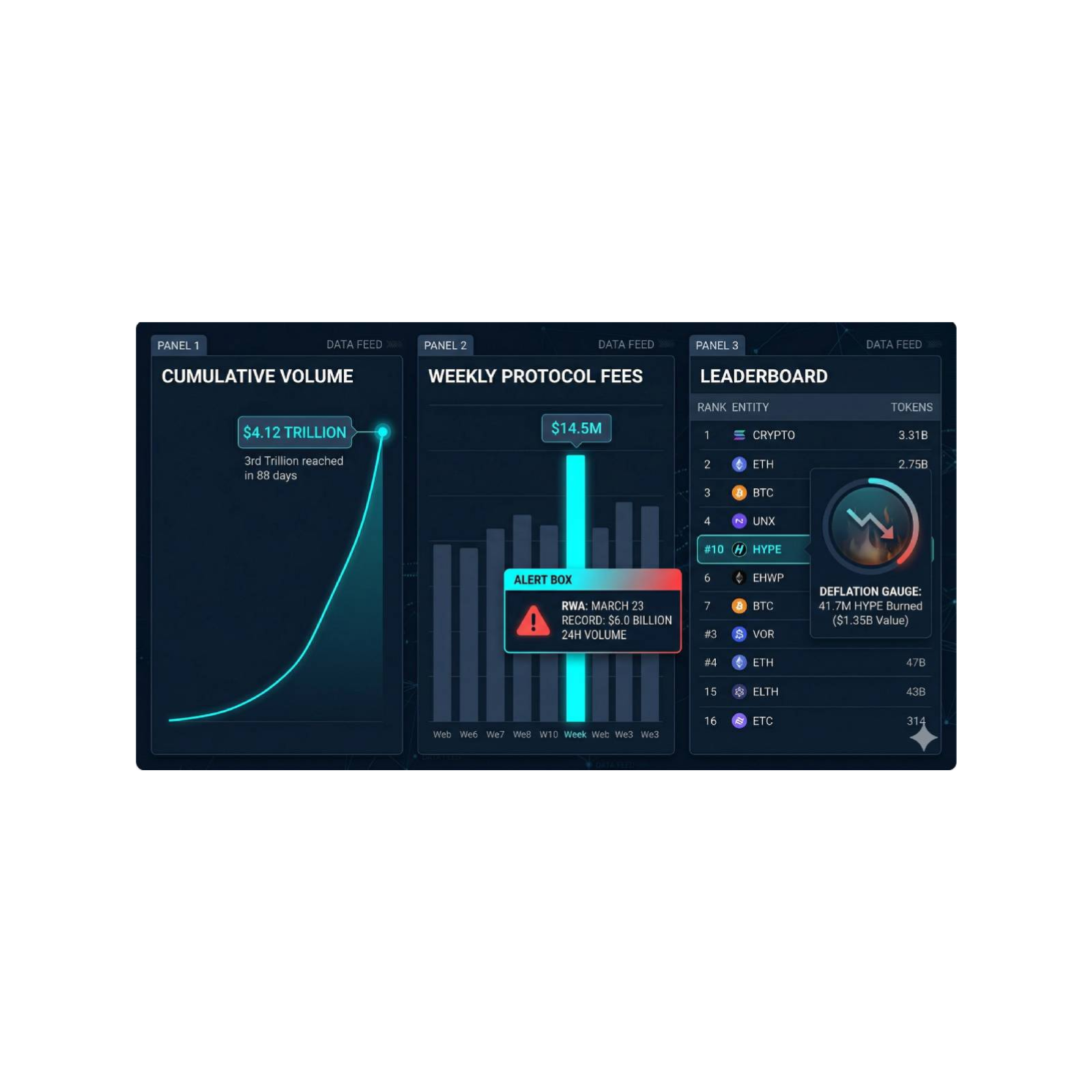
This episode stages a structured debate over Hyperliquid's Q2 2026 performance, opening with a simple engineering frame: bridges aren't built for the weight of cars, they're built for hurricanes. One side argues Hyperliquid's technical architecture and community-first design have produced a genuinely resilient trading engine. The other argues rapid expansion is masking unbundled risk most participants never separate out. The debate covers HIP-3's permissionless market framework — deployers staking roughly $30 million to launch a single market — and the real-world-asset open interest that exploded to $3.6 billion by mid-July as a result, including the February weekend when Hyperliquid's oil and gold markets kept trading while CME and the NYSE sat closed, forcing traditional markets to converge to Hyperliquid's prices when they reopened. The central disagreement is the Assistance Fund's buyback mechanism. The bull case: 97-99% of trading fees route automatically into open-market buying, and a standing fund 4.5x the size of July's token unlock absorbed it instantly. The bear case: that support is procyclical by construction — an umbrella that shrinks exactly as the storm hits, funded by trading volume that contracts in a genuine downturn. The two spar over whether a 40% buyback decline between Q3 2025 and Q1 2026, during HYPE's rally to new highs, proves the risk or proves the system self-corrects. The episode closes on the four distinct ways to gain Hyperliquid exposure — spot holding, HLP vault deposits, HIP-3 trading, and HIP-3 deployment — arguing each carries genuinely different risk, and that treating "Hyperliquid exposure" as one trade is where most participants get into trouble.