Episode #365
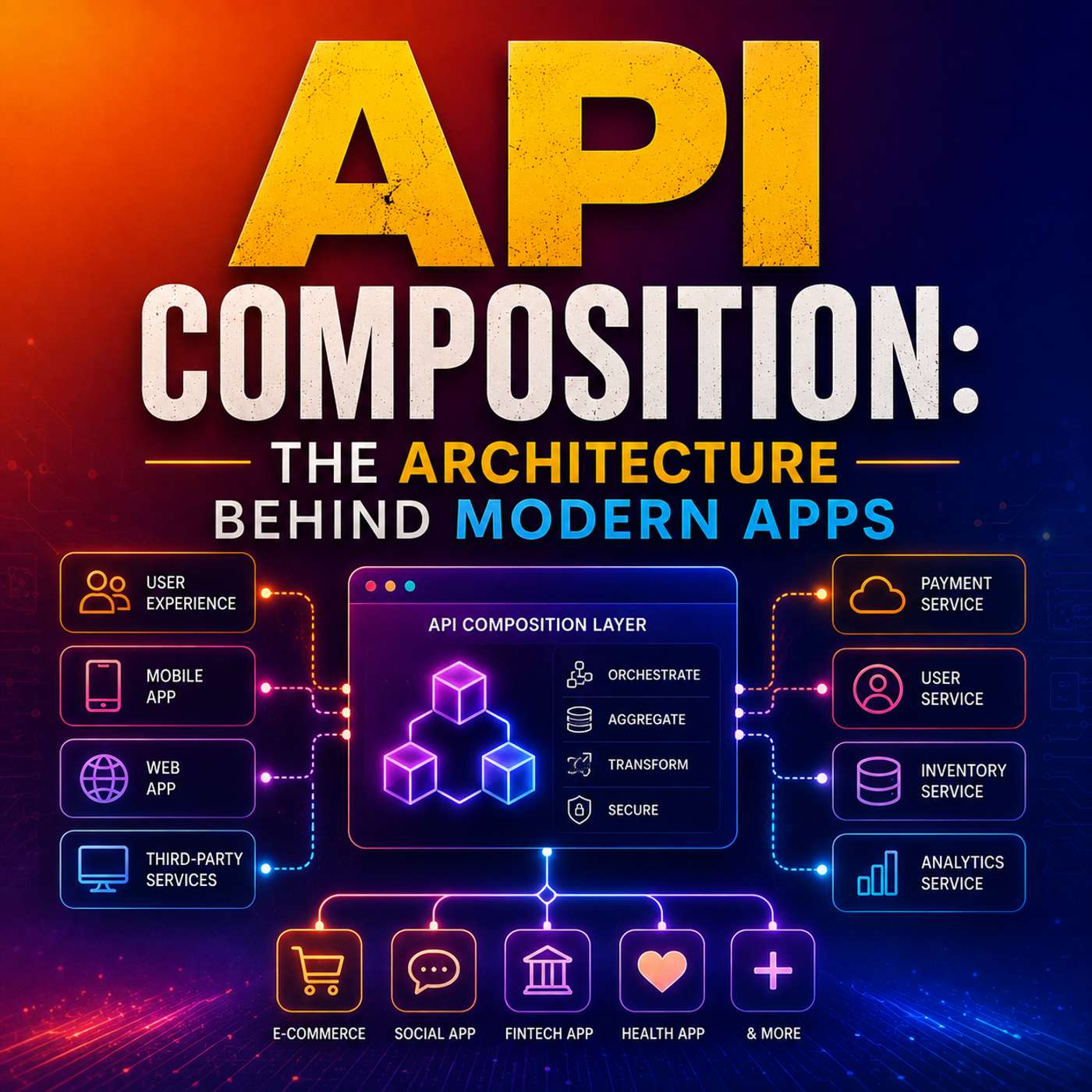
API Composition: The Architecture Behind Modern Apps
Every seamless app screen hides a surprisingly complex network of services working together behind the scenes. In this episode of techaily.ai, David and Sophia explore API composition—the architectural techniques developers use to combine fragmented data from independent microservices into a fast, cohesive user experience. The conversation starts with client-side composition and why asking a mobile app to communicate directly with multiple backend services can quickly create latency, overfetching, underfetching, and a frustrating user experience. From there, the episode explores the major patterns used to solve those problems: How API gateways centralize requests and reduce network latency Why oversized gateways can become monolithic bottlenecks How the Backend for Frontend, or BFF, pattern gives mobile, web, and other clients greater autonomy Why BFF architectures can introduce duplicated integration logic How GraphQL lets clients request exactly the data they need The caching challenges and N+1 query problem associated with GraphQL How DataLoader-style batching can reduce excessive backend queries Why edge composition moves aggregation closer to users through CDNs The security, compliance, and compute trade-offs of edge infrastructure The discussion then moves deeper into microservices communication and one of software architecture’s biggest debates: orchestration versus choreography. You’ll learn how centralized orchestration provides control and observability, while event-driven choreography uses message brokers such as Apache Kafka to create more loosely coupled systems. The episode also explains eventual consistency, saga patterns, compensating transactions, and why asynchronous architectures can become difficult to monitor and debug. David and Sophia also examine a bigger architectural question: are increasingly complex composition layers sometimes covering up poorly designed microservices that were split too aggressively? Finally, the episode looks at Google Cloud’s approach to API design, including gRPC, protocol buffers, JSON-to-gRPC transcoding, standardized API methods, and API Improvement Proposals. The discussion shows how strict API standards can reduce developer uncertainty and make large-scale automation possible. If you work with APIs, microservices, distributed systems, cloud architecture, GraphQL, Kafka, or backend engineering, this episode provides a practical look at the trade-offs behind the interfaces users experience every day. Subscribe to techaily.ai for more conversations about software architecture, APIs, cloud systems, AI, and modern technology.