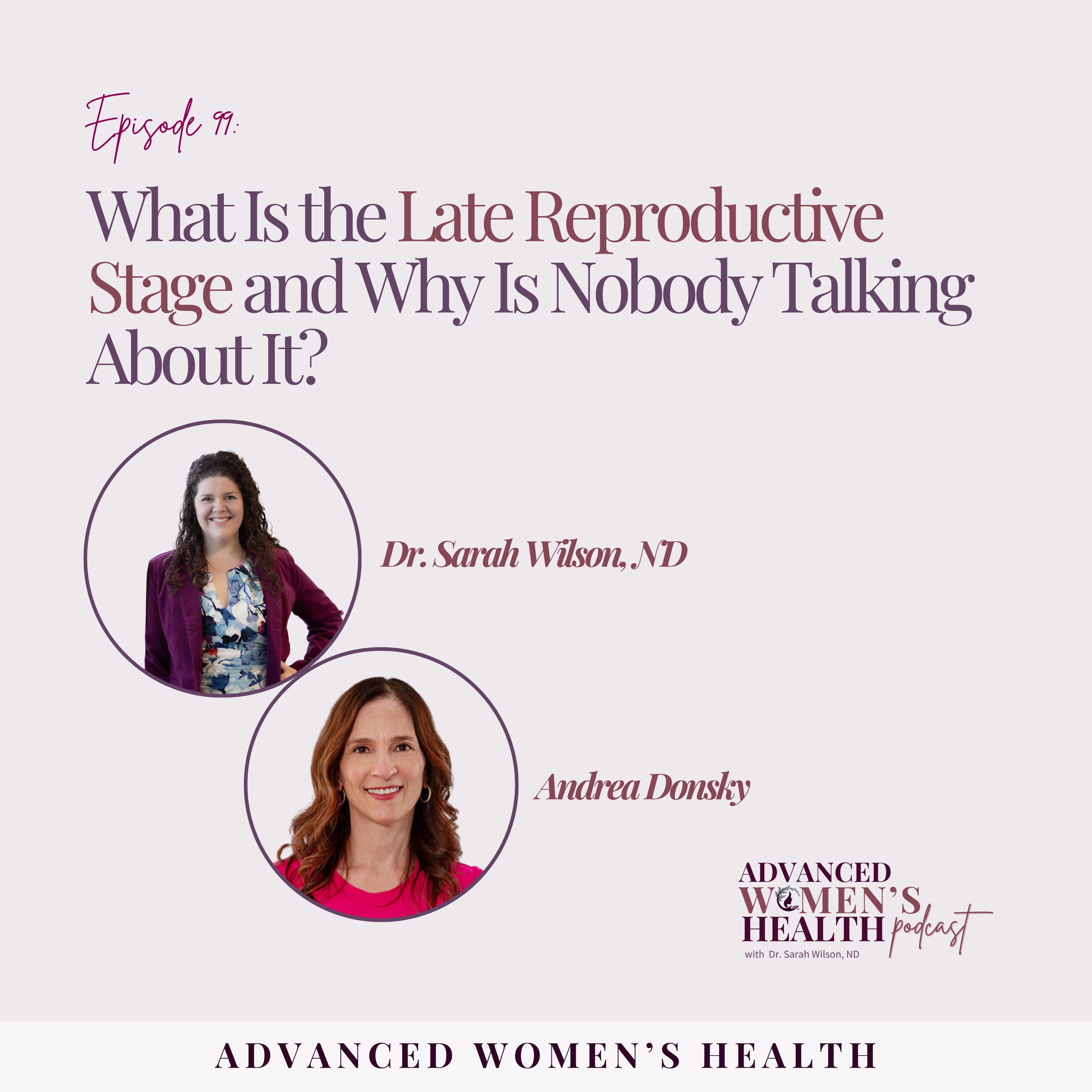
Episode #99
Episode 99: What Is the Late Reproductive Stage and Why Is Nobody Talking About It? A Perimenopause and Menopause Chat with Andrea Donsky
If you have been told you are too young for perimenopause, your labs look fine, and you should just manage your stress — this episode is the conversation your doctor should have had with you. In This Episode, We Answer: Can you have perimenopause symptoms before your periods change? Why do my hormone labs look normal if I feel terrible? What does insulin have to do with menopause weight gain? Should I do a nutrition program before starting a GLP medication? Why do I feel like a completely different person? Key Takeaways: You can be fully symptomatic with anxiety, brain fog, sleep disruption, and mood changes years before you are technically perimenopausal by lab criteria. The late reproductive stage is real, it is under-discussed, and standard FSH and LH testing on a single day will miss it. You deserve help regardless of whether you fit a label. Insulin has been more directly associated with hot flashes, night sweats, menopausal weight gain, anxiety, and cognitive changes than reproductive hormones. A normal HbA1c does not rule out insulin dysregulation. A fasting insulin test is inexpensive and changes everything about how a plan is built. The best-performing GLP-1 studies had a three-month nutrition primer built in before starting medication. That nutritional education and habit formation is what produced better sustained results. This is what the headlines do not tell you. Quick Answers (FAQ): Q: Can you have perimenopause symptoms before your periods change? A: Yes. The late reproductive stage can begin in the late 30s and early 40s. Hormone levels on a single blood draw may appear normal while daily fluctuations are already causing anxiety, brain fog, sleep disruption, and mood changes. We go deeper into this at 06:43. Q: Why do my hormone labs look normal if I feel terrible? A: Standard FSH, LH, and estradiol testing on one day gives a single snapshot. Hormones genuinely fluctuate day to day in this stage, meaning a normal reading does not confirm a normal experience. We go deeper into this at 07:47. Q: What does insulin have to do with menopause weight gain? A: Insulin is a storage hormone. When it stays elevated, fat cells are locked in storage mode regardless of how little you eat. Eating less when insulin is high is like making less money when your savings account is locked — the checking account still feels empty. Lowering insulin unlocks fat burning. We go deeper into this at 14:04. Q: Should I do a nutrition program before starting a GLP medication? A: The trials that produced the best GLP-1 results included a three-month nutrition primer before the medication started. Participants learned macronutrient principles, built habits, and changed their relationship with food before the drug was introduced. Results were significantly better at 12 and 24 months. We go deeper into this at 22:38. Q: Why do I feel like a completely different person in perimenopause? A: Hormone fluctuations affect brain function, mood regulation, sleep, and stress response. The late reproductive stage adds a layer of inconsistency — good days and bad days with no predictable pattern — that makes women feel like they no longer know themselves. We go deeper into this at 06:43. Resources Mentioned: Andrea Donsky: @ andreadonsky on Instagram Menopause Reimagined Podcast Nourishing Menopause by Andrea Donsky: available at most Canadian bookstores and on Amazon in the US Website: wearemorphis.com Connect With Us: Website: advancedwomenshealth.ca Instagram: @drsarah_nd | @advancedwomenshealth Book an appointment: advancedwomenshealth.ca Leave a review: wherever you are listening, it helps other women find this episode The Advanced Women's Health Podcast is hosted by Dr. Sarah Wilson, ND, naturopathic doctor, clinic founder, and obesity and immunology researcher. This episode is crossposted with the Menopause Reimagined podcast by Andrea Donsky.