The Biblical Hitmen
Religion of the End Times|The Cult of Pythagoras|Apollo/Rituals|Reincarnation|Hyperboreans|Image of the Beast
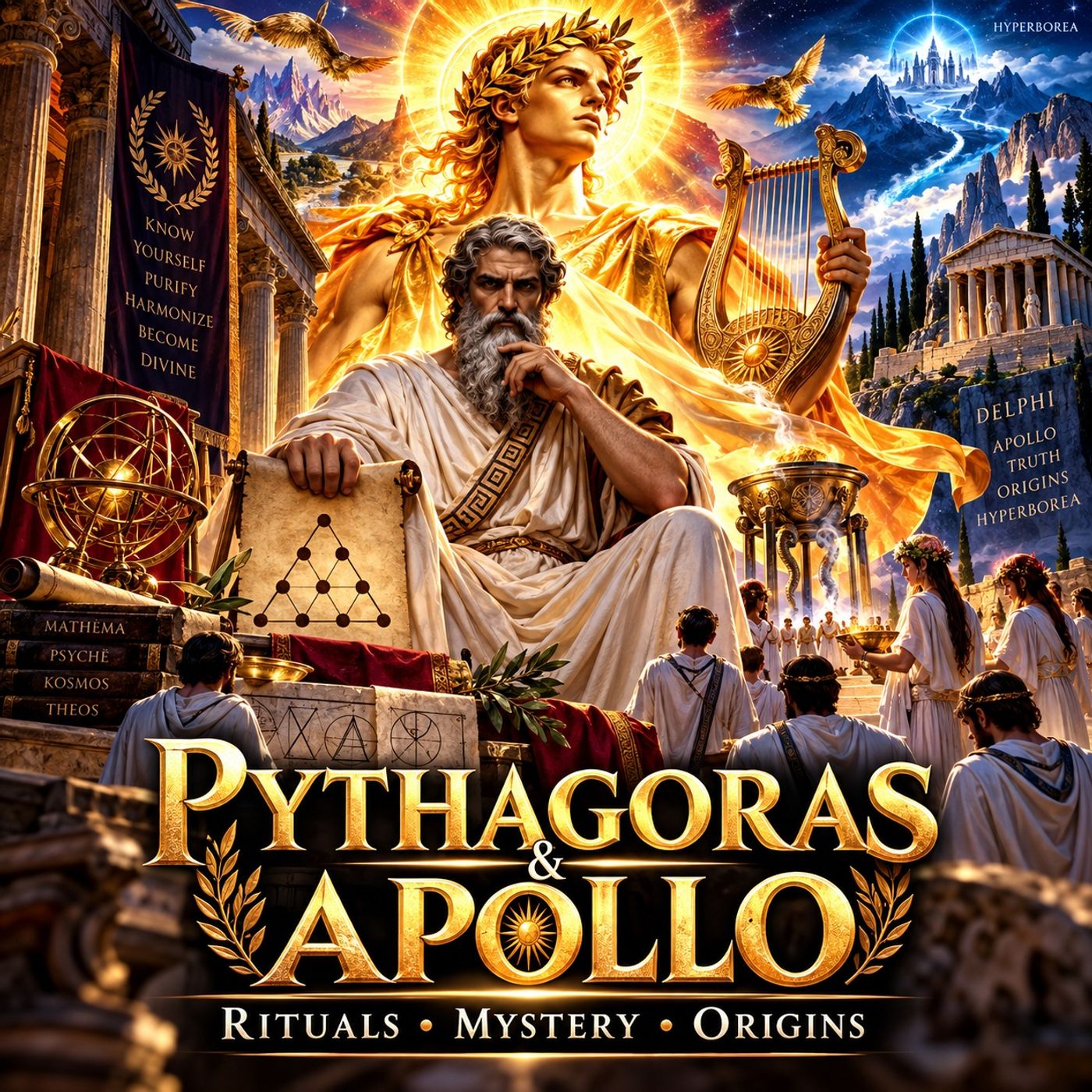
I Appreciate The Listeners Getting Through The AD Space!! Listening here is the best way to support our show and keep the show going. Its very valuable to our time and hard work that goes into this operation. We thank you so much as an audience for supporting the us. It does not go unnoticed. God Bless and enjoy the show! Full Disclaimer: The opinions of the guests do not directly reflect the views and opinions of the hosts of the show. God Bless and Enjoy!!! Link To YT Video https://youtube.com/live/e534rm-29sM Best way to support the show| AD FREE CONTENT EARLY ACCESS https://www.patreon.com/TheBiblicalHitmen https://x.com/BiblicalHitmen Donate To The Show https://paypal.me/TheBiblicalHitmen Spotify: https://open.spotify.com/show/0mzbeUFrdzpKZyI0wSfSff?si=da3cfb9f8d994c32 Apple Podcast: https://podcasts.apple.com/us/podcast/the-biblical-hitmen/id1789365234 In this episode, we take a deep look at Pythagoras not merely as a mathematician, but as a religious teacher, ritual leader, and founder of a highly disciplined spiritual community.At the center of that world was Apollo—especially Apollo of Delphi, Pythian Apollo, and the mysterious tradition of Hyperborean Apollo.We examine what ancient sources actually say Pythagoras and his followers practiced, how Apollo became connected to Pythagorean theology, and where Pythagoras may have obtained the ideas behind his religious system.Topics Covered Pythagoras as a religious teacher rather than simply a mathematician The founding of the Pythagorean community at Croton Why Croton was already strongly associated with Apollo and the Delphic oracle Ancient reports identifying Pythagoras with “Hyperborean Apollo” Aristotle's traditions concerning Pythagoras's supernatural reputation Hyperborea and its ancient connection to Apollo Abaris the Hyperborean and his connection to Pythagorean legend The importance of Delphi and Pythian Apollo The tradition that Pythagoras learned from the Delphic priestess Themistoclea Apollo's tripod and its connection to Pythagorean symbolism The sacred importance of numbers The Tetractys and the number ten Number, proportion, cosmic order, and harmony Music as spiritual purification Apollo's connection to the lyre, music, healing, and prophecy Pythagorean use of hymns, paeans, and musical purification Ritual purity before entering temples Entering sacred spaces barefoot Clean clothing and bodily purification Libations and carefully prescribed religious ritual Bloodless offerings including grain, cakes, honey, and incense The debate over Pythagorean vegetarianism and animal sacrifice Restrictions concerning particular foods and animals Famous prohibitions involving beans The discipline of silence Religious secrecy and restricted teachings Ancient reports of long initiation periods Communal property and Pythagorean brotherhood Morning and evening spiritual routines Solitude in sacred groves and sanctuaries Moral self-examination Control of desires and emotions The purification of the soul Pythagorean beliefs concerning the immortality of the soul Reincarnation and transmigration The ancient story of Pythagoras recognizing a dead friend's soul in a dog The concept that humans and animals participate in a common spiritual kinship Why reincarnation affected diet, sacrifice, burial, and daily behavior Similarities between Pythagoreanism and Orphism Orphic ideas concerning purification, death, rebirth, and the soul Herodotus connecting Orphic, Bacchic, and Pythagorean practices Whether Orphism influenced Pythagoras—or whether Pythagoreans helped shape later Orphism Possible Egyptian influence on Pythagorean religion Ancient reports that Pythagoras studied in Egypt Egyptian priestly purity, temple practices, and sacred knowledge Herodotus's comparison between Egyptian and Pythagorean burial customs The question of whether reincarnation entered Pythagoreanism through Egypt Possible Babylonian influence involving mathematics and astronomy Later stories of Pythagoras studying with Chaldeans Why direct Babylonian influence on his Apollo devotion is much harder to prove Claims of Indian influence involving reincarnation and asceticism Why direct India-to-Pythagoras transmission remains historically uncertain The theory that Pythagoreanism was influenced by northern Eurasian or Scythian shamanism Abaris, Aristeas, miraculous travel, and northern religious traditions Why modern scholars remain divided over the “shamanic Pythagoras” theory Become a supporter of this podcast: https://www.spreaker.com/podcast/the-biblical-hitmen--6532902/support .