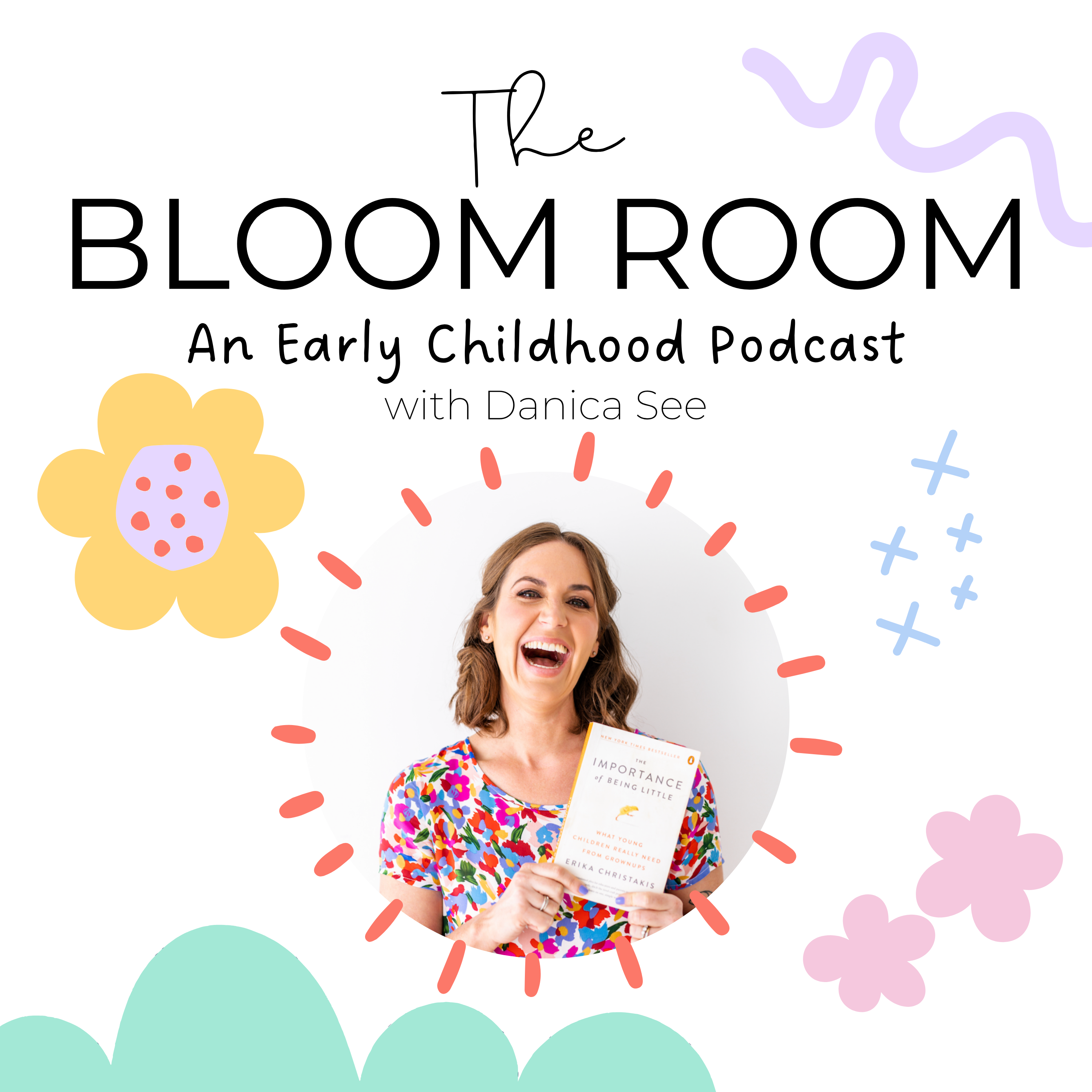
Where big feelings are welcome, tricky behaviour isn’t shamed, and early childhood educators finally feel seen. Are you an educator, teacher, or school leader navigating the messy, beautiful world of guiding children’s behaviour, emotions, and sense of belonging? You’ve just found your people. I’m Danica - early childhood mentor and consultant, and your go-to gal for honest, heart-led conversations about what actually works when supporting young children. Inside The Bloom Room, we go beyond sticker charts and surface-level strategies. Each week, I bring you fresh episodes packed with: ✨ Real, evidence-informed tools you can use tomorrow . ✨ Thoughtful chats with experts and educators doing the work. ✨ Practical guidance for supporting behaviour without shame. ✨ A whole lot of validation, nuance, and “OMG SAME” moments. Whether you're a seasoned leader or fresh out of uni, this is your space to grow, reflect, and reimagine what’s possible for the chil
Pitch Analysis
Required Pod Score for this show. PitchCentric checks your profile against host openness, topical fit, and audience signals before you generate a pitch.
Contact path
Verified email
Booking probability
33%
Guest openness
Selective
Verified email on file
80/100
Required Score
Sign up to generate a grounded pitch for The Bloom Room: An Early Childhood Podcast.
What is The Bloom Room: An Early Childhood Podcast?
The Bloom Room: An Early Childhood Podcast is a education podcast hosted by Danica See, with 61 episodes on record and a Required Pod Score of 80. PitchCentric scores this show on Booking Probability, Listen Score, and live audience signals refreshed every 24 hours.
About the host
Danica See hosts The Bloom Room: An Early Childhood Podcast, a education show with 61 episodes published.
Our AI reads these to draft pitches. Use them as grounding for a pitch that cites a real guest and a specific topic.
The Bloom Room: An Early Childhood Podcast
EP 62 | Who Are Your Marigolds? Finding Your People in Education
Aug 17, 202628 min
This is the final episode of The Bigger Than Behaviour Series! There’s a lot about education that feels heavy right now, and this series has made space for that heaviness - but there’s something else I think we need to talk about: the people we move through the system with. In this episode, I’m exploring the idea of finding your Marigolds - the people who help us grow, remind us who we are when things get hard, and give us somewhere safe to put the messy parts of this work. You’ll hear: ✨ Why finding your people matters when you’re working within systems you can’t always change ✨ Who our Marigolds are - and why we need to look out for pesky walnut trees ✨ What my own experiences with both marigolds and walnut trees taught me about whose voices we allow to shape our own ✨ Why I believe I wouldn’t be the teacher I am today without my marigolds This isn’t a conversation about surrounding ourselves with positive people and pretending the hard stuff isn’t hard. Our people can’t fix the education system, and they can’t remove every barrier or answer the questions we’re carrying. BUT They can sit beside us in the messy middle without making us more hopeless. They can help us stay connected to our values, our voice, our hope, and the reasons we chose this work in the first place. Please note - very (very) mild coarse language in this episode. Read Find Your Marigold: The One Essential Rule for New Teachers from Jenn Gonzalez Let's Connect! Join the waitlist my course: The Behaviour Reset Want to know how to respond to baffling behaviours better? Download my free guide with 90 behaviour scripts Join me on Instagram: @littlebloom.consultancy
EP 60 | It Was Never Meant to Be Us vs. Parents with Abby Thomason
Aug 3, 20261h 12m
It's easy it is to fall into blame - parents blaming educators, educators blaming parents. And when we do? The children miss out. In this episode, I sit down with Abby Thomason from Early Emotions to explore what happens when we stop searching for who's at fault and start exploring what children - and the adults around them - actually need. Together, we unpack why children's mental health is still treated differently from every other area of development, why early intervention shouldn't stop at speech or motor skills, and what happens when educators are expected to carry more than they were ever trained or supported to. We also explore the growing rates of preschool suspension and expulsion, the importance of supporting adults to respond to children's emotions, and why meaningful partnerships between families and educators have never been more important. You'll hear: ✨ Why children's mental health deserves the same attention as physical and developmental milestones ✨ The gap between identifying concerns and accessing meaningful support ✨ Why supporting children starts with supporting the adults around them ✨ What rising preschool suspension and expulsion rates reveal about our systems ✨ How blame creates distance between educators and families ✨ Why genuine partnership is one of the most powerful protective factors for children ✨ What gives Abby hope for the future of early childhood education This conversation is a reminder that behaviour is never just about the child. Creating better outcomes for children has never been about choosing between parents and educators; it's about building systems where both feel supported enough to stand on the same side. Connect with Abby on Insta @earlyemotions Download Abby's free guide - Navigating Little People's Big Emotions Want to know how to respond to baffling behaviours better? Click here to download my free guide with 90 behaviour scripts inside! Let's Connect! Join me on Instagram @littlebloom.consultancy Learn more about my course The Behaviour Reset
EP 59 | What Do the NDIS Changes Really Mean For Early Childhood? with Dave Jereb
Jul 27, 20261h 19m
Over the past few months, you've probably heard bits and pieces about the changes to the NDIS and the introduction of Thriving Kids. But what do these changes actually mean for children, families, and the educators supporting them every day? In this episode, I sit down with occupational therapist, author, and founder of Move About Therapy Services, Dave Jereb, to unpack the changes that are coming and the ripple effect they could have across early childhood settings and schools. Together, we explore what meaningful inclusion really looks like, why changing the environment is often more powerful than trying to change the child, and what educators can do when the support around children starts to shift. You'll hear: ✨ What the NDIS changes and Thriving Kids could mean for children, families, and educators ✨ Why participation - not just therapy - is at the heart of supporting children well ✨ What true inclusion looks like beyond simply being present in the classroom ✨ Why changing the environment is often the quickest and most respectful way to support behaviour ✨ How small shifts in connection, expectations, and meaningful engagement can transform a child's day ✨ Why educators need greater support, collaboration, and training if we want inclusion to be successful This conversation is honest, thought-provoking and, ultimately, hopeful. If you've been wondering what these policy changes might mean for your space, or you've ever found yourself asking how we can better support every child without burning out educators in the process, this episode is for you. Visit Dave's Instagram @moveabout.ot Buy Dave's book - Challenging The Story: A Surprisingly Simple Approach to Supporting Children with Challenging Behaviours Want to know how to respond to baffling behaviours better? Click here to download my free guide with 90 behaviour scripts inside! Let's Connect! Join me on Instagram @littlebloom.consultancy Learn more about my course The Behaviour Reset
EP 58 | Are We Preparing New Educators For the Reality Of Behaviour Support?
Jul 20, 202641 min
University teaches you the theory, but what happens when you step into a real classroom? In this episode, I sit down with Chloe - a recently graduated early childhood educator - to explore the gap between what we're taught at university and what it actually feels like to support children, families and colleagues in the real world. You'll hear: ✨ What surprised Chloe most when she stepped from university into the classroom ✨ The invisible mental and emotional load that no textbook can prepare you for ✨ Why understanding behaviour and responding to behaviour are two very different skills ✨ The role mentors play in shaping confident, capable educators ✨ Where Chloe believes universities are preparing educators well - and where there are still important gaps ✨ Why working alongside families is often far more complex than we expect This conversation is honest, thoughtful and incredibly reassuring. Whether you're a new educator finding your feet, a mentor supporting the next generation, or an experienced teacher reflecting on your own journey, I think you'll find yourself somewhere in Chloe's story. Connect with Chloe on RedNote (her ID is 602288284) Want to know how to respond to baffling behaviours better? Click here to download my free guide with 90 behaviour scripts inside! Let's Connect! Join me on Instagram @littlebloom.consultancy Learn more about my course The Behaviour Reset
EP 57 | Could Love Be What's Missing in Education?
Jul 13, 202652 min
Most of us begin this work because we care deeply about children but, at some point, many of us discover that caring isn't as simple as we thought. In this episode, I sit down with Sarah Louise Nelson - early childhood educator, researcher, university lecturer and PhD candidate - to explore the concept of professional love, and why relationships aren't just a nice addition to education; they're the foundation that everything else is built upon. You'll hear: ✨ What professional love really means (and why it's so often misunderstood) ✨ Why relationships are an ethical commitment, not just a teaching strategy ✨ The connection between professional love, behaviour support and belonging ✨ How compassion fatigue changes the way we show up for children ✨ Why care has become undervalued in education, despite being essential for learning ✨ Why reconnecting with the relational heart of our work gives Sarah Louise hope for the future of early childhood This conversation is thoughtful, challenging and incredibly hopeful. If you've ever wondered how to keep caring deeply without losing yourself in the process, or what it really means to bring love into professional practice, this episode will leave you thinking long after it ends. Connect with Sarah Louise on LinkedIn Want to know how to respond to baffling behaviours better? Click here to download my free guide with 90 behaviour scripts inside! Let's Connect! Join me on Instagram @littlebloom.consultancy Learn more about my course The Behaviour Reset
Every question we get asked before someone starts their trial.
If you have a concern about deliverability, AI quality, data privacy, or whether this will actually work for your specific situation, it's probably answered below.
What is the difference between Founder Solo and Founder Pro?
Founder Solo gives you 50 AI pitches per month using the credit model (Standard pitches cost 1 credit, Enriched pitches cost 2). Founder Pro raises that to 200 credits per month and adds full Booking Probability access, unlimited Magic Match, Apollo enrichment credits, and data export capabilities. Both plans use the same credit system, so you can stretch your monthly budget further by using Standard-mode drafting.
How do agency tiers work?
Agency tiers have no base fee. You pay per managed client and per talent profile. Agency Standard is $199 per client per month; Agency Pro is $399 per client per month. Both add $39 per talent profile per month. Your own team's user seats are always free.
What is a talent profile?
A talent profile represents one person (founder, executive, or spokesperson) you are booking onto podcasts. It includes their bio, topics, headshots, and outreach history. Team plans include 5 profiles; agency plans are pay-as-you-go.
Can I switch plans later?
Yes, at any time. Upgrades take effect immediately; downgrades apply at the end of the current billing period. Contact support if you need help migrating between plan families.
Do you offer a free trial?
Every paid plan includes a 15-day free trial. Your card is saved at signup but you will not be charged until day 16. Cancel any time from your dashboard.
What happens if I cancel?
You keep access until the end of your current billing period. No charges after that. Your data is retained for 30 days in case you reactivate.
Is the 20% annual discount automatic?
Yes. Select Annual on the pricing toggle and the discounted price is applied automatically at checkout. The annual price shown is the full year cost.
What if I have more than 50 profiles or 20 clients?
That is our Enterprise tier. Contact our sales team and we will build a custom plan with volume pricing, a dedicated account manager, and SLA guarantees.