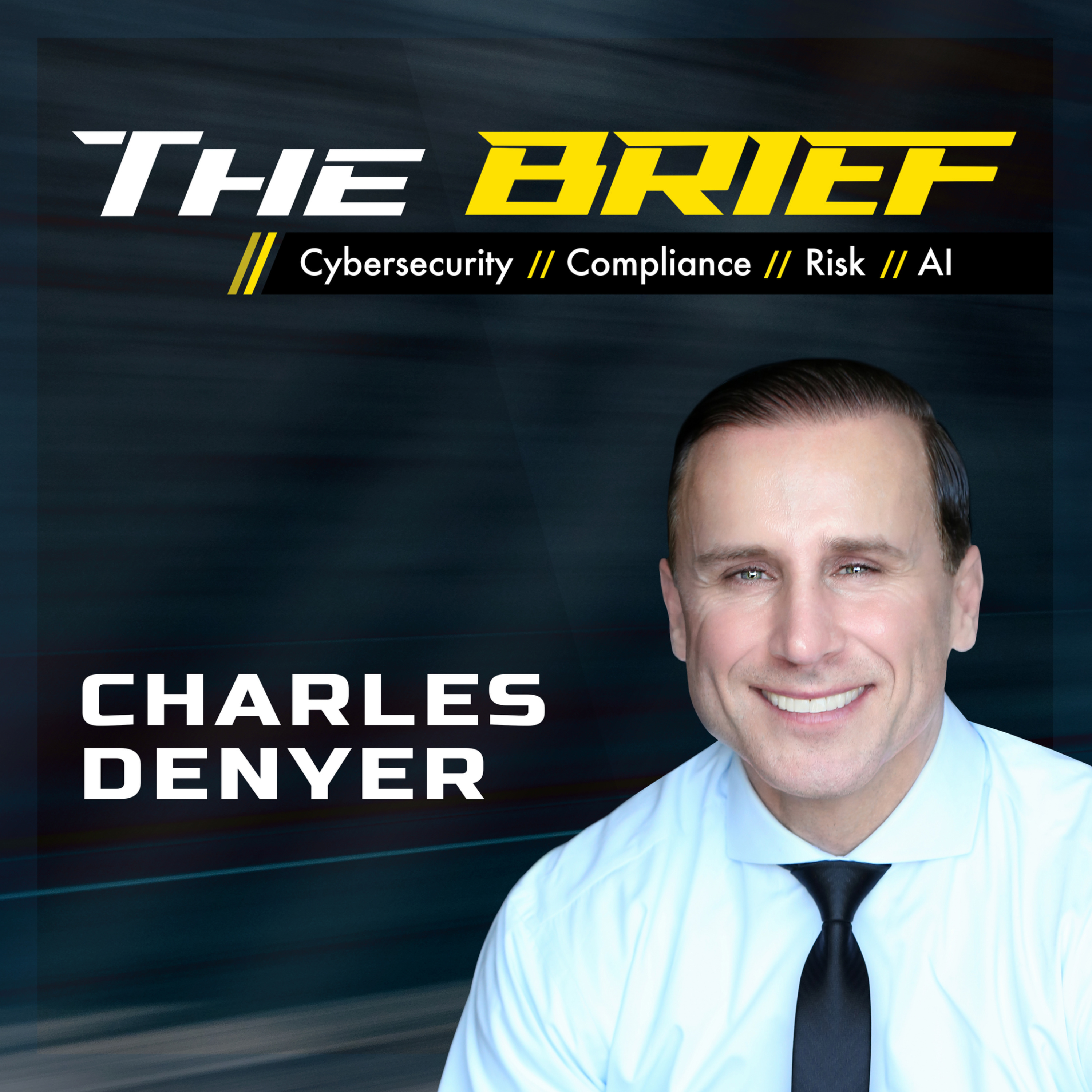
The Brief with Charles Denyer is your guide to cybersecurity, AI, compliance, risk, and data privacy. Each week, Charles brings sharp insights and practical strategies to help you reduce risk, cut costs, and protect what matters most. From regulatory chaos to AI uncertainty, Charles breaks down the issues leaders face today — with real answers and real solutions.Listen on Apple, Spotify & more.Learn more: charlesdenyer.comContact: info@charlesdenyer.com
Pitch Analysis
Required Pod Score for this show. PitchCentric checks your profile against host openness, topical fit, and audience signals before you generate a pitch.
Contact path
Verified email
Booking probability
31%
Guest openness
Selective
Verified email on file
80/100
Required Score
Sign up to generate a grounded pitch for The Brief on Cybersecurity, Compliance, Risk, AI.
What is The Brief on Cybersecurity, Compliance, Risk, AI?
The Brief on Cybersecurity, Compliance, Risk, AI is a technology podcast hosted by Charles Denyer, with 30 episodes on record and a Required Pod Score of 80. PitchCentric scores this show on Booking Probability, Listen Score, and live audience signals refreshed every 24 hours.
About the host
Charles Denyer hosts The Brief on Cybersecurity, Compliance, Risk, AI, a technology show with 30 episodes published.
Our AI reads these to draft pitches. Use them as grounding for a pitch that cites a real guest and a specific topic.
Episode #29
CMMC Section 4: The CUI Storage Workbook — Every Place CUI Lives at REST in your Environment | EP 29
Jul 1, 202618 minS1
In this episode of The Brief, Charles Denyer continues his 8-part CMMC series with Step 4: CUI Storage — where Controlled Unclassified Information lives at rest in your environment, and why this is where compliance scope explodes most unexpectedly. Building on the processing framework from Episode 28, Charles explains that CUI does not disappear once work is finished. It persists — in primary repositories, collaboration platforms, application databases, endpoint profiles, backup vaults, archives, and email tenants — often long after the people who put it there have stopped thinking about it. He walks through a structured, workbook-driven methodology covering three matrices and a supporting gaps log designed to make every CUI storage location visible, classified, evidenced, and defensible. The Brief is a Charles Denyer Productions podcast hosted by Charles Denyer. Learn more at charlesdenyer.com | Instagram: @denyer.charles | Facebook: @charles.denyer Questions/Topics/Advertising: info@charlesdenyer.com Disclaimer: The Brief is a podcast produced by Charles Denyer Productions. The views and opinions expressed by the host and any guests are their own and do not constitute legal advice.
CMMC Section 3: The CUI Processing & Transformation Workbook — What Happens to CUI AFTER It Enters Your Environment
Jun 4, 202614 minS1
<p>In this episode of The Brief, Charles Denyer continues his 8-part CMMC series with Step 3: CUI Processing and Transformation — what actually happens to Controlled Unclassified Information after it enters your environment, and why this is where risk concentrates and assessors probe hardest. Building on the ingestion framework established in Episode 27, Charles explains that CUI rarely stays static after arrival. It gets viewed, edited, analyzed, exported, annotated, and transformed through the normal course of engineering, proposals, testing, and program execution — and every one of those activities creates artifacts. </p><p>Drafts, working files, autosave copies, intermediate outputs, cached downloads, and deri...
CMMC Section 2: The CUI Ingestion & Entry Points Workbook — Documenting How CUI Enters Your Environment | EP 27
Apr 26, 202618 minS1
<p>In this episode of The Brief, Charles Denyer continues his 8-part CMMC series by breaking down Step 2: CUI Ingestion—how Controlled Unclassified Information actually enters your environment and why this is where most organizations lose control of their compliance scope. Building on the foundation established in Episode 26, Charles explains that defining CUI is only the beginning. The real challenge lies in controlling how that data flows into your systems through contracts, vendors, email, file transfers, and internal processes. He walks through a structured, workbook-driven methodology for identifying ingestion points, validating incoming data, restricting approved channels, and aligning all entry po...
CMMC Section 1: The CUI Definition Workbook — A Detailed Analysis for Defense Contractors | EP 26
Apr 6, 202616 minS1
<p>In this episode of The Brief, Charles Denyer shifts from foundational concepts to real-world execution by breaking down the most critical step in any CMMC program: defining and identifying Controlled Unclassified Information (CUI) with precision and authority. </p><p><br></p><p>Drawing directly from his CUI Definition Workbook, Charles walks through a structured, contract-driven methodology for determining what actually qualifies as CUI within your environment—and just as importantly, why. This is not a theoretical discussion. It is a step-by-step operational approach that forces organizations to move beyond assumptions and establish traceability between contract requirements, CUI categories, and th...
Understanding the Relationship Between Controlled Unclassified Information (CUI) and CMMC for DoD Contractors | EP 25
Apr 3, 202610 minS1
<p>In this episode of The Brief, Charles Denyer takes a deep dive into one of the most critical—and most consistently misunderstood—foundations of CMMC compliance: the relationship between Controlled Unclassified Information (CUI) and your true audit scope. </p><p><br></p><p>Most defense contractors believe they understand where their CUI resides and how it’s controlled. But when that assumption is tested under real assessment conditions, it almost always breaks down. What appears to be progress on paper often reveals gaps in definition, visibility, and control that expand risk in ways organizations don’t fully recognize.</p><p><br><...
Every question we get asked before someone starts their trial.
If you have a concern about deliverability, AI quality, data privacy, or whether this will actually work for your specific situation, it's probably answered below.
What is the difference between Founder Solo and Founder Pro?
Founder Solo gives you 50 AI pitches per month using the credit model (Standard pitches cost 1 credit, Enriched pitches cost 2). Founder Pro raises that to 200 credits per month and adds full Booking Probability access, unlimited Magic Match, Apollo enrichment credits, and data export capabilities. Both plans use the same credit system, so you can stretch your monthly budget further by using Standard-mode drafting.
How do agency tiers work?
Agency tiers have no base fee. You pay per managed client and per talent profile. Agency Standard is $199 per client per month; Agency Pro is $399 per client per month. Both add $39 per talent profile per month. Your own team's user seats are always free.
What is a talent profile?
A talent profile represents one person (founder, executive, or spokesperson) you are booking onto podcasts. It includes their bio, topics, headshots, and outreach history. Team plans include 5 profiles; agency plans are pay-as-you-go.
Can I switch plans later?
Yes, at any time. Upgrades take effect immediately; downgrades apply at the end of the current billing period. Contact support if you need help migrating between plan families.
Do you offer a free trial?
Every paid plan includes a 15-day free trial. Your card is saved at signup but you will not be charged until day 16. Cancel any time from your dashboard.
What happens if I cancel?
You keep access until the end of your current billing period. No charges after that. Your data is retained for 30 days in case you reactivate.
Is the 20% annual discount automatic?
Yes. Select Annual on the pricing toggle and the discounted price is applied automatically at checkout. The annual price shown is the full year cost.
What if I have more than 50 profiles or 20 clients?
That is our Enterprise tier. Contact our sales team and we will build a custom plan with volume pricing, a dedicated account manager, and SLA guarantees.