The Catalyst Podcast
"Help, Not Handcuffs": How and Why Problem Solving Courts Work
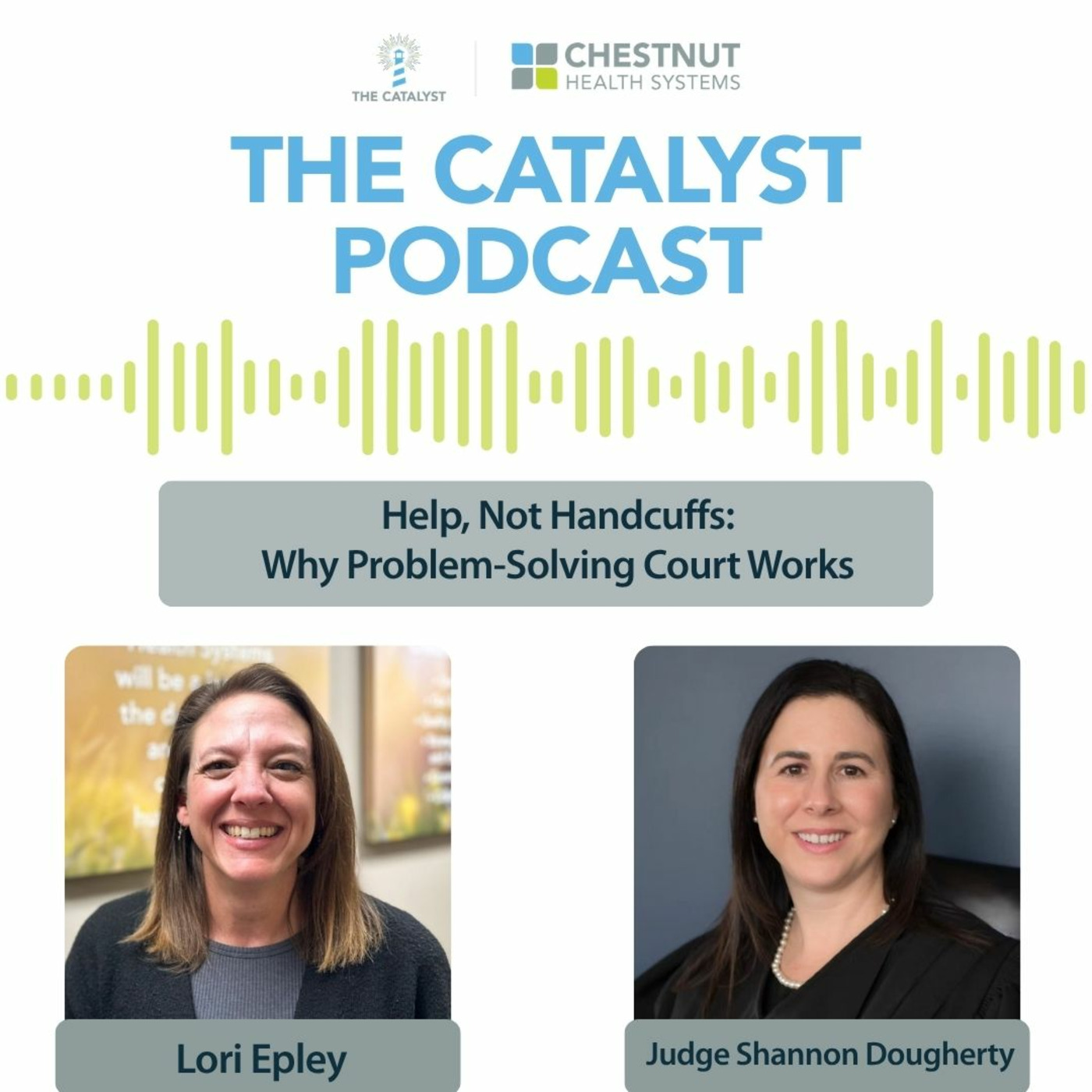
What if the smartest response to addiction, relapse, and repeat court involvement is not harsher punishment, but a highly structured path back to stability? The Honorable Shannon R. Dougherty, a Circuit Judge for Division 6 of the 23rd Judicial Circuit in Jefferson County, Missouri, and Lori Epley, the Director of Project Access at Chestnut Health Systems, break down how problem-solving courts are helping people stay in recovery, keep families together, and rebuild their lives while protecting public safety. Judge Dougherty explains how treatment courts work in practice: close monitoring, regular drug testing, team staffing, and individualized responses that mix accountability with support. Lori Epley, Director of Project Access at Chestnut Health Systems, shares how Chestnut's clinician and peer support specialists work alongside the court team to provide therapy, transportation help, resume support, and practical services that participants need to succeed. You'll discover: Why treatment courts are more demanding than many people assume How judges, probation, prosecutors, treatment providers, and case managers make decisions together What happens when a participant struggles or relapses Why employment, housing, credit repair, and transportation are often part of recovery How misinformation and stigma can block access to life-changing programs Our guests make the case for better education, stronger interagency collaboration, and a future treatment court center where participants can access multiple services in one place. If you care about criminal justice, substance use recovery, family stability, or practical solutions that actually change outcomes, this episode is essential listening.