Looking to lead, grow, and stay ahead in the global chemical industry?The Chemical Show is the #1 business podcast for the chemical industry, bringing you leadership insights, business strategies, industry trends, and real-world lessons from the executives shaping the business of chemicals.Each week, host Victoria King Meyer sits down with leaders from across the chemical industry, from Fortune 50 companies to mid-sized businesses and innovative startups. You’ll hear how they’re navigating today’s challenges and opportunities, the experiences that shaped their leadership, and the insights you can apply to your own business and career.Conversations explore the issues that matter to chemical industry leaders, including:• Business strategy and growth• Leadership and talent• Innovation and technology• AI and digital transformation• Supply chain and operational resilience• Markets, customers, and industry trendsVictoria brings more than 25 years of chemical industry experienc
Pitch Analysis
Required Pod Score for this show. PitchCentric checks your profile against host openness, topical fit, and audience signals before you generate a pitch.
Contact path
Verified email
Booking probability
37%
Guest openness
Selective
Verified email on file
80/100
Required Score
Sign up to generate a grounded pitch for The Chemical Show: Leadership Conversations on Strategy, Supply Chain, Innovation, Talent and Trends.
What is The Chemical Show: Leadership Conversations on Strategy, Supply Chain, Innovation, Talent and Trends?
The Chemical Show: Leadership Conversations on Strategy, Supply Chain, Innovation, Talent and Trends is a business podcast hosted by Victoria King Meyer, with 283 episodes on record and a Required Pod Score of 80.
About the host
Victoria King Meyer hosts The Chemical Show: Leadership Conversations on Strategy, Supply Chain, Innovation, Talent and Trends, a business show with 283 episodes published.
Our AI reads these to draft pitches. Use them as grounding for a pitch that cites a real guest and a specific topic.
Episode #283
MARKETS: How Hyperscaling and Data Centers Influence Chemical Demand and Innovation with Jan Kalfus of S&P Global - Ep. 283
Sep 29, 202627 min
Jan Kalfus , Head of Americas Chemical Advisory at S&P Global Energy , joins Victoria Meyer for a fast-paced exploration of how AI and data center growth are reshaping the chemical industry. Starting with Jan’s personal journey, the conversation connects industry fundamentals with today’s high stakes shifts in AI, digital infrastructure, and supply chains. They dig into why demand from data centers is spurring real, but nuanced, changes on both the commodity and specialty sides, why much of the action (and opportunity) in specialized materials is still outside the US, and how regulatory constraints and value chain complexity make reshoring tough. The discussion then looks ahead: What does AI really mean for chemical leadership? How are industry roles and university connections evolving as automation advances? Victoria and Jan discuss the following : How data center and AI growth is fueling complex, uneven demand for chemicals. The real challenges behind US specialty chemical competitiveness and reshoring. Modernization, regulation, and why many intermediates left North America. R&D, innovation, and the shifting role of universities in the chemical sector. What “agentic AI” could mean for future chemical businesses and leaders. Human context, divergent thinking, and why people still matter for competitive edge. Killer Quote: " I always say it kind of to be a little bit provocative, but I think there's a lot of truth behind it, is that the AI will turn out to be the best CEO, the best engineer, the best manager, and the best scientist. It may not be one AI. We may have different agents with different capabilities and different sort of learning profile. But that's where we are going. " — Jan Kalfus
INSIGHT: Chemical Industry Paradox: Is Bigger Still Better - Ep. 282
Sep 22, 202620 min
Victoria Meyer returns solo to examine a pivotal question for chemical industry leaders: Does bigger still mean better when it comes to company and asset scale? With restructuring, capacity additions, persistent margin pressure, and changing global dynamics reshaping the industry, Victoria challenges longstanding assumptions about economies of scale and explores whether "economies of fit" are more relevant for the industry’s future. She draws on recent trends in prices, asset closures, geographic investment shifts, and customer preference changes to invite business leaders to reconsider how advantage is created and what to prioritize as you position for the next 20 years, not just the next cycle. Key topics Victoria covers: The Pricing Paradox: Rising chemical prices alongside squeezed margins and ongoing overcapacity issues. Do We Have the Right Capacity? Exploration of global utilization trends, China’s continued build-out, and the drivers behind new investment decisions. Rethinking Asset Lifecycles: Why asset retirements in Europe tell a bigger story about geographic shifts and changing demand patterns. Is Bigger Still Better? Direct examination of scale economics versus the need for flexible, locally optimized assets and supply chains. The Shift from Scale to Fit: How customer needs, regionalization, and the demand for supply security are changing asset and investment strategies. What This Means for Leaders: The challenge of aligning engineering, operations, and capital markets around new models of “fit” over traditional “scale.” Killer Quote: “ The industry that we need to build today and reshape today for the next 20 years is going to look very different than the one that we've built over the last 20, 30, 40 years. ” – Victoria Meyer More Links: The Chemical Summit
CEO: How Executive Orders are Reshaping Chemical Imports and Compliance with Noushin Shamsili of NUCO Logistics - Ep. 281
Sep 15, 202636 min
New executive orders and tougher enforcement are raising the stakes for trade compliance in the chemical industry. Victoria Meyer sits down with Noushin Shamsili , CEO of NUCO Logistics , to clarify what leaders need to know about customs, importer responsibilities, and real-time compliance demands. They outline how assigning ownership of trade compliance, strengthening internal processes, and leveraging systems like CAPE for tariff refunds can protect your business. This episode highlights the true risks of non-compliance and offers practical guidance for leaders navigating the shifting landscape of global supply chains. Victoria and Noushin discuss : How NUCO Logistics pioneered chemical-specific freight forwarding and customs brokerage. The difference between customs clearance and full-spectrum trade compliance. Understanding the new Executive Order 14411: stricter requirements, physical presence, and increased accountability for importers of record. Why compliance is a company-wide responsibility spanning purchasing, logistics, regulatory, finance, and executive leadership. The essentials every chemical importer must address: HTS codes, country of origin, valuation, recordkeeping, and post-entry audits. Tariffs and what’s changed, how to ensure you recover eligible duties, and common pitfalls. Practical steps to strengthen compliance culture and safeguard your license to operate. Killer Quote : “ Importing into the country is not a right, it is a privilege that has been given to every importer. ” — Noushin Shamsili More Links: Episode 248 - What’s Ahead for Marine Logistics in 2026 with Noushin Shamsili of NUCO Logistics Episode 64 - Innovative Logistic Solutions With Noushin Shamsili Of NUCO Logistics Episode 12 - How NUCO Logistics Pivoted During The Pandemic With Noushin Shamsili
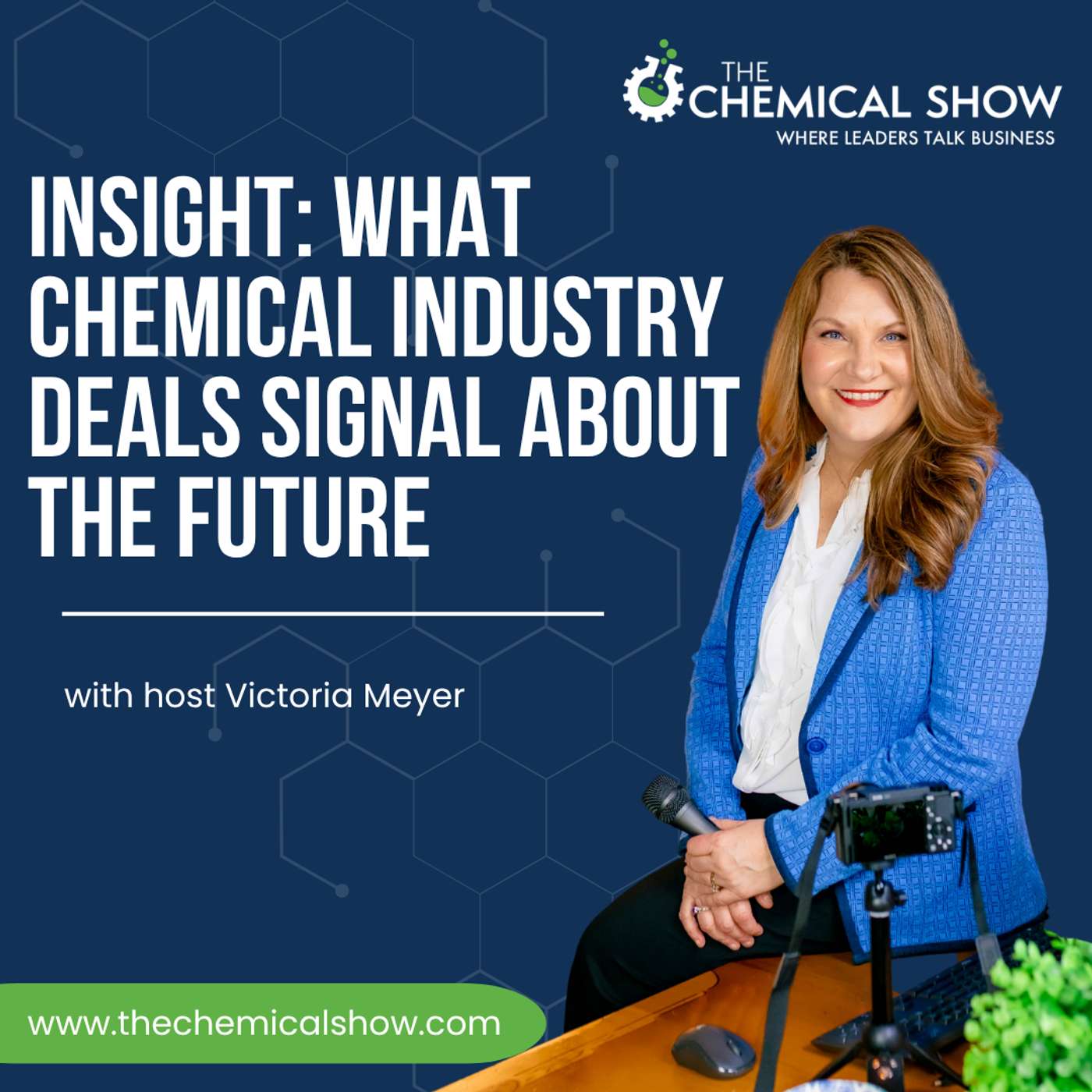
INSIGHT: What Chemical Industry Deals Signal About the Future
Sep 8, 202614 min
Industry headlines are driving strategic shifts in the chemical sector, and Victoria Meyer gives her candid perspective on what these major moves really mean for industry leaders and decision makers. This episode puts a spotlight on recent deals and boardroom decisions involving Shell, Olin, Huntsman, Solstice Advanced Materials, and H.B. Fuller. From Shell’s planned chemical asset sale to the Olin-Huntsman merger of equals, Victoria unpacks key questions: Is this a broader trend or company-specific? How does M&A activity impact value chains, partner relationships, and competitive dynamics? What does it signal about the future shape of the chemical industry? Victoria discusses: Shell’s $8B US chemical asset sale and why Exxon, LyondellBasell, and investors are circling. H.B. Fuller’s board rejecting a proposal from activist investor Ancora and why value creation looks different from the inside versus the outside. Why Solstice and Element Solutions called off a $14.5B merger, insight into what “better alone than together” means in practice. The Olin and Huntsman “merger of equals” and what’s behind their conviction that the whole is greater than the sum of the parts. Broader market trends: Portfolio reshaping, supply chain considerations in deal-making, and what leaders must do to position their companies for future advantage. Killer Quote : “ The whole point of reshaping advantage is that it’s not about fixing your business for today… it’s really looking ahead—for the future, 5 years, 10 years, 20 years out. ” – Victoria Meyer Article Links: Solstice, Element terminate $14.5 billion merger deal after shareholder feedback H.B. Fuller Board Unanimously Rejects Unsolicited Proposal from Ancora Shell draws Exxon interest in $8bn US chemical assets sale OLIN and HUNTSMAN Shareholders Approve Transformative Merger of Equals
Navigating Economic Shifts and Industry Trends with Martha Moore, Chief Economist at American Chemistry Council - Ep. 279
Sep 1, 202634 min
Chief Economist Martha Moore of the American Chemistry Council joins Victoria Meyer to unpack the latest economic realities and policy challenges shaping the chemical industry. Martha shares insight from ACC’s member surveys, discusses key drivers behind current market trends, and covers what’s keeping executives awake at night—from rising raw material costs to global trade uncertainty. This episode also covers the strategic importance of US manufacturing, the impact of legislation like TSCA , and how the industry is positioning for growth and innovation amid a shifting global landscape. Martha offers data-driven perspectives relevant to leaders needing to navigate volatility, build resilience, and influence both policy and boardrooms. Victoria and Martha discuss the following: Martha’s path from a STEM-focused upbringing to Chief Economist at ACC. The three pillars driving chemical demand: consumer spending, business investment, and exports. The sharp rise in raw materials and logistics costs for chemical manufacturers. What ACC’s members and sentiment surveys reveal about today’s top business challenges. The effect of international trade policy, tariffs, and China’s rising influence on the industry. Why innovation and reshoring US manufacturing are vital for future growth. Leadership lessons for executives: focus on agility, long-term strategy, and building resilience. Killer Quote : “ Chemistry is foundational to our economy, and being able to communicate that message is one of the top things we do. I try to help people make the connection between chemistry and the experiences they’re having in their everyday lives. ” —Martha Moore Other Links: The Chemical Summit
Recent guests on The Chemical Show: Leadership Conversations on Strategy, Supply Chain, Innovation, Talent and Trends. Study who booked and why before you pitch.
Every question we get asked before someone starts their trial.
If you have a concern about deliverability, AI quality, data privacy, or whether this will actually work for your specific situation, it's probably answered below.
What is the difference between Founder Solo and Founder Pro?
Founder Solo gives you 50 AI pitches per month using the credit model (Standard pitches cost 1 credit, Enriched pitches cost 2). Founder Pro raises that to 200 credits per month and adds full Booking Probability access, unlimited Magic Match, Apollo enrichment credits, and data export capabilities. Both plans use the same credit system, so you can stretch your monthly budget further by using Standard-mode drafting.
How do agency tiers work?
Agency tiers have no base fee. You pay per managed client and per talent profile. Agency Standard is $199 per client per month; Agency Pro is $399 per client per month. Both add $39 per talent profile per month. Your own team's user seats are always free.
What is a talent profile?
A talent profile represents one person (founder, executive, or spokesperson) you are booking onto podcasts. It includes their bio, topics, headshots, and outreach history. Team plans include 5 profiles; agency plans are pay-as-you-go.
Can I switch plans later?
Yes, at any time. Upgrades take effect immediately; downgrades apply at the end of the current billing period. Contact support if you need help migrating between plan families.
Do you offer a free trial?
Every paid plan includes a 15-day free trial. Your card is saved at signup but you will not be charged until day 16. Cancel any time from your dashboard.
What happens if I cancel?
You keep access until the end of your current billing period. No charges after that. Your data is retained for 30 days in case you reactivate.
Is the 20% annual discount automatic?
Yes. Select Annual on the pricing toggle and the discounted price is applied automatically at checkout. The annual price shown is the full year cost.
What if I have more than 50 profiles or 20 clients?
That is our Enterprise tier. Contact our sales team and we will build a custom plan with volume pricing, a dedicated account manager, and SLA guarantees.