
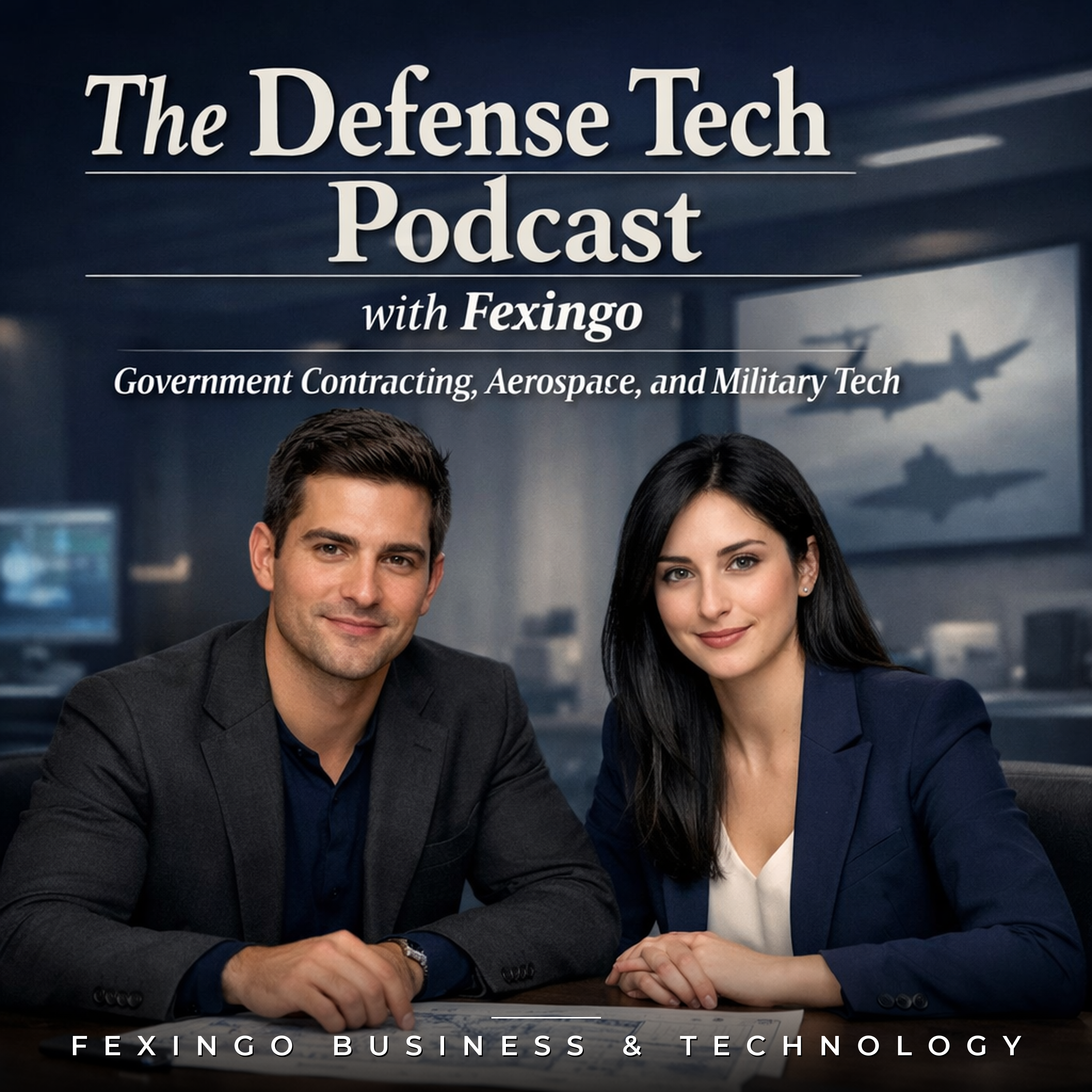
Defense contracting isn't just F-35s and carrier groups. Lucas and Luna break down the actual economics of military tech: how aerospace primes like Lockheed, RTX, and Northrop Grumman manage multi-year fixed-price development contracts, what the DoD’s new CMMC cybersecurity rules mean for small subcontractors, and why the Navy’s Columbia-class submarine program is a case study in industrial-base risk. Each episode starts with a real number — a contract award value, a quarterly P&L line from a defense prime, a Pentagon budget line item — and builds a conversation around it. Lucas, a former defense correspondent, brings the policy and accounting; Luna, a tech-market analyst, connects the programs to publicly traded supply chains and venture-backed startups trying to break into classified markets. No classified information, no defense-blog speculation — just the business logic behind the weapons systems you read about in the news. Why does a missile cost $4 million? How does a shipbuilder
Pitch Analysis
Required Pod Score for this show. PitchCentric checks your profile against host openness, topical fit, and audience signals before you generate a pitch.
Contact path
Verified email
Booking probability
35%
Guest openness
Selective
Verified email on file
80/100
Required Score
Sign up to generate a grounded pitch for The Defense Tech Podcast with Fexingo: Government Contracting, Aerospace, and Military Tech.
What is The Defense Tech Podcast with Fexingo: Government Contracting, Aerospace, and Military Tech?
The Defense Tech Podcast with Fexingo: Government Contracting, Aerospace, and Military Tech is a business podcast hosted by Fexingo, with 155 episodes on record and a Required Pod Score of 80. PitchCentric scores this show on Booking Probability, Listen Score, and live audience signals refreshed every 24 hours.
About the host
Fexingo hosts The Defense Tech Podcast with Fexingo: Government Contracting, Aerospace, and Military Tech, a business show with 155 episodes published.
Our AI reads these to draft pitches. Use them as grounding for a pitch that cites a real guest and a specific topic.
Episode #159
How the Pentagon Buys Drones Like a Subscription Service
Aug 18, 202611 minS4
The Pentagon is quietly shifting from buying drones one at a time to paying for them as a service. In this episode, Lucas and Luna break down the Replicator initiative's new approach, using the Navy's recent contract for autonomous surface vessels as the anchor. They explain how the Pentagon now buys drone swarms like a cloud subscription, what that means for traditional primes like Lockheed Martin and Northrop Grumman, and why the market is starting to price in a new model. With the S&P 500 down for a third day and defense names like RTX and NOC edging up, they examine whether this shift is a genuine transformation or just procurement theater. If you're tracking defense tech or the business of national security, this episode gives you a clear read on where the money is actually going. #PentagonProcurement #ReplicatorInitiative #DroneSwarm #AutonomousVessels #DefenseTech #SubscriptionModel #LockheedMartin #NorthropGrumman #RTX #Navy #MilitaryTechnology #GovernmentContracting #Aerospace #Business #Technology #FexingoBusiness #BusinessPodcast #DefensePodcast Keep every episode free: buymeacoffee.com/fexingo
How the Pentagon Buys Military Bases Like a Landlord
Aug 17, 202614 minS4
The Pentagon owns and leases hundreds of thousands of buildings across 4,500+ sites worldwide. This episode looks at how the Defense Logistics Agency handles facility maintenance and construction — a $20+ billion annual portfolio with landlord-style headaches: deferred maintenance, mold, and aging infrastructure. Lucas and Luna compare it to running a giant property management firm, touching on a recent L3Harris CEO ouster and the defense stock backdrop. They also discuss the military housing privatization model and why privatizing facilities can backfire, using a famous 2018 Reuters investigation into 'hazardous homes' as a cautionary tale. No ads, just analysis. #Pentagon #DefenseContracting #MilitaryBases #FacilitiesManagement #RealEstate #GovernmentContracting #DefenseLogistics #PublicPrivatePartnerships #L3Harris #MilitaryHousing #Infrastructure #Business #Technology #FexingoBusiness #BusinessPodcast #DefenseTech #Contracting #Military Keep every episode free: buymeacoffee.com/fexingo
How the Pentagon Buys Nuclear Subs Like a Shipyard
Aug 16, 20269 minS4
The U.S. Navy's Columbia-class ballistic missile submarine program is the Pentagon's biggest single shipbuilding effort — and it's a masterclass in how the military manages a decades-long, high-stakes build. In this episode of The Defense Tech Podcast, Lucas and Luna break down the Columbia program's $132 billion price tag, the two-submarine-per-year production rhythm that keeps the industrial base alive, and the 'one ship, one yard' strategy that puts all eggs in one basket. They discuss the role of General Dynamics Electric Boat and Huntington Ingalls, the workforce challenge of hiring 10,000 new shipyard workers, and why the Navy is buying subs 'like a shipyard' — not like an assembly line. With reference to current stock moves and the latest news from the Pacific theater, this is a deep dive into the business of building the ultimate deterrent. #ColumbiaClass #NuclearSubmarines #ElectricBoat #HuntingtonIngalls #Shipbuilding #PentagonProcurement #DefenseContracting #Navy #Submarines #IndustrialBase #GeneralDynamics #HuntingtonIngalls #DefenseTech #Business #Technology #FexingoBusiness #BusinessPodcast #MilitaryTech Keep every episode free: buymeacoffee.com/fexingo
How the Pentagon Buys Cargo Planes Like a Fleet Manager
Aug 15, 20269 minS4
The Pentagon buys a lot of things, but cargo airlift is a special beast: planes that move troops, tanks, and pallets of supplies anywhere on Earth. In this episode, Lucas and Luna break down how the Air Force actually buys these aircraft, using a surprising comparison: it's less like buying a weapon and more like running a commercial airline fleet. They look at the recent decision to buy more C-130Js from Lockheed Martin, the ongoing debate over the C-17 versus commercial freighters, and how the Pentagon is now using data on flight hours and maintenance costs to decide what to buy next. With defense stocks like Lockheed and Northrop Grumman hovering near their highs, the hosts explain why the cargo program is a quiet but crucial piece of the budget, and how the Air Force's 'bake-off' approach — pitting contractors against each other in a sort of flight-hour competition — is changing the game. If you've ever wondered why the Air Force buys a plane that seems like a big flying box, this episode is for you. #PentagonProcurement #CargoAirlift #C130J #LockheedMartin #AirForceBudget #DefenseContracting #MilitaryLogistics #FleetManagement #AerialRefueling #AirliftModernization #DefenseAcquisition #Boeing #NorthropGrumman #Business #Technology #FexingoBusiness #BusinessPodcast #DefenseTech Keep every episode free: buymeacoffee.com/fexingo
In this episode of The Defense Tech Podcast, Lucas and Luna explore a less-covered corner of defense acquisition: battlefield medicine. They look at how the Pentagon buys trauma care and emergency medical technology, from tourniquets to AI-assisted triage. The conversation centers on a new $1.2 billion contract for next-generation field hospitals, sealed in late July 2026, and how it reflects a shift from treating injuries to preventing them. Lucas explains the 'golden hour' metric, the move toward compact, portable medical devices, and the challenge of getting cutting-edge tech into the hands of medics in contested logistics. They also touch on the market context, with Lockheed Martin up 0.9 percent over the week and Northrop Grumman up 1.4 percent, and what that says about the broader defense landscape. The episode closes on the future of autonomous evacuation and whether AI can truly save lives on the battlefield. #DefenseTech #Pentagon #BattlefieldMedicine #MilitaryMedical #TraumaCare #GoldenHour #FieldHospital #MedicalTechnology #AI #Triage #LockheedMartin #NorthropGrumman #Business #Technology #FexingoBusiness #BusinessPodcast #Defense #Aerospace Keep every episode free: buymeacoffee.com/fexingo
Every question we get asked before someone starts their trial.
If you have a concern about deliverability, AI quality, data privacy, or whether this will actually work for your specific situation, it's probably answered below.
What is the difference between Founder Solo and Founder Pro?
Founder Solo gives you 50 AI pitches per month using the credit model (Standard pitches cost 1 credit, Enriched pitches cost 2). Founder Pro raises that to 200 credits per month and adds full Booking Probability access, unlimited Magic Match, Apollo enrichment credits, and data export capabilities. Both plans use the same credit system, so you can stretch your monthly budget further by using Standard-mode drafting.
How do agency tiers work?
Agency tiers have no base fee. You pay per managed client and per talent profile. Agency Standard is $199 per client per month; Agency Pro is $399 per client per month. Both add $39 per talent profile per month. Your own team's user seats are always free.
What is a talent profile?
A talent profile represents one person (founder, executive, or spokesperson) you are booking onto podcasts. It includes their bio, topics, headshots, and outreach history. Team plans include 5 profiles; agency plans are pay-as-you-go.
Can I switch plans later?
Yes, at any time. Upgrades take effect immediately; downgrades apply at the end of the current billing period. Contact support if you need help migrating between plan families.
Do you offer a free trial?
Every paid plan includes a 15-day free trial. Your card is saved at signup but you will not be charged until day 16. Cancel any time from your dashboard.
What happens if I cancel?
You keep access until the end of your current billing period. No charges after that. Your data is retained for 30 days in case you reactivate.
Is the 20% annual discount automatic?
Yes. Select Annual on the pricing toggle and the discounted price is applied automatically at checkout. The annual price shown is the full year cost.
What if I have more than 50 profiles or 20 clients?
That is our Enterprise tier. Contact our sales team and we will build a custom plan with volume pricing, a dedicated account manager, and SLA guarantees.
