This audio collection of amazing short stories is taken from the Great Lakes region and the Tip of Michigan’s Thumb. We love Michigan's history, places to see, and things to do in Michigan. Each episode is taken from feature articles from Thumbwind.com and Michigan4you.com . So, as a podcast, you can enjoy them anytime and anywhere. So sit back, relax, and enjoy this week’s tale from the End of the Road in Michigan. Thank you for taking the time to listen to check out and listen to our little podcast. If you like this kind of tale, you are invited to subscribe. Search for The End Of The Road In Michigan from wherever you're listening. Please watch for and download next week’s episode and take a moment to give us a review. We cover #Michigan, #MichiganThumb, #PureMichigan #Thumbwind #Caseville, #PortAustin, #BadAxe, #GrindstoneCity, #HarborBeach, #Kindie, #Elkton, #BayPort, #Sebewaing, #Verona, #Pigeon and #PortHope
Pitch Analysis
Required Pod Score for this show. PitchCentric checks your profile against host openness, topical fit, and audience signals before you generate a pitch.
Contact path
Verified email
Booking probability
34%
Guest openness
Selective
Verified email on file
80/100
Required Score
Sign up to generate a grounded pitch for The End of the Road in Michigan.
The End of the Road in Michigan is a arts podcast hosted by Unknown Host, with 0 episodes on record and a Required Pod Score of 80. PitchCentric scores this show on Booking Probability, Listen Score, and live audience signals refreshed every 24 hours.
About the host
Unknown Host hosts The End of the Road in Michigan, a arts show with 0 episodes published.
Our AI reads these to draft pitches. Use them as grounding for a pitch that cites a real guest and a specific topic.
Episode #17
When Copper Went Quiet: Three Public Works Projects That Remade Keweenaw County
Aug 20, 202617 minS7
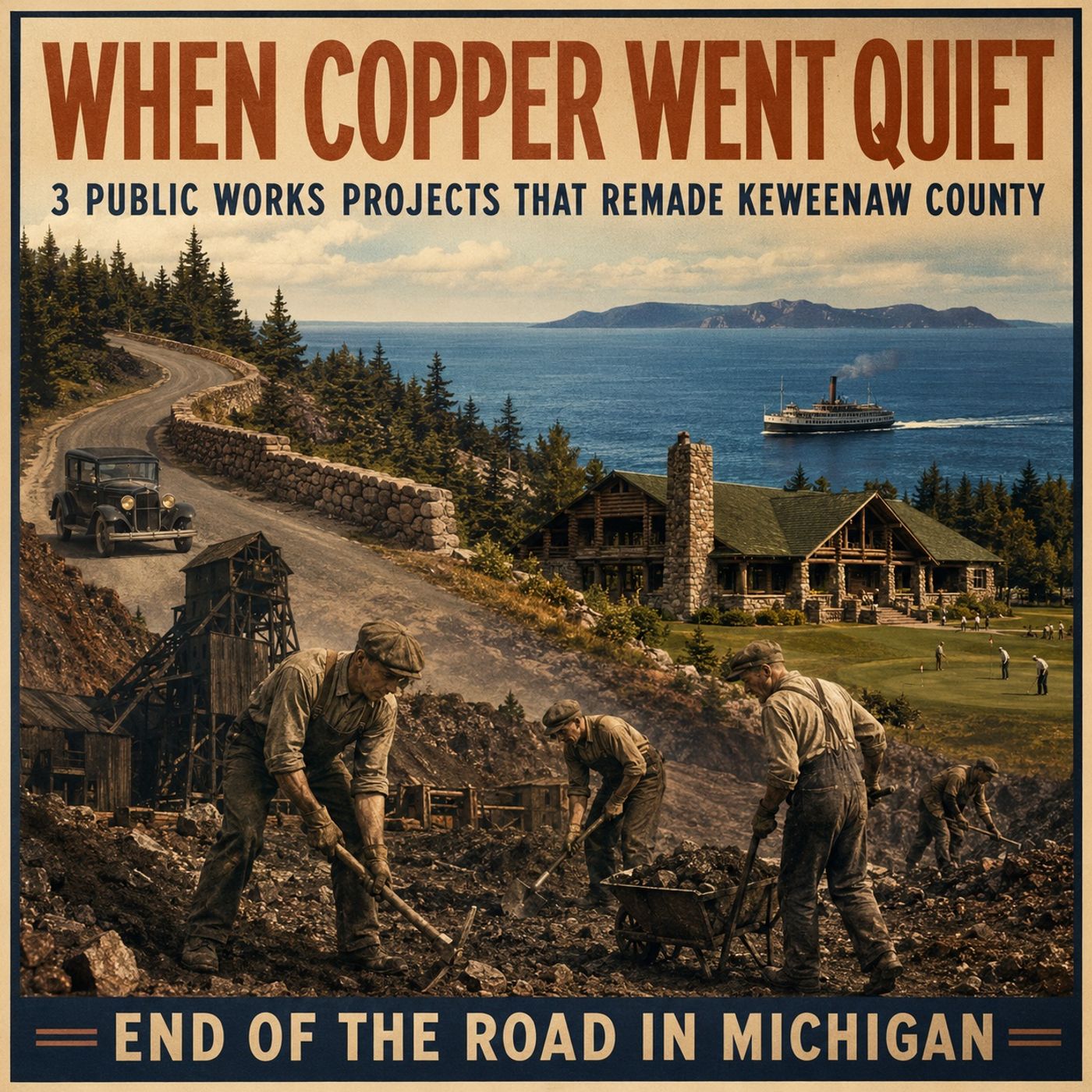
When copper mines closed during the Great Depression, more than three-quarters of Keweenaw County’s workforce was reportedly unemployed. Local and federal officials responded with three major public projects that helped create a new tourism economy at Michigan’s northern tip. This episode of End of the Road in Michigan examines the construction of Brockway Mountain Drive, Ocha Potter’s controversial Keweenaw Park and Golf Course, and the early development of Isle Royale National Park. Relief workers carved a road across Brockway Mountain, cleared thousands of trees and stumps for a publicly owned resort, and built early visitor facilities on Isle Royale. Critics dismissed Potter’s golf course as “Potter’s Folly,” but the lodge, road and national park remain important Keweenaw attractions more than 90 years later. These projects did not replace the copper industry or end the region’s hardship. They did, however, provide wages, build lasting public facilities and help establish Copper Harbor as a major Michigan vacation destination. #MichiganHistory #KeweenawPeninsula #CopperHarbor #IsleRoyale #GreatDepression The End of the Road in Michigan is a production of Thumbwind Publications This episode includes AI-generated content.
Buried Alive: Michigan's Deadliest Mine Disaster | The Barnes-Hecker Mine Collapse of 1926
Aug 5, 202620 minS7
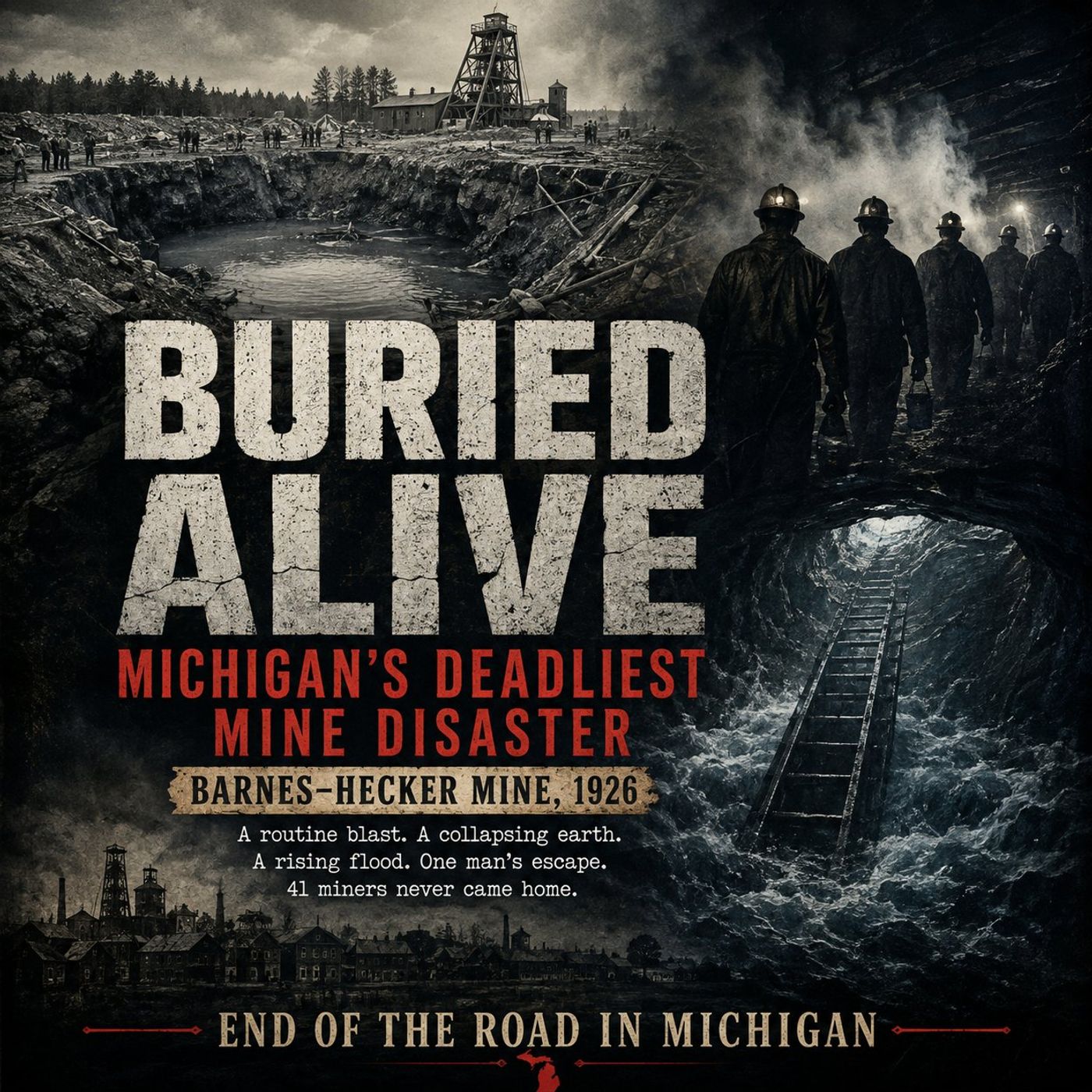
On a cold November morning in 1926, fifty-one miners descended into the Barnes-Hecker Mine near Ishpeming expecting another ordinary shift. Minutes later, a violent collapse sent water, mud, and thousands of tons of earth crashing into the underground workings. Only one miner escaped. Forty-one men were never recovered and remain buried beneath Michigan's Upper Peninsula nearly a century later. In this episode of End of the Road in Michigan, we reconstruct the disaster minute by minute using historical records, eyewitness accounts, and modern research. You'll hear the remarkable story of Wilfred Wills, the lone survivor who climbed nearly 800 feet to safety, the families who waited at the mine entrance for news that never came and the questions that still surround Michigan's deadliest mining disaster. This is more than the story of a mine collapse. It is a story about courage, sacrifice, and a community forever changed by one of the worst industrial tragedies in American history. Join us as we remember the fifty-one men of the Barnes-Hecker Mine. The End of the Road in Michigan is a production of Thumbwind Publications
The Train That Fled Into the Fire: The Metz Disaster of 1908
Aug 1, 202614 minS7
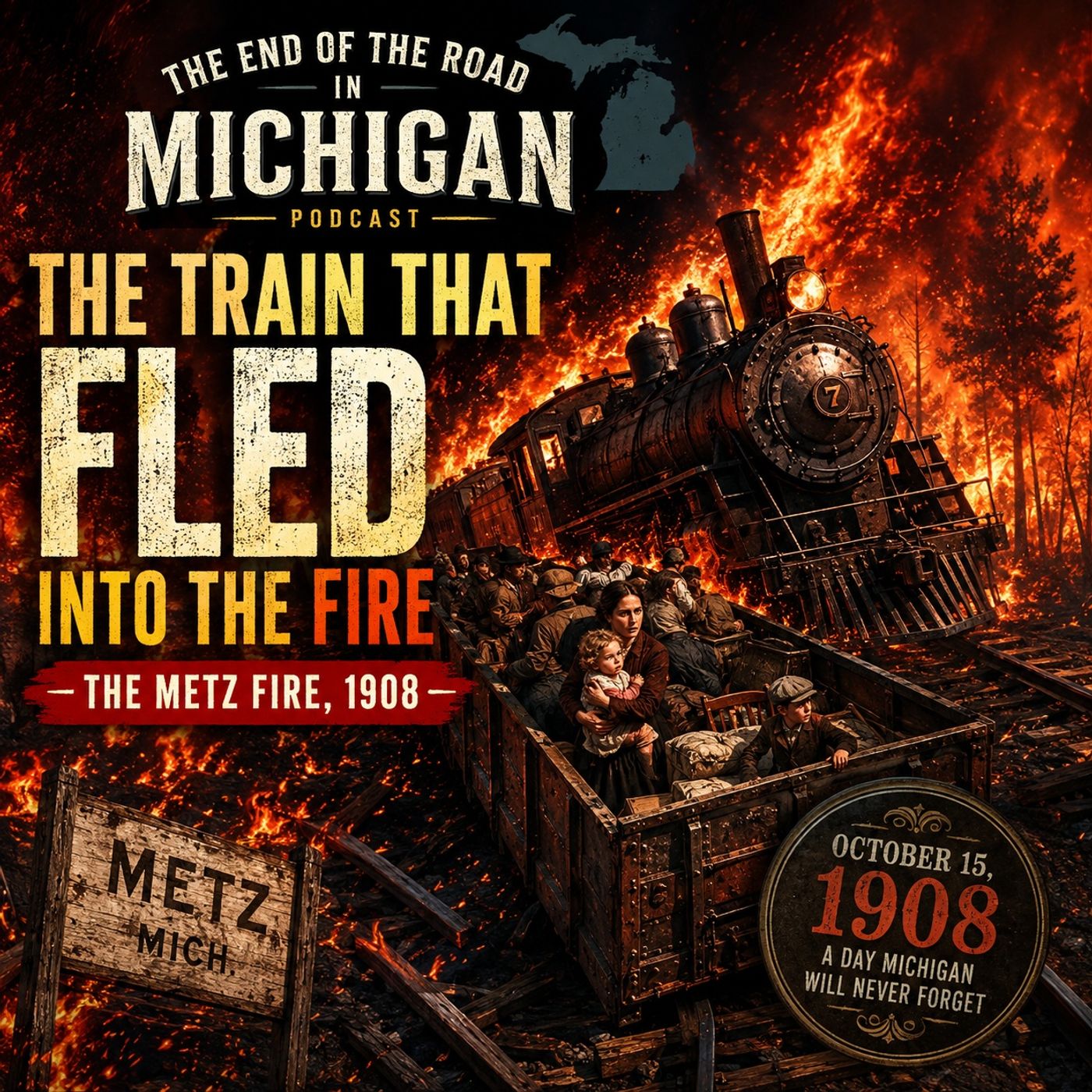
On Oct. 15, 1908, a freight train pulled away from Metz, Michigan, carrying families trying to escape one of the worst forest fires in state history. The passengers believed the railroad would carry them to safety. Instead, the train entered a burning corridor lined with cedar posts, railroad ties, hemlock bark and timber. Heat had damaged the tracks, and the locomotive derailed near Nowicki’s Siding. The open freight cars behind it became a deadly trap. In this episode of The End of the Road in Michigan, we revisit the Metz Fire of 1908, the doomed relief train and the families caught between flames on both sides of the track. The story includes the desperate evacuation, the survivors who crawled through smoke and burning ground, and the residents who stayed behind and lived. The fire killed 37 people across Presque Isle County, destroyed much of Metz and left hundreds without homes as winter approached. It also exposed the dangers created by logging waste, drought and the lack of organized emergency planning in early 20th-century Michigan. This is the story of a village built by the railroad—and the night that railroad carried its people into the fire. The End of the Road in Michigan is a production of Thumbwind Publications This episode includes AI-generated content.
The Good Hart Murders: A Family, a Cottage and a Killer Who Walked Away
Jul 31, 202614 minS7
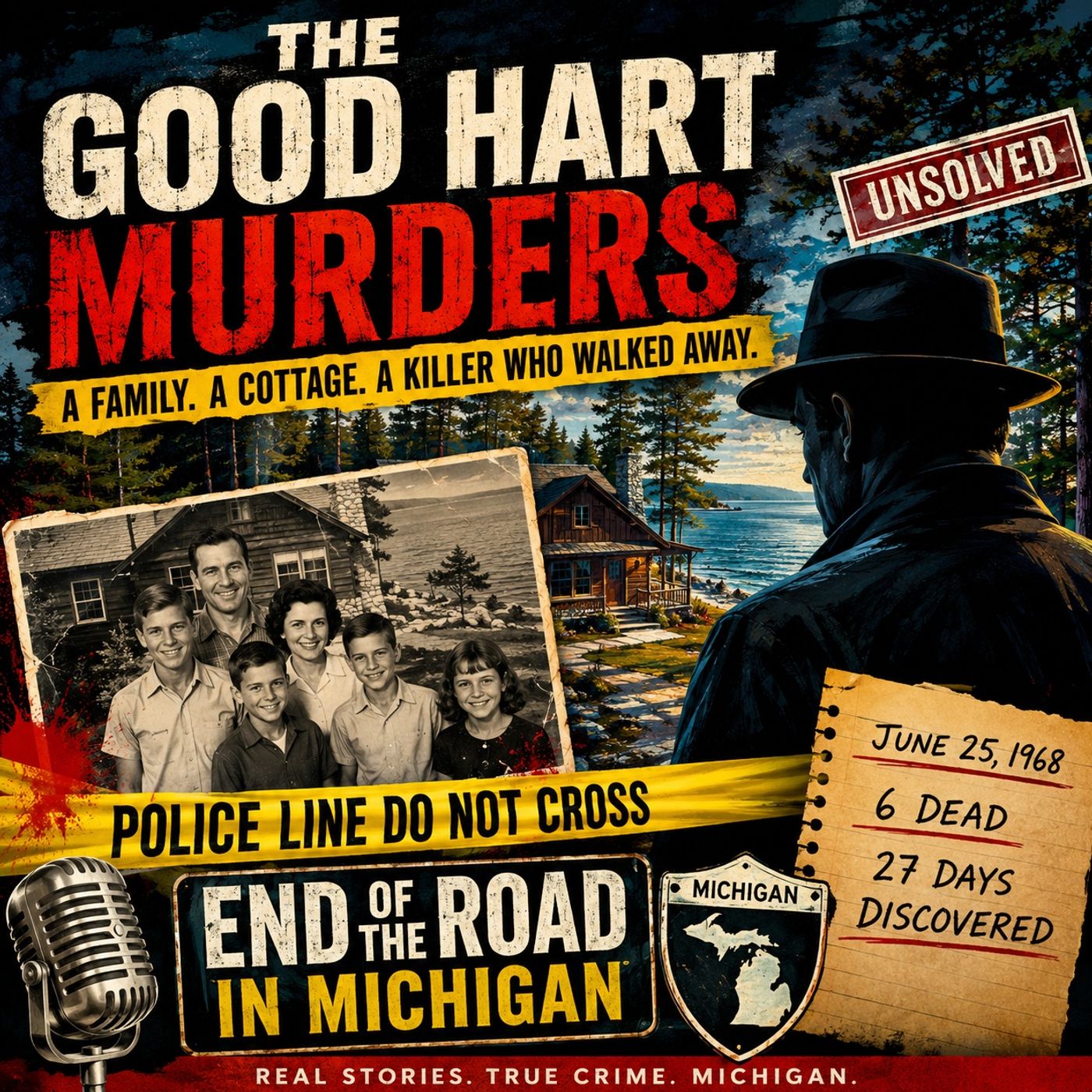
In June 1968, Richard and Shirley Robison took their four children to the family’s secluded summer cottage near Good Hart, Michigan. Twenty-seven days later, a caretaker entered the locked home and found all six members of the family dead. Investigators built a strong circumstantial case against Richard’s employee, Joseph Scolaro, pointing to missing business funds, an unexplained gap in his movements and links to weapons connected to the crime. But prosecutors never brought the case to trial, and Scolaro died before a jury could hear the evidence. In this episode of End of the Road in Michigan, we examine the crime scene, the delayed discovery, the prime suspect and the question that still divides investigators and true-crime researchers: Was the Good Hart case solved in everything but a courtroom? The End of the Road in Michigan is a production of Thumbwind Publications This episode includes AI-generated content.
38 Hours on Lake Huron: The Last Man of the Daniel J. Morrell
Jul 28, 202615 minS7
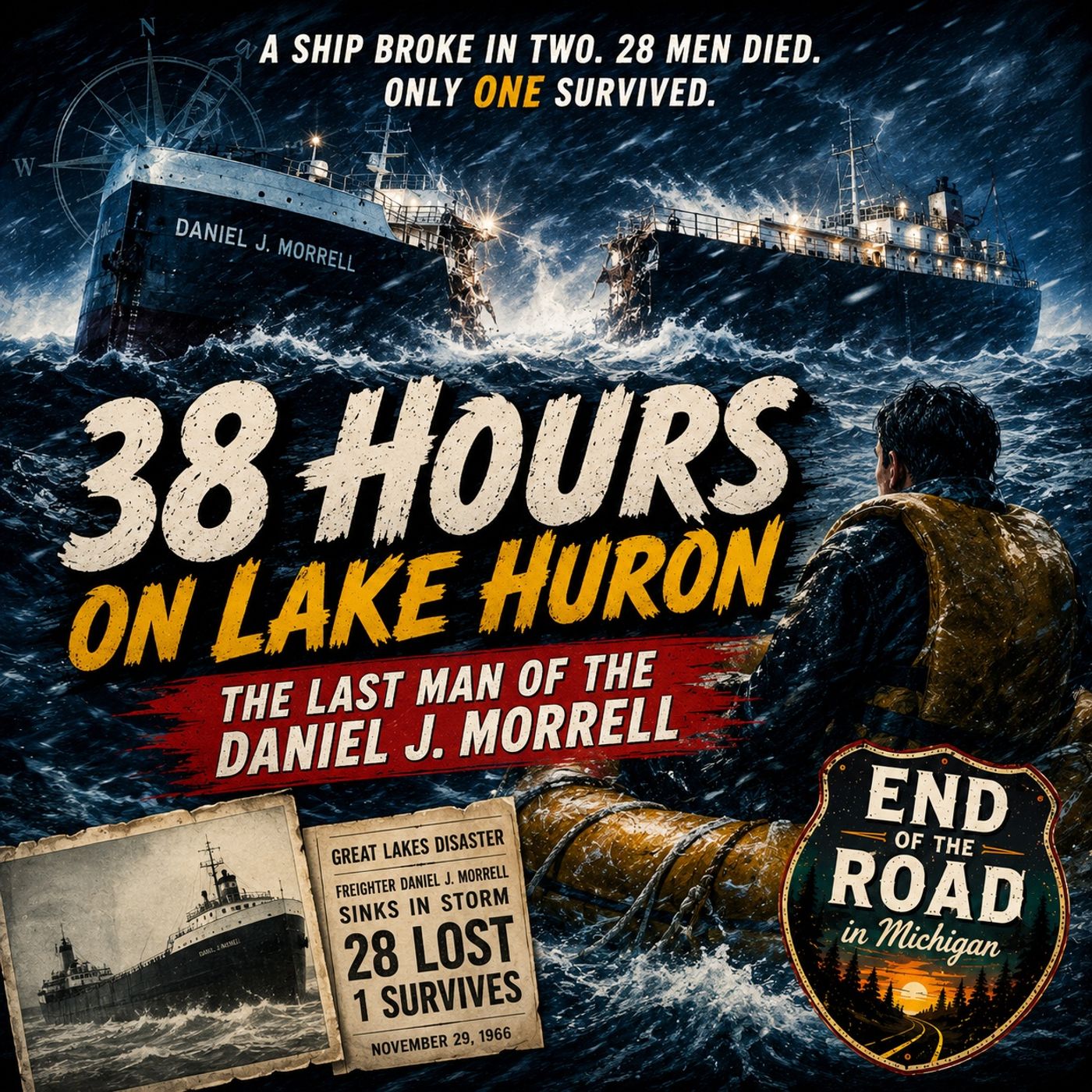
Before dawn on Nov. 29, 1966, the Great Lakes freighter Daniel J. Morrell broke in two during a violent storm on Lake Huron. Twenty-nine men were aboard. Only one came home. Watchman Dennis Hale escaped onto a life raft with three crewmates. One by one, the other men died from exposure as the raft drifted through freezing spray, towering waves and two nights of darkness. Hale remained alone for 38 hours before a Coast Guard helicopter spotted movement on what appeared to be a raft carrying four bodies. In this episode of End of the Road in Michigan, we follow the Morrell’s final voyage, the terrifying sight of its powered stern racing through the storm, the delayed search and the remarkable survival of the man who lifted one arm toward the sky. The End of the Road in Michigan is a production of Thumbwind Publications This episode includes AI-generated content.
Every question we get asked before someone starts their trial.
If you have a concern about deliverability, AI quality, data privacy, or whether this will actually work for your specific situation, it's probably answered below.
What is the difference between Founder Solo and Founder Pro?
Founder Solo gives you 50 AI pitches per month using the credit model (Standard pitches cost 1 credit, Enriched pitches cost 2). Founder Pro raises that to 200 credits per month and adds full Booking Probability access, unlimited Magic Match, Apollo enrichment credits, and data export capabilities. Both plans use the same credit system, so you can stretch your monthly budget further by using Standard-mode drafting.
How do agency tiers work?
Agency tiers have no base fee. You pay per managed client and per talent profile. Agency Standard is $199 per client per month; Agency Pro is $399 per client per month. Both add $39 per talent profile per month. Your own team's user seats are always free.
What is a talent profile?
A talent profile represents one person (founder, executive, or spokesperson) you are booking onto podcasts. It includes their bio, topics, headshots, and outreach history. Team plans include 5 profiles; agency plans are pay-as-you-go.
Can I switch plans later?
Yes, at any time. Upgrades take effect immediately; downgrades apply at the end of the current billing period. Contact support if you need help migrating between plan families.
Do you offer a free trial?
Every paid plan includes a 15-day free trial. Your card is saved at signup but you will not be charged until day 16. Cancel any time from your dashboard.
What happens if I cancel?
You keep access until the end of your current billing period. No charges after that. Your data is retained for 30 days in case you reactivate.
Is the 20% annual discount automatic?
Yes. Select Annual on the pricing toggle and the discounted price is applied automatically at checkout. The annual price shown is the full year cost.
What if I have more than 50 profiles or 20 clients?
That is our Enterprise tier. Contact our sales team and we will build a custom plan with volume pricing, a dedicated account manager, and SLA guarantees.