Marketers of Technology
Why Collective disqualifies forty percent of its own applicants | Nick Knight
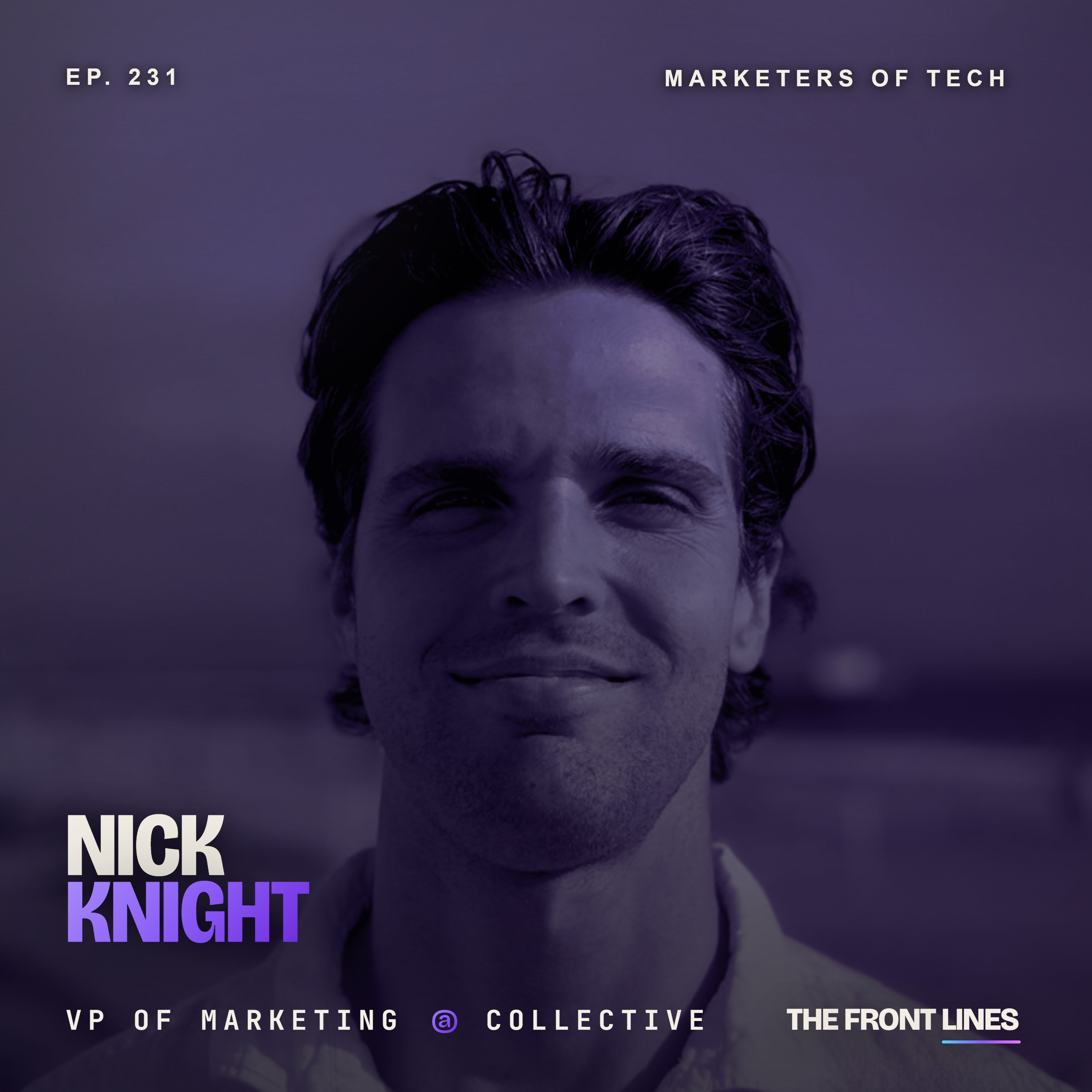
Collective is the first all-in-one financial platform designed to give self-employed entrepreneurs the technology and team they need so they can stop focusing on the paperwork behind their business. In a recent episode of Marketers of Technology, we sat down with Nick Knight , VP of Sales and Marketing at Collective , to learn why member referrals still beat every paid channel, and why Collective turns away forty percent of the people who apply. Topics Discussed: How a growth marketing career at an agency built on quantitative, hypothesis-driven testing led Nick to Collective's earliest days Why Collective serves exclusively "businesses of one," single founder, service-based companies across 256 different professions The three different onboarding paths a solopreneur takes into Collective's back-office platform Why member referral is still Collective's most important channel for both acquisition and retention Why referral moves inside professional micro-communities rather than across the market at large Why Collective deliberately disqualifies forty percent of the people who apply for membership How AI lets Collective give thousands of daily prospects a Fortune 500-level personalized experience Why Nick's team keeps tearing down and rebuilding its internal AI workflows as models improve GTM & Technology Adoption Lessons: Treat referral as a compounding growth loop, not a one-time channel: Nick said member referrals remain Collective's most important channel for both acquisition and retention, because members who refer others are already satisfied, and the people they refer are themselves more likely to refer again, creating a self-reinforcing loop. Recognize that referral clusters inside professional micro-communities: Nick said referral doesn't move randomly across the market, it travels inside vertical networks: real estate agents refer other real estate agents, and wedding photographers, planners, and florists cross-refer each other. Collective's growth motion leans into those existing professional relationships instead of treating its market as one undifferentiated audience. Disqualify the wrong-fit leads on purpose, even at real cost: Collective turns away roughly forty percent of the people who apply for membership because the platform isn't the right fit for their business. Nick treats this as equally important as scaling the go-to-market motion, since reaching the right people matters as much as reaching more people. Use AI to give every prospect a Fortune 500-level personalized experience at scale: Nick's stated philosophy is that a solopreneur entering Collective's funnel should feel treated the way a Fortune 500 CEO would entering a funnel like Salesforce's, with immediate, highly personalized attention rather than a generic automated email. Keep rebuilding AI workflows rather than treating any version as finished: Nick said Collective's team builds internal AI agents and then regularly tears them down and rebuilds them as underlying models improve, testing continuously and only keeping what the data proves works better than the previous version. Set a single hard number and let the roadmap be wrong along the way: Nick's concrete 2026 marketing goal is a forty percent improvement in conversion rate by December, without a fixed plan for how to get there. He described the process as testing quickly, getting proven wrong often, and iterating based on what customers actually do. // Sponsors: Front Lines — Silicon Valley's leading Podcast Production Studio. We help B2B tech companies launch, manage, and grow podcasts that drive demand, awareness, and thought leadership. Mention you are a listener and get a 10% discount. www.FrontLines.io/Podcast-as-a-Service