
In a time where healthcare and technology are deeply intertwined, understanding medical device cybersecurity is not just important—it's essential. Welcome to The Med Device Cyber Podcast, your go-to resource for understanding the complexities of this critical field of cyber security. As the definitive podcast on medical device security, we explore everything from identifying and mitigating vulnerabilities to navigating this ever-evolving regulatory landscape. Hosted by Christian Espinosa, Founder & CEO of Blue Goat Cyber, and Trevor Slattery, Director of Medical Device Cybersecurity, each episode features expert insights into the latest cybersecurity threats, innovative solutions, and best practices for protecting the medical devices that are at the heart of modern healthcare. Whether you're a healthcare provider, a device manufacturer, a cybersecurity professional, or just someone looking to learn about the importance of cybersecurity in human lives, this podcast empowers you with the knowledge and tools to ensure patient safety and secure the future of medical technology. This podcast is brought to you by Blue Goat Cyber, specializing in providing elite cybersecurity solutions.
Pitch Analysis
Required Pod Score for this show. PitchCentric checks your profile against host openness, topical fit, and audience signals before you generate a pitch.
Contact path
Verified email
Booking probability
33%
Guest openness
Selective
Verified email on file
80/100
Required Score
Sign up to generate a grounded pitch for The Med Device Cyber Podcast.
The Med Device Cyber Podcast is a health podcast hosted by Unknown Host, with 94 episodes on record and a Required Pod Score of 80. PitchCentric scores this show on Booking Probability, Listen Score, and live audience signals refreshed every 24 hours.
About the host
Unknown Host hosts The Med Device Cyber Podcast, a health show with 94 episodes published.
Our AI reads these to draft pitches. Use them as grounding for a pitch that cites a real guest and a specific topic.
Episode #81
The Hidden Barriers to Clinical Adoption with Amel Havkic | Ep 81
Aug 13, 202641 minS1
Why do so many promising MedTech companies fail even when the technology is strong, the funding is there and the product is compliant? In this episode of the Med Device Cyber Podcast, Christian Espinosa speaks with Amel Havkic, founder of VivoMed Consulting, about the hidden barriers that prevent medical technologies from achieving real clinical adoption. Amel explains why clinical adoption is often treated too late, how workflow friction can derail an otherwise strong product and why the founder’s greatest strength can sometimes become the company’s biggest strategic blind spot. The conversation also explores the KOL trap, the cost of forcing behavior change inside already overstretched clinical environments and why cybersecurity, reimbursement, usability and implementation cannot be treated as separate problems. In This Episode 01:08 Amel Havkic and VivoMed Consulting 02:41 Why 75% of MedTech companies fail 04:43 Clinical adoption, fundability and founder blind spots 07:23 Why one solution must satisfy many stakeholders 09:42 Economic viability and implementation friction 12:37 The hidden cost of changing clinical behaviour 15:43 The KOL trap and why pilots can mislead 18:46 Alarm fatigue and real-world clinical environments 20:46 Christian’s introduction to medical-device cybersecurity 23:04 Why cybersecurity deficiencies derail submissions 27:49 Building the right team around a MedTech founder 32:38 Authenticity, intuition and choosing the right partners 37:17 Why being human may become a superpower in the age of AI Check out Amel Havkic’s LinkedIn here . The Med Device Cyber Podcast is brought to you by Blue Goat Cyber, cybersecurity experts providing essential security solutions for the medical device industry. Learn more by visiting https://bluegoatcyber.com . If you’re interested in our services or partnering with us, schedule a Discovery Session: https://go.bluegoatcyber.com/meetings/blue-goat-cyber/discovery-session Christian Espinosa is the CEO and founder of Blue Goat Cyber. Christian Espinosa on LinkedIn: https://www.linkedin.com/in/christianespinosa/ Blue Goat Cyber on LinkedIn: https://www.linkedin.com/company/blue-goat-cyber/ Blue Goat Cyber on Instagram: https://www.instagram.com/bluegoatcyber/ Blue Goat Cyber on Facebook: https://www.facebook.com/bluegoatcyber/ Blue Goat Cyber on YouTube: https://www.youtube.com/@BlueGoatCyber/?sub_confirmation=1
Why Consumer AI Is Not a Medical Device with Tyler Harmon | Ep 80
Aug 6, 202644 minS1
AI is moving quickly, but medical devices cannot afford to treat every new model like an ordinary software update. In this episode of the Med Device Cyber Podcast, Christian Espinosa speaks with Tyler Harmon, CEO and co-founder of IASO Automated Medical Systems, about the risks and responsibilities surrounding AI as a medical device. Tyler explains why consumer tools such as ChatGPT and Claude should not be treated as clinical diagnostic systems, even when a doctor remains involved in the final decision. He also explores why a human in the loop does not automatically make an AI system safe when the underlying model was never designed or cleared for that medical use. The conversation examines how predetermined change control plans can support safer AI updates, why developers must understand the difference between frontier models and AI harnesses, and what can go wrong when a medical-device company builds on top of a third-party model. In This Episode 00:48 Tyler Harmon and IASO Automated Medical Systems 03:34 What qualifies as AI as a medical device? 04:44 Predetermined change control plans 06:08 When should an AI medical device be updated? 09:00 Why medical AI is not new 11:32 Why medical AI still needs human oversight 17:40 Doctors using ChatGPT to interpret X-rays 20:09 Frontier models and AI harnesses 24:16 The challenge of developing proprietary AI 29:21 Why medical AI can take years to reach the market 34:28 Using consumer LLMs outside their intended licence 39:25 Licensing third-party AI for medical-device use 40:41 Final lessons for medical-AI developers Check out Tyler Harmon’s LinkedIn here: https://www.linkedin.com/in/tyler-h-938bbb43/ The Med Device Cyber Podcast is brought to you by Blue Goat Cyber, cybersecurity experts providing essential security solutions for the medical device industry. Learn more by visiting https://bluegoatcyber.com . If you’re interested in our services or partnering with us, schedule a Discovery Session: https://go.bluegoatcyber.com/meetings/blue-goat-cyber/discovery-session Christian Espinosa is the CEO and founder of Blue Goat Cyber. Christian Espinosa on LinkedIn: https://www.linkedin.com/in/christianespinosa/ Blue Goat Cyber on LinkedIn: https://www.linkedin.com/company/blue-goat-cyber/ Blue Goat Cyber on Instagram: https://www.instagram.com/bluegoatcyber/ Blue Goat Cyber on Facebook: https://www.facebook.com/bluegoatcyber/ Blue Goat Cyber on YouTube: https://www.youtube.com/@BlueGoatCyber/?sub_confirmation=1
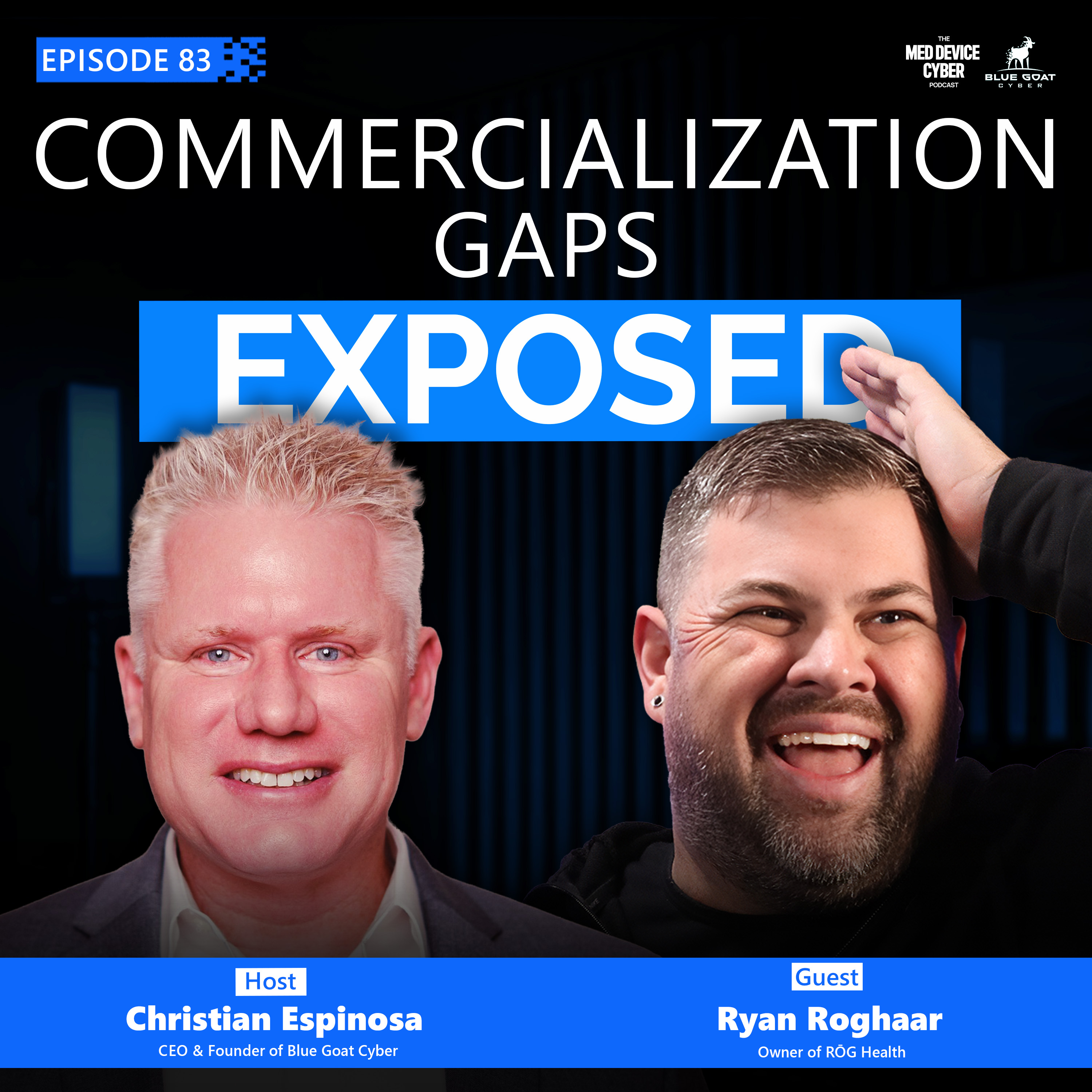
Why Technical Intelligence Is Not Enough with Samantha Silk | Ep 79
Jul 30, 202646 minS1
A strong résumé may get someone an interview, but technical ability alone does not determine whether they will succeed within an organization. In this episode of the Med Device Cyber Podcast, Christian Espinosa speaks with Samantha Silk, CEO of Apex Pro Placement, about recruitment, emotional intelligence, and the challenge of identifying the right people for highly technical roles. Samantha explains why an unfilled critical position can cost an organization thousands of dollars every day, when using a specialist recruiter makes financial sense, and why job descriptions often fail to reflect what the company actually needs. She discusses the importance of listening to hiring managers, setting realistic expectations and evaluating candidates beyond the qualifications listed on paper. The conversation explores why highly intelligent professionals sometimes struggle to explain complex ideas, how poor communication can limit careers and why emotional intelligence plays such an important role in leadership, investment and team performance. Christian and Samantha examine gut instinct in hiring, the risks of overriding warning signs, the growing volume of AI-generated recruitment noise and why human judgment remains essential when someone’s livelihood or a company’s future is at stake. In This Episode 00:57 Samantha’s path from cybersecurity recruiting to life sciences 04:07 When using an external recruiter makes sense 05:39 How an open critical role can cost up to $5,000 per day 09:41 Why effective hiring starts with listening to the client 11:57 Why most job descriptions fail to describe the real role 13:34 Emotional intelligence in recruitment and leadership 18:53 Why technical experts must communicate in simple language 21:24 Investor pressure and unethical recruitment practices 26:25 Using intuition and gut instinct when hiring 32:03 How constant screen use affects attention and connection 37:22 AI-generated résumés, recruitment noise and human oversight 39:58 What rock climbing teaches us about trust in cybersecurity 42:36 Final lessons on communication, EQ and technical careers 45:04 Christian’s vision for AI agents running a company 46:41 Why social engineering succeeds against hospitals 47:20 How AI is making phishing more personalized 48:21 Why AI is changing every part of business 49:25 Final lessons on curiosity, assumptions and friction Check out Samantha Silk’s LinkedIn here - https://www.linkedin.com/in/samanthawein/ The Med Device Cyber Podcast is brought to you by Blue Goat Cyber, cybersecurity experts providing essential security solutions for the medical device industry. Learn more by visiting https://bluegoatcyber.com . If you’re interested in our services or partnering with us, schedule a Discovery Session: https://go.bluegoatcyber.com/meetings/blue-goat-cyber/discovery-session Christian Espinosa is the CEO and founder of Blue Goat Cyber. Christian Espinosa on LinkedIn: https://www.linkedin.com/in/christianespinosa/ Blue Goat Cyber on LinkedIn: https://www.linkedin.com/company/blue-goat-cyber/ Blue Goat Cyber on Instagram: https://www.instagram.com/bluegoatcyber/ Blue Goat Cyber on Facebook: https://www.facebook.com/bluegoatcyber/ Blue Goat Cyber on YouTube: https://www.youtube.com/@BlueGoatCyber/?sub_confirmation=1
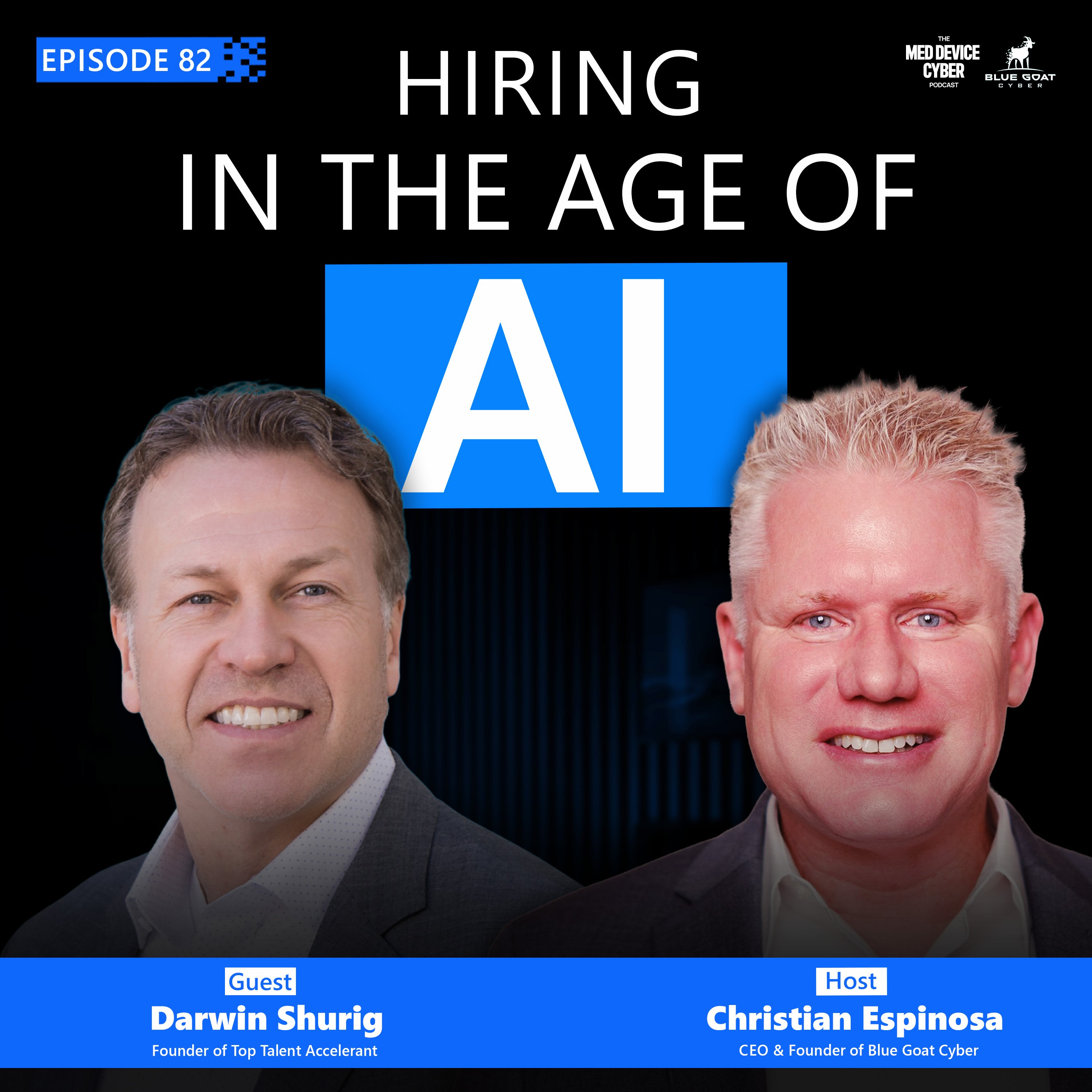
Productivity, Psychological Safety and AI with Sarah Ohanesian and Jeff Gibbard | Ep 78
Jul 23, 202652 minS1
Productivity means making meaningful progress on the work that matters most. Yet many organizations remain trapped in repetitive tasks, unclear priorities, unnecessary meetings and systems that rely too heavily on individual employees saving the day. In this episode of the Med Device Cyber Podcast, Christian Espinosa is joined by Sarah Ohanesian and Jeff Gibbard, co-founders of Super Productive, to explore how teams can reduce friction, improve communication and build working environments that support different kinds of brains. Sarah and Jeff share practical strategies organizations can implement immediately, including creating a universal system for capturing work, automating processes that have been repeated three times and building personal user guides that explain how individual team members communicate, focus and perform at their best. The conversation examines the hidden problems created by workplace “heroes,” employees who repeatedly step in to solve crises but may prevent the organization from building repeatable systems. Sarah explains why identity, recognition and job security can make delegation difficult, while Jeff discusses how psychological safety and curiosity can create more productive conversations. The episode explores neurodiversity in the workplace, the limitations of labels and why employees should be able to explain what they need without disclosing a diagnosis. During a special mic-swap segment, Sarah and Jeff question Christian about AI, social engineering and the changing future of cybersecurity. In This Episode: 00:52 What Super Productive does 02:24 The difference between being busy and being productive 03:39 Why focusing on one task creates momentum 04:33 Defining productivity as meaningful progress 05:13 Identifying the work that moves the needle 06:44 Jeff’s Hyperfocus task-scoring system 08:08 Creating a universal inbox for capturing work 08:47 Why anything repeated three times should be automated 09:07 Building a user guide for every team member 10:44 The productivity problem created by workplace heroes 11:41 Why some leaders struggle to delegate 13:47 Creating psychological safety through curiosity 17:16 Why productivity depends on communication 19:30 Using personal instruction manuals to improve teamwork 24:35 What neurodivergence means 25:21 Why different brains require different working environments 26:06 Neurodiversity versus neurodivergence 28:06 Why “normal” depends on the environment 30:47 Neurodivergence in cybersecurity and MedTech 31:26 Can emotional intelligence and social skills be learned? Learn more about Sarah Ohanesian, Jeff Gibbard and Super Productive at: https://getsuperproductive.com/ The Med Device Cyber Podcast is brought to you by Blue Goat Cyber, cybersecurity experts providing essential security solutions for the medical device industry. Learn more by visiting https://bluegoatcyber.com . If you’re interested in our services or partnering with us, schedule a Discovery Session: https://go.bluegoatcyber.com/meetings/blue-goat-cyber/discovery-session Christian Espinosa is the CEO and founder of Blue Goat Cyber. Christian Espinosa on LinkedIn: https://www.linkedin.com/in/christianespinosa/ Blue Goat Cyber on LinkedIn: https://www.linkedin.com/company/blue-goat-cyber/ Blue Goat Cyber on Instagram: https://www.instagram.com/bluegoatcyber/ Blue Goat Cyber on Facebook: https://www.facebook.com/bluegoatcyber/ Blue Goat Cyber on YouTube: https://www.youtube.com/@BlueGoatCyber/?sub_confirmation=1
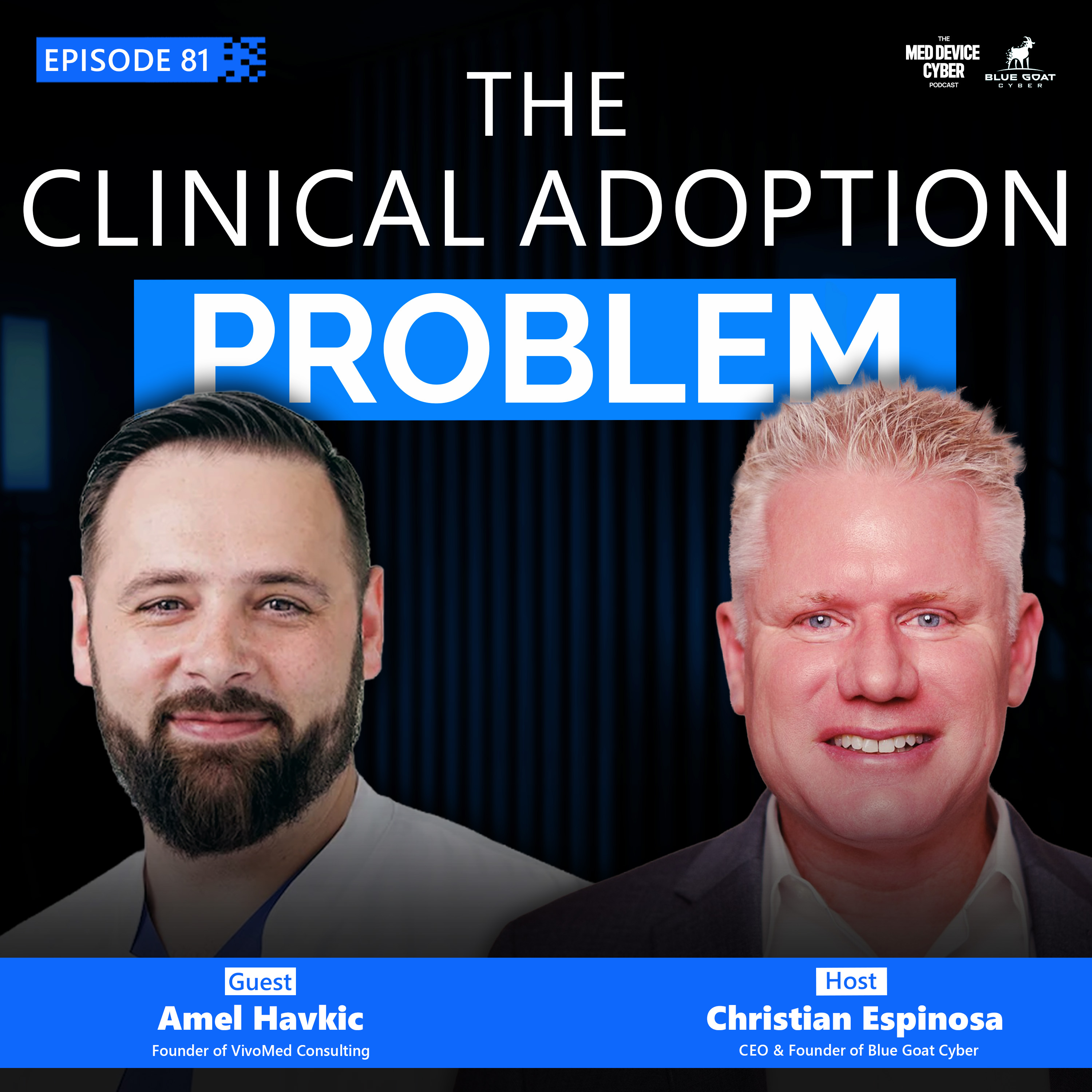
From Science Fiction to Visual Prosthesis with Frederik Ceyssens | Ep. 77
Jul 16, 202639 minS1
What if a blind person could use a pair of glasses where information is transmitted wirelessly to an implant in the visual cortex, allowing them to perceive shapes, movement, and elements of their surroundings? In this episode of the Med Device Cyber Podcast, Christian Espinosa speaks with Frederik Ceyssens, CEO and co-founder of ReVision Implant, about the development of a visual prosthesis designed to restore useful vision by stimulating the brain directly. Frederik explores why his team chose to bypass the eyes and optic nerve, how flexible electrode arrays can stimulate thousands of points within the visual cortex, and what researchers have learned through long-term animal studies. The conversation also explores the cybersecurity risks surrounding neurotechnology. An attacker could potentially interfere with wireless communication, alter the device’s algorithm, or increase stimulation to unsafe levels. The implant may also remain inside a patient for decades, creating difficult questions about encryption, software updates, and technologies that may become obsolete during the device’s lifetime. In This Episode: 00:38 Frederik’s background in neural implant research 02:31 Why ReVision Implant targets the visual cortex instead of the eye 04:26 Developing flexible brain electrodes through long-term testing 06:48 Raising €4 million to advance the technology 07:42 Preparing for the first proof of concept with a human volunteer 09:24 How the glasses and brain implant work together 11:04 What vision through the implant may look like 12:33 Why colour and depth perception remain difficult 16:16 The cybersecurity implications of a visual prosthesis 17:43 How an attacker could manipulate the device 20:25 The hardest parts of developing neurotechnology 22:42 How the implant was tested using monkeys 26:12 Designing an implant that can last 15 to 25 years 28:28 Why today’s encryption may not remain secure for decades 30:16 Why replacing the implant would require months of rehabilitation 34:51 How close the technology is to science fiction 36:07 The next steps towards testing with blind volunteers Find Frederik Ceyssens on Linkedin: https://www.linkedin.com/in/frederikceyssens/ Find ReVision Implant at: https://revisionimplant.com The Med Device Cyber Podcast is brought to you by Blue Goat Cyber, cybersecurity experts providing essential security solutions for the medical device industry. Learn more by visiting https://bluegoatcyber.com . If you’re interested in our services or partnering with us, schedule a Discovery Session: https://go.bluegoatcyber.com/meetings/blue-goat-cyber/discovery-session Christian Espinosa is the CEO and founder of Blue Goat Cyber. Christian Espinosa on LinkedIn: https://www.linkedin.com/in/christianespinosa/ Blue Goat Cyber on LinkedIn: https://www.linkedin.com/company/blue-goat-cyber/ Blue Goat Cyber on Instagram: https://www.instagram.com/bluegoatcyber/ Blue Goat Cyber on Facebook: https://www.facebook.com/bluegoatcyber/ Blue Goat Cyber on YouTube: https://www.youtube.com/@BlueGoatCyber/?sub_confirmation=1

Every question we get asked before someone starts their trial.
If you have a concern about deliverability, AI quality, data privacy, or whether this will actually work for your specific situation, it's probably answered below.
What is the difference between Founder Solo and Founder Pro?
Founder Solo gives you 50 AI pitches per month using the credit model (Standard pitches cost 1 credit, Enriched pitches cost 2). Founder Pro raises that to 200 credits per month and adds full Booking Probability access, unlimited Magic Match, Apollo enrichment credits, and data export capabilities. Both plans use the same credit system, so you can stretch your monthly budget further by using Standard-mode drafting.
How do agency tiers work?
Agency tiers have no base fee. You pay per managed client and per talent profile. Agency Standard is $199 per client per month; Agency Pro is $399 per client per month. Both add $39 per talent profile per month. Your own team's user seats are always free.
What is a talent profile?
A talent profile represents one person (founder, executive, or spokesperson) you are booking onto podcasts. It includes their bio, topics, headshots, and outreach history. Team plans include 5 profiles; agency plans are pay-as-you-go.
Can I switch plans later?
Yes, at any time. Upgrades take effect immediately; downgrades apply at the end of the current billing period. Contact support if you need help migrating between plan families.
Do you offer a free trial?
Every paid plan includes a 15-day free trial. Your card is saved at signup but you will not be charged until day 16. Cancel any time from your dashboard.
What happens if I cancel?
You keep access until the end of your current billing period. No charges after that. Your data is retained for 30 days in case you reactivate.
Is the 20% annual discount automatic?
Yes. Select Annual on the pricing toggle and the discounted price is applied automatically at checkout. The annual price shown is the full year cost.
What if I have more than 50 profiles or 20 clients?
That is our Enterprise tier. Contact our sales team and we will build a custom plan with volume pricing, a dedicated account manager, and SLA guarantees.