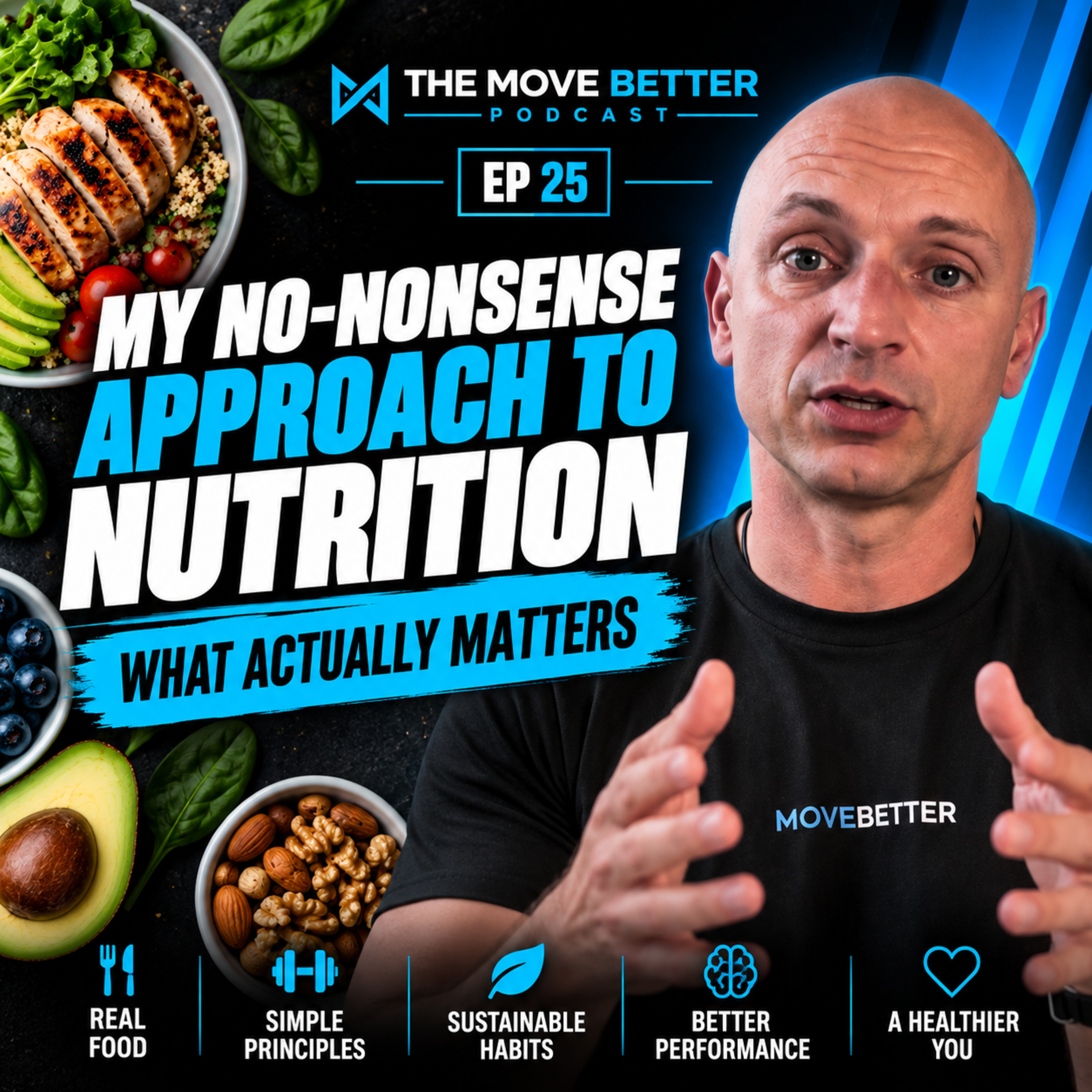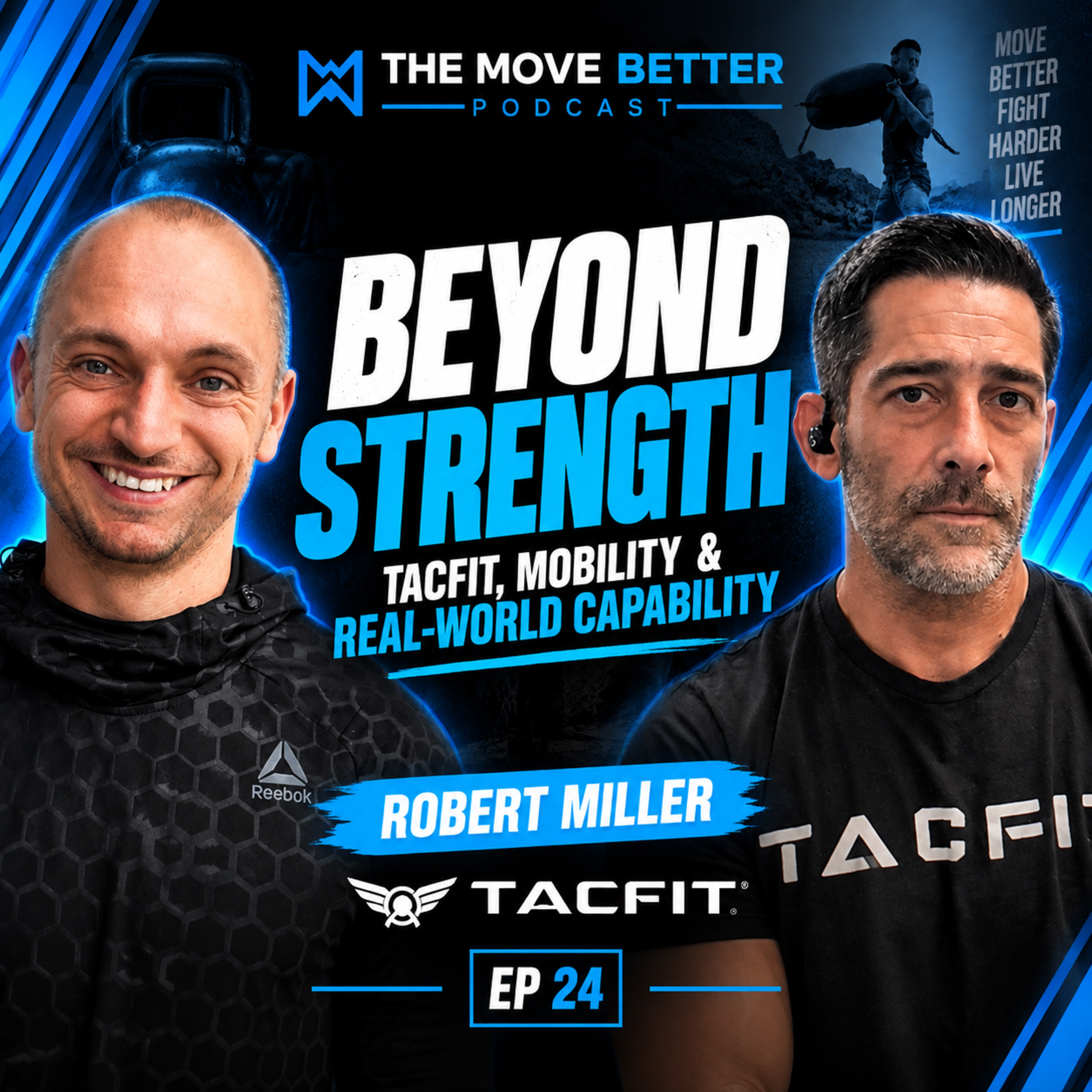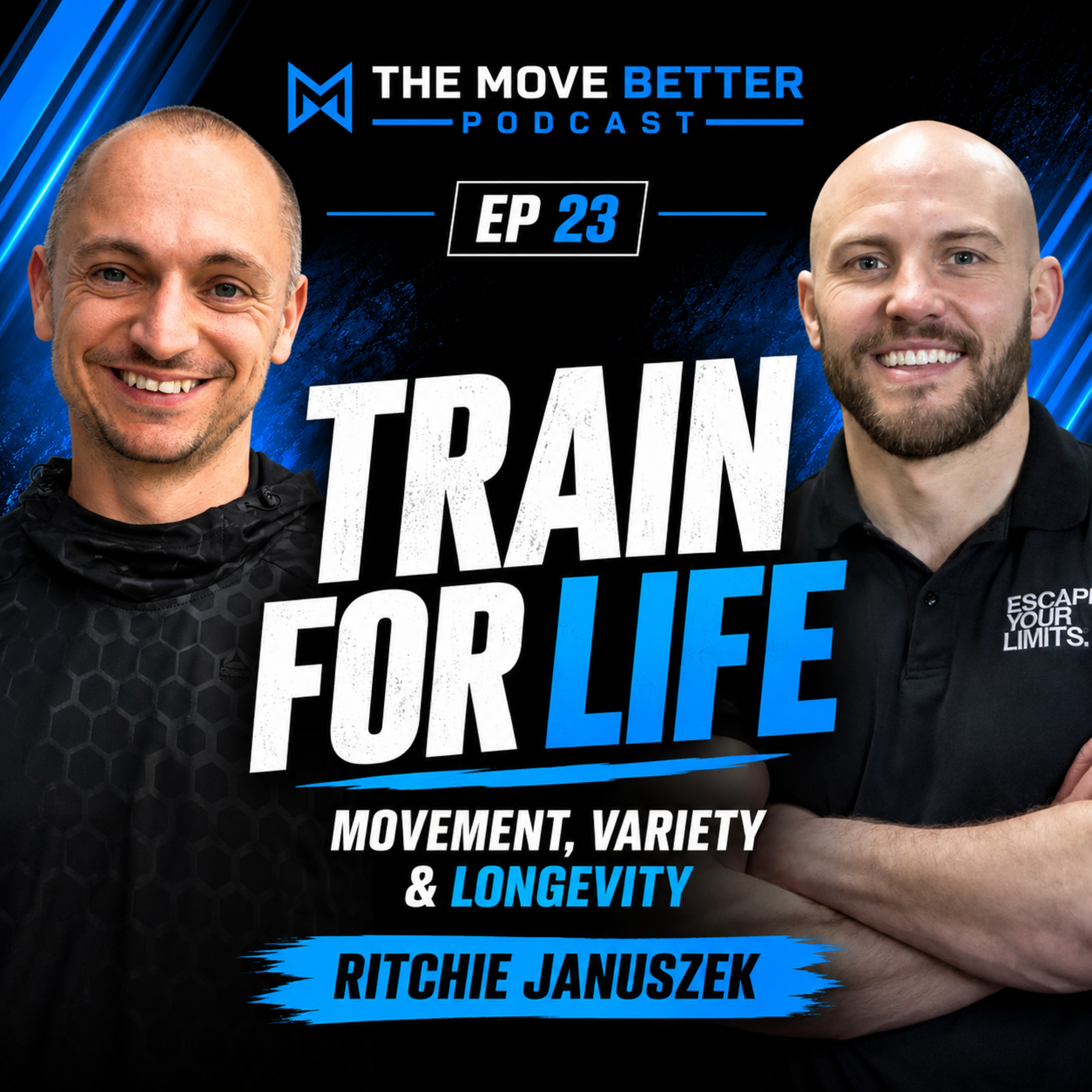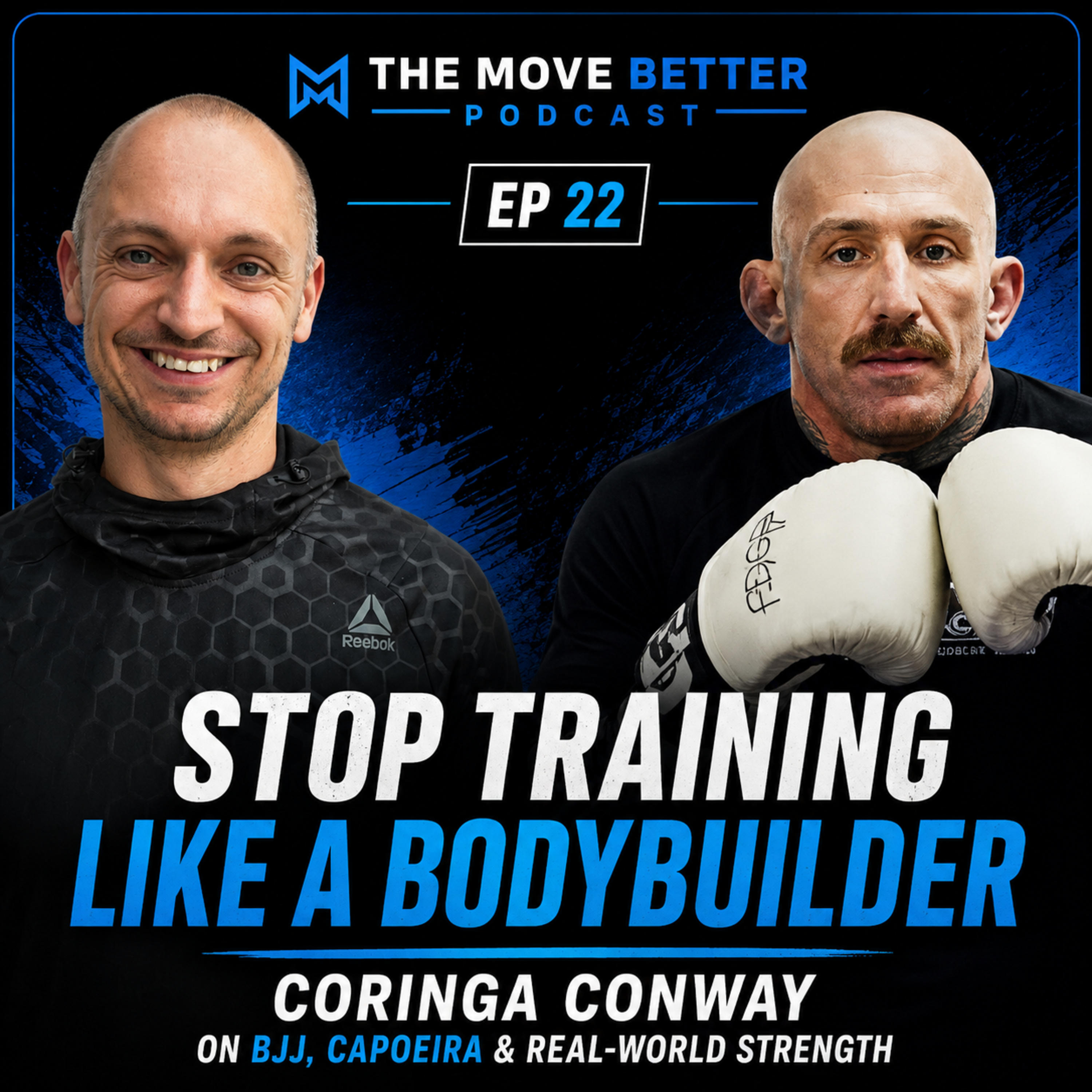
Most people train but still feel stiff, tight, and beaten up.The Move Better Podcast shows you how to train in a way your body actually understands, so you can reduce aches and pains, move better, and build real-world strength that lasts.Hosted by Mark Broadbent (over 20 years experience), this is simple, practical advice without the fluff, gimmicks, or “just lift heavier” nonsense.If you want a body that works - not just looks good - this is for you.With some great guests, you'll learn about some of the "alternative" methods of training that just might be what your body's craving.
Pitch Analysis
Required Pod Score for this show. PitchCentric checks your profile against host openness, topical fit, and audience signals before you generate a pitch.
Contact path
Verified email
Booking probability
30%
Guest openness
Selective
Verified email on file
80/100
Required Score
Sign up to generate a grounded pitch for The Move Better Podcast | Functional Fitness, Mobility & Strength for Real Life.
What is The Move Better Podcast | Functional Fitness, Mobility & Strength for Real Life?
The Move Better Podcast | Functional Fitness, Mobility & Strength for Real Life is a health podcast hosted by Mark Broadbent, with 20 episodes on record and a Required Pod Score of 80. PitchCentric scores this show on Booking Probability, Listen Score, and live audience signals refreshed every 24 hours.
About the host
Mark Broadbent hosts The Move Better Podcast | Functional Fitness, Mobility & Strength for Real Life, a health show with 20 episodes published.
Our AI reads these to draft pitches. Use them as grounding for a pitch that cites a real guest and a specific topic.
Episode #20
#20 - Is Strength Training Making You Worse at Your Sport? | Train for Athletic Performance
Aug 17, 202628 minS1
Are you training to get better at your sport — or just getting better at the gym? In this solo episode of The Move Better Podcast , I question one of the biggest assumptions in sports training: that continually increasing your squat, bench and deadlift automatically makes you a better athlete. Strength matters. But once you're already strong enough, would the next 8–12 weeks be better spent adding another 10kg to your squat — or improving your movement, balance, coordination, mobility, timing, rhythm, reaction time and ability to change direction? In this episode, I cover: Why gym strength and athletic performance aren't the same thing The difference between strength and useful strength Why athletes need strength they can express in different positions, directions and situations The problem with chasing gym PBs for the sake of it Why rugby players are a great example of this Strength training vs movement and skills training Rotation, unilateral work, throwing, catching and reactive movement Rope flow, juggling, martial arts and other ways to improve athletic qualities Why being stronger isn't always the quality you need most How to think about the minimum effective dose of strength training The question every athlete should ask: How strong do I actually need to be? The goal isn't to stop getting stronger. It's to stop confusing getting stronger in the gym with becoming a better athlete. Listen now and let me know whether you agree. Want to move better, feel better and perform better? Join the FREE 7-Day Move Better Challenge and Move Better community: www.movebetter.club #AthleticPerformance #StrengthTraining #SportsPerformance #FunctionalTraining #MoveBetter Move BetterHashtags
#19 - Are You Walking Wrong? | Ricky Stanzi on GOATA, Pain & Durable Movement
Aug 10, 20261h 25mS1
What if some of the aches, pains and injuries we blame on training actually start with something much more basic — how we stand, walk and interact with the ground every day? In Episode 19 of The Move Better Podcast, I’m joined by Ricky Stanzi , former NFL quarterback and one of the leading coaches behind GOATA Movement . GOATA stands for Greatest Of All Time Actions and takes a very different approach to movement. Rather than looking at muscles and joints in isolation, the system studies movement patterns seen across durable athletes, children, indigenous populations and active older adults. We get into why Ricky believes durability should be the foundation of performance , and why the way your feet interact with the ground can have consequences throughout the entire body. In this episode: • What GOATA actually is — and what it isn't • Why GOATA studies movement rather than isolated muscles • “Cadaver science” vs studying living human movement • Why your feet are the foundation of movement • Straight feet, strong arches and the importance of the second toe line • Why being able to walk doesn't necessarily mean you're walking well • How modern shoes, chairs and our environment can change movement • Why getting comfortable on the floor matters as we age • The importance of standing, walking and resting — the “other 90%” of your day • Why you can’t “out-rep” a poor walking pattern • GOATA vs WOATA — Greatest vs Worst Of All Time Actions • Why Ricky believes durability is the ultimate performance strategy • The limitations of looking at the body one muscle or joint at a time • Strength training, Olympic lifting and whether gym training can influence movement patterns • Pain, compensation and why an injury can build long before something finally gives way • Why persistent pain shouldn't simply be accepted as part of getting older or training • How the GOATA Recode attempts to retrain standing and walking patterns • Simple things you can begin paying attention to today Ricky's core message is simple: before worrying about how much you can lift, how fast you can run or how hard you can train, make sure the movement system underneath it is working properly. FIND RICKY / GOATA GOATA Movement: https://www.goatamovement.com/ Free 6-Day GOATA Recode Challenge: https://www.goatamovement.com/ Instagram: https://www.instagram.com/goata_movement/ Ricky Stanzi: https://www.instagram.com/glsgoata_education/ MOVE BETTER Start the FREE 7-Day Move Better Challenge and join the community: https://www.MoveBetter.Club Instagram: https://www.instagram.com/movebetter.club YouTube: https://www.youtube.com/@MoveBetterPodcast Facebook: https://www.facebook.com/MoveBetter.Club/ Email: Mark@MoveBetter.Club
#18 - Why Stretching Isn’t Enough | Tom Morrison on Mobility, Pain & Stronger Joints
Aug 3, 202647 minS1
Most people jump straight into lifting heavier weights, running further or attempting advanced exercises without first making sure their joints can move - and stabilise - properly. In Episode 18 of The Move Better Podcast, I’m joined by Tom Morrison, creator of The Simplistic Mobility Method, to discuss what mobility training should actually involve and why repeatedly stretching or foam rolling the painful area often fails to solve the underlying problem. We discuss: • Why joint function should come before heavy loading • The difference between flexibility, mobility and stability • Why Tom stopped foam rolling completely • How hard-style planks teach proper bracing • Why pain may be caused by restrictions elsewhere in the body • How to intelligently work around recurring pain triggers • Why lunges can be more back-friendly than squats • The importance of balance, hip stability and muscle activation • How five minutes of morning mobility can change how you move • What to focus on now if you want to move well in your 70s and beyond • Tom’s simple rule: lengthen first, then strengthen This conversation is packed with practical ideas to help you build stronger joints, move with more control and continue doing the things you enjoy for life. Start the free 7-Day Move Better Challenge and join the community: https://www.movebetter.club Follow Mark Broadbent / Move Better Website: https://www.movebetter.club Instagram: https://www.instagram.com/movebetter.club YouTube: https://www.youtube.com/@MoveBetterPodcast Facebook: https://www.facebook.com/MoveBetter.Club/ Find Tom Morrison Website: https://tommorrison.uk Simplistic Mobility Method: https://tommorrison.uk/products/the-simplistic-mobility-method Instagram: https://www.instagram.com/tom.morrison.training YouTube: https://www.youtube.com/@TomMorrison #TomMorrison #MobilityTraining #JointHealth #FunctionalFitness #MoveBetterPodcast
#17 - Why Bodybuilding Alone Isn’t Enough | Tom DeGiuli on Real-World Strength
Jul 27, 202647 minS1
Does having a big bench press, squat or deadlift automatically make you strong in the real world? In this episode of The Move Better Podcast, I’m joined by Tom DeGiuli, owner of DeGiuli’s Gym in Long Island, New York, to discuss why strength training shouldn’t be limited to barbells, bodybuilding routines and conventional gym exercises. Tom explains how he combines traditional lifts with kettlebells, sandbags, steel clubs, landmines and other unconventional training methods to develop strength, power, conditioning and athleticism. We discuss: • Why bodybuilding and powerlifting can leave gaps in your strength • The difference between lifting a barbell and lifting an awkward object • Why sandbags expose weaknesses that conventional lifts can hide • How to combine traditional and unconventional exercises • The best equipment for a simple home gym • Why busy parents need a different approach to training • The problem with filming every workout for social media • Why enjoying your training matters • The importance of community, consistency and longevity • Tom’s highest-return exercises for building total-body strength Whether you train with barbells, kettlebells, sandbags or something completely different, the most important thing is finding a way to keep moving, progressing and enjoying the process. Start the free 7-Day Move Better Challenge at: www.MoveBetter.club Find Tom on instagram: @tomdegiuli @degiulisgym
#16 - How to Stay Strong, Mobile & Capable for Life | Dan John
Jul 20, 20261h 1mS1
What does it really take to remain strong, mobile and physically capable as you get older? Strength coach and author Dan John joins Mark to explain why effective training is often far simpler than the fitness industry makes it seem. Dan discusses the importance of maintaining muscle as we age, why constantly switching programmes holds people back, and how training with the seasons can help develop a broader range of physical abilities. They also explore why movement should come before personal records, the long-term value of crawling, hanging, carrying and getting off the floor, and the essential exercises Dan would keep if he had to strip training back to the basics. In this episode: Why Dan’s view of bodybuilding changed as he got older The training mistake he wishes he had avoided Why constantly changing programmes limits progress How to periodise training around the seasons The danger of becoming too specialised Why movement quality should come before heavier weights The importance of crawling and developing the feet How Dan would train someone for the next 50–70 years The five movement patterns he considers essential Why getting up and down from the floor matters more with age The two surprisingly important ingredients for longevity Dan’s simple approach to nutrition and fasting Why small changes consistently applied produce the biggest results Dan’s family motto is: “It’s not where you start; it’s where you finish.” Wherever you are starting from, begin today. Find Dan John: Dan John University: https://danjohnuniversity.com Instagram: https://www.instagram.com/coachdanjohn/ YouTube: https://www.youtube.com/@DanJohnStrengthCoach Start your free 7-Day Move Better Challenge: https://www.MoveBetter.Club Follow Mark: https://www.instagram.com/movebetter.club/ The Move Better Podcast is for educational and informational purposes only. It is not a substitute for individual medical advice.
Every question we get asked before someone starts their trial.
If you have a concern about deliverability, AI quality, data privacy, or whether this will actually work for your specific situation, it's probably answered below.
What is the difference between Founder Solo and Founder Pro?
Founder Solo gives you 50 AI pitches per month using the credit model (Standard pitches cost 1 credit, Enriched pitches cost 2). Founder Pro raises that to 200 credits per month and adds full Booking Probability access, unlimited Magic Match, Apollo enrichment credits, and data export capabilities. Both plans use the same credit system, so you can stretch your monthly budget further by using Standard-mode drafting.
How do agency tiers work?
Agency tiers have no base fee. You pay per managed client and per talent profile. Agency Standard is $199 per client per month; Agency Pro is $399 per client per month. Both add $39 per talent profile per month. Your own team's user seats are always free.
What is a talent profile?
A talent profile represents one person (founder, executive, or spokesperson) you are booking onto podcasts. It includes their bio, topics, headshots, and outreach history. Team plans include 5 profiles; agency plans are pay-as-you-go.
Can I switch plans later?
Yes, at any time. Upgrades take effect immediately; downgrades apply at the end of the current billing period. Contact support if you need help migrating between plan families.
Do you offer a free trial?
Every paid plan includes a 15-day free trial. Your card is saved at signup but you will not be charged until day 16. Cancel any time from your dashboard.
What happens if I cancel?
You keep access until the end of your current billing period. No charges after that. Your data is retained for 30 days in case you reactivate.
Is the 20% annual discount automatic?
Yes. Select Annual on the pricing toggle and the discounted price is applied automatically at checkout. The annual price shown is the full year cost.
What if I have more than 50 profiles or 20 clients?
That is our Enterprise tier. Contact our sales team and we will build a custom plan with volume pricing, a dedicated account manager, and SLA guarantees.