
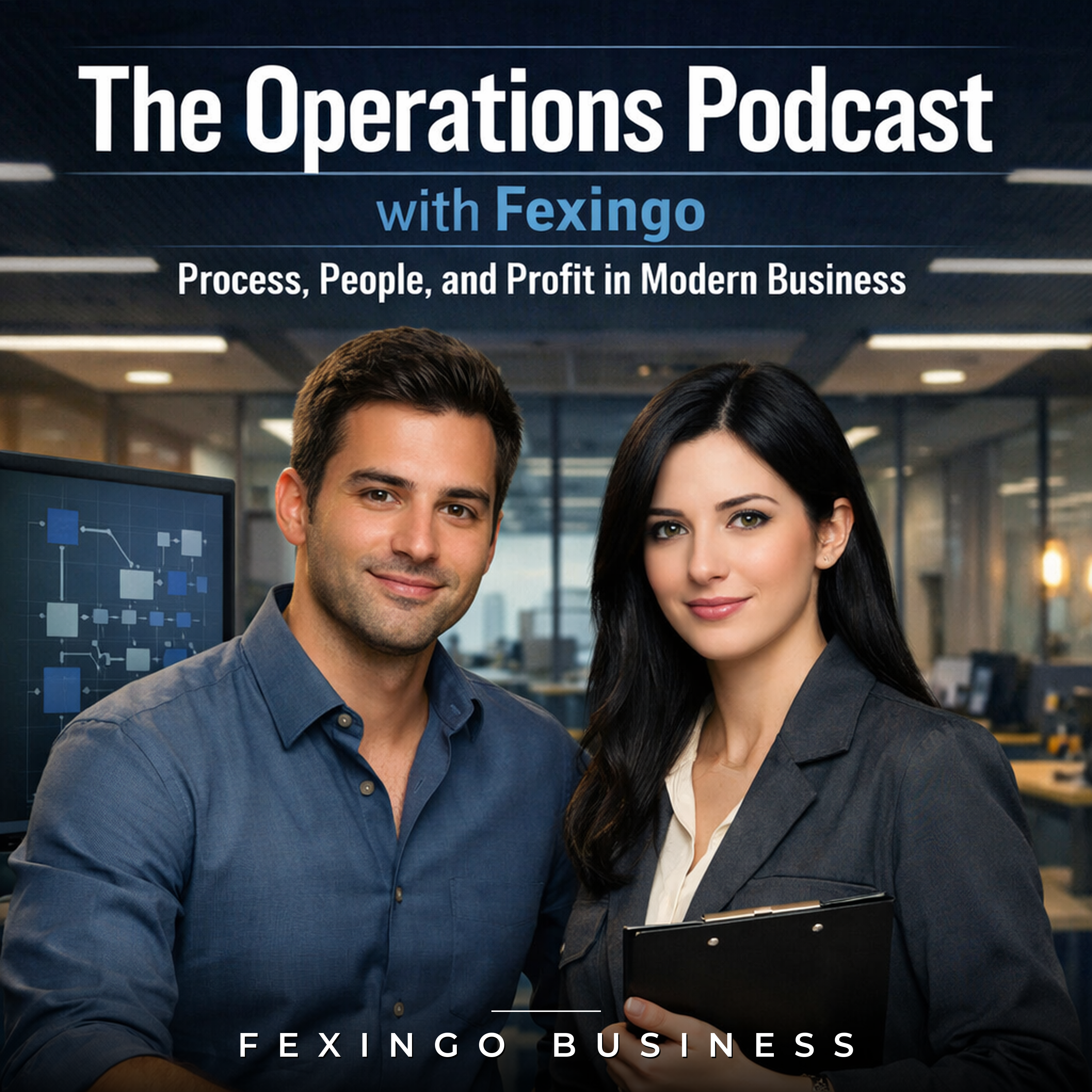
Lucas and Luna examine the operational backbone of modern business: how process design, people management, and profit optimization intersect in real companies. Each episode takes a specific case — a factory floor reorg at Toyota, a logistics overhaul at Maersk, a staffing pivot at a regional hospital network — and pulls the numbers, the decisions, and the trade-offs into clear view. Lucas brings the analyst's eye: flow charts, cycle times, throughput metrics. Luna pushes on the human side: how a change in shift structure affected turnover, or why a new inventory system broke team morale. They don't settle for theory; they want the specific dollar figure, the week-by-week timeline, the boardroom vote tally. The listener is someone who manages operations — or aspires to — and knows that process and people are not separate silos. No fluff, no platitudes. By the end of a conversation, you'll have a concrete question to ask about your own operation: What is the one metric we're measuring th
Pitch Analysis
Required Pod Score for this show. PitchCentric checks your profile against host openness, topical fit, and audience signals before you generate a pitch.
Contact path
Verified email
Booking probability
35%
Guest openness
Selective
Verified email on file
80/100
Required Score
Sign up to generate a grounded pitch for The Operations Podcast with Fexingo: Process, People, and Profit in Modern Business.
What is The Operations Podcast with Fexingo: Process, People, and Profit in Modern Business?
The Operations Podcast with Fexingo: Process, People, and Profit in Modern Business is a business podcast hosted by Fexingo, with 160 episodes on record and a Required Pod Score of 80. PitchCentric scores this show on Booking Probability, Listen Score, and live audience signals refreshed every 24 hours.
About the host
Fexingo hosts The Operations Podcast with Fexingo: Process, People, and Profit in Modern Business, a business show with 160 episodes published.
Our AI reads these to draft pitches. Use them as grounding for a pitch that cites a real guest and a specific topic.
Episode #165
How a Railroad Cut Yard Dwell Time by 51 Percent
Aug 19, 20267 minS4
In this episode, Lucas and Luna explore a freight railroad's operation makeover. By rethinking how they sequence railcars in the yard, they cut average dwell time from 28 hours to under 14 — improving asset utilization and customer satisfaction. The hosts break down the specific steps: how they used real-time data to predict arrivals, why they moved from a first-in-first-out yard to a priority-based pull system, and the cultural shift required to get crews on board. They also discuss the financial ripple effect: fewer locomotives, lower fuel burn, and faster customer turnarounds. If you've ever wondered how a 150-year-old industry gets a modern operations upgrade, this episode is for you. #FreightRail #RailOperations #YardManagement #SupplyChain #OperationsManagement #Business #Logistics #Efficiency #RailTransportation #RealTimeData #LeanOperations #AssetUtilization #FexingoBusiness #BusinessPodcast #OperationsPodcast #ProcessImprovement #IndustrialOperations #RailwayEfficiency Keep every episode free: buymeacoffee.com/fexingo
How a Data Center Cut Cooling Energy by 40 Percent
Aug 18, 20268 minS4
Cooling is the hidden cost of the digital age. In this episode, Lucas and Luna look at how one regional data center operator cut its cooling energy draw by 40 percent — not by buying expensive new chillers, but by redesigning its airflow layout and rethinking temperature setpoints. They walk through the physics of hot and cold aisles, the surprisingly simple change that made the biggest difference, and why the same logic applies to any warehouse or office building. If you've ever wondered why data centers are so energy-hungry, or how to cut energy costs without major capital spending, this episode gives you a concrete playbook. #DataCenter #Cooling #EnergyEfficiency #Operations #Business #FexingoBusiness #BusinessPodcast #Sustainability #CostReduction #Airflow #HVAC #Temperature #Infrastructure #Tech #ProcessImprovement #Industrial #Logistics #EnergySavings Keep every episode free: buymeacoffee.com/fexingo
How a Wind Turbine Maker Cut Blade Inspections by 80 Percent
Aug 17, 20268 minS4
Episode 163 of The Operations Podcast dives into wind turbine blade inspections—a maintenance bottleneck that can ground turbines for days. Lucas and Luna explore how one manufacturer slashed inspection time by 80 percent using drone swarms and AI image analysis. They break down the operational shift: from manual rope-access teams to automated drones that capture thousands of images per turbine, and the machine-vision models that detect micro-cracks before they become costly failures. The episode walks through the pilot program, the key performance metrics, and the cultural resistance from veteran inspectors who initially distrusted the tech. Lucas and Luna also discuss the broader implications for asset-heavy industries: how predictive maintenance changes the economics of renewable energy, and why operations teams need to embrace data-driven workflows. Tune in for a real-world example of how technology, process redesign, and people management converge to deliver measurable operational gains. If you've ever wondered how wind farms stay profitable, this episode offers a concrete answer. #WindEnergy #DroneInspection #AIInspection #PredictiveMaintenance #OperationsManagement #RenewableEnergy #AssetManagement #MachineVision #MaintenanceOps #Business #FexingoBusiness #BusinessPodcast #ProcessImprovement #DataDrivenOps #TechInnovation #WindTurbine #BladeInspection #OperationalExcellence Keep every episode free: buymeacoffee.com/fexingo
How a Microchip Plant Slashed Test Time by 40 Percent
Aug 16, 20268 minS4
In this episode of The Operations Podcast, hosts Lucas and Luna examine how a mid-sized semiconductor manufacturer cut its final chip-testing time by 40 percent. The company, a supplier to automotive and industrial clients, faced a bottleneck in its test floor: thousands of chips waiting for validation. By applying a mix of parallel testing, machine learning–based binning, and a redesigned workflow, the plant reduced test time from an average of 18 minutes to under 11 minutes per chip, without adding equipment. Lucas breaks down the specific operational changes—how they prioritized test sequences, used predictive models to skip redundant checks, and reconfigured the floor to cut movement. Luna challenges the assumptions about ML reliability and asks about the trade-offs. They also touch on the broader industry pressure to speed up testing as chip complexity grows. A concrete takeaway: testing is often the hidden bottleneck in semiconductor manufacturing, and smart scheduling can unlock capacity. The episode closes with a reflection on how these principles apply beyond chips. A short, sincere note about listener support keeps the show ad-free. #SemiconductorTesting #ChipManufacturing #OperationsExcellence #ProcessImprovement #MachineLearning #BottleneckAnalysis #ManufacturingEfficiency #TestTimeReduction #AutomotiveChips #IndustrialChips #WorkflowOptimization #QualityControl #LeanOperations #TechOperations #Business #OperationsPodcast #FexingoBusiness #BusinessPodcast Keep every episode free: buymeacoffee.com/fexingo
How One Hospital Cut ICU Readmissions by 62 Percent
Aug 15, 20267 minS4
Episode 161 of The Operations Podcast dives into a single, surprising operations win: a regional hospital system cut ICU readmissions by 62 percent in under a year. Lucas and Luna unpack the root-cause analysis that revealed the real problem wasn't clinical — it was a handoff bottleneck between the ICU and step-down units. They walk through the redesigned discharge protocol, the nurse-led communication board, and the post-discharge check-in calls that flipped the metric. The episode also touches on why so many operations teams stop at the first fix instead of chasing the second-order cause, and how a simple visual management tool outperformed a multi-million-dollar software rollout. If you've ever wondered how hospitals actually improve outcomes without adding staff, this episode gives you the concrete playbook. The hosts share the exact numbers, the pushback from clinicians, and the lesson for any operations leader: sometimes the cheapest fix is the one that works best. #HospitalOperations #ICUReductions #HealthcareOps #ReadmissionRate #RootCauseAnalysis #VisualManagement #NurseLed #ProcessImprovement #PatientOutcomes #LeanHospital #Kaizen #OperationsExcellence #FexingoBusiness #BusinessPodcast #OperationsPodcast #HealthcareManagement #ProcessMapping #QualityImprovement Keep every episode free: buymeacoffee.com/fexingo
Every question we get asked before someone starts their trial.
If you have a concern about deliverability, AI quality, data privacy, or whether this will actually work for your specific situation, it's probably answered below.
What is the difference between Founder Solo and Founder Pro?
Founder Solo gives you 50 AI pitches per month using the credit model (Standard pitches cost 1 credit, Enriched pitches cost 2). Founder Pro raises that to 200 credits per month and adds full Booking Probability access, unlimited Magic Match, Apollo enrichment credits, and data export capabilities. Both plans use the same credit system, so you can stretch your monthly budget further by using Standard-mode drafting.
How do agency tiers work?
Agency tiers have no base fee. You pay per managed client and per talent profile. Agency Standard is $199 per client per month; Agency Pro is $399 per client per month. Both add $39 per talent profile per month. Your own team's user seats are always free.
What is a talent profile?
A talent profile represents one person (founder, executive, or spokesperson) you are booking onto podcasts. It includes their bio, topics, headshots, and outreach history. Team plans include 5 profiles; agency plans are pay-as-you-go.
Can I switch plans later?
Yes, at any time. Upgrades take effect immediately; downgrades apply at the end of the current billing period. Contact support if you need help migrating between plan families.
Do you offer a free trial?
Every paid plan includes a 15-day free trial. Your card is saved at signup but you will not be charged until day 16. Cancel any time from your dashboard.
What happens if I cancel?
You keep access until the end of your current billing period. No charges after that. Your data is retained for 30 days in case you reactivate.
Is the 20% annual discount automatic?
Yes. Select Annual on the pricing toggle and the discounted price is applied automatically at checkout. The annual price shown is the full year cost.
What if I have more than 50 profiles or 20 clients?
That is our Enterprise tier. Contact our sales team and we will build a custom plan with volume pricing, a dedicated account manager, and SLA guarantees.
