
Episode #17
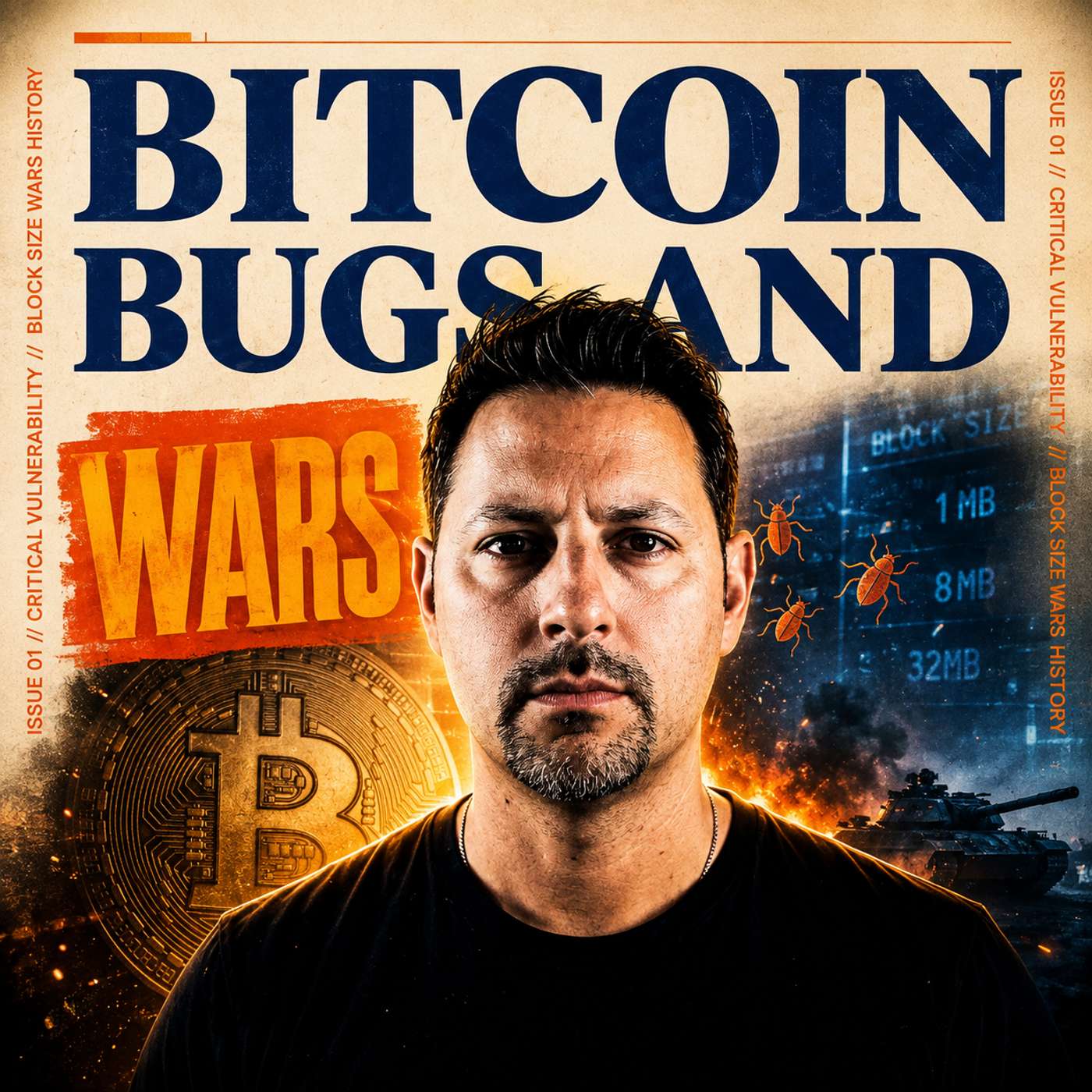
The Cold Card Bug That Drained 2,000 Bitcoin — And the Real Story of the Bitcoin Block Size Wars
A hardware wallet bug just drained roughly 2,000 Bitcoin from people who thought they'd done everything right. Joe breaks down what actually happened with Cold Card's firmware, what a genuinely secure self-custody setup looks like today — pairing a device like SeedSigner with Sparrow Wallet and a personal Bitcoin node — and why owning a hardware wallet is never the same thing as having a secure setup. From there, Joe makes the case that Bitcoin was built to be peer-to-peer digital cash, not just a thing to hold and never touch, pointing to small businesses and local economies already proving that out. That sets up a look back at the 2017 Bitcoin block size wars and the SegWit/UASF activation — and why the popular "users versus miners" version of that story leaves out just how messy and political it actually was, with good and bad actors on every side. Joe closes on Bitcoin's real origin point: the Genesis block and Satoshi's founding message. In this episode: - What actually went wrong in the Cold Card firmware bug — and why it led to real Bitcoin theft - Why owning a hardware wallet isn't the same thing as having a secure self-custody setup - A practical self-custody stack: SeedSigner, Sparrow Wallet, and running your own Bitcoin node - Why Bitcoin was designed as peer-to-peer digital cash — not just an asset to stack and hold - Real examples of Bitcoin adoption in small businesses and local economies - The history of the Bitcoin block size wars and the 2017 SegWit/UASF activation - Why the "miners versus users" framing of the block size wars is a misleading oversimplification - The political dynamics and competing incentives that actually drove the block size controversy - Bitcoin's true origin — the Genesis block and Satoshi's founding message New episodes every week. Subscribe on Apple Podcasts, Spotify, YouTube, or wherever you listen — and join the Phoenician League newsletter at phoenicianleague.com for weekly macro investing analysis and real asset research.