For CIOs, CTOs, Enterprise Architects, Software Developers, and anyone responsible for delivering tangible results from technology investments. We challenge conventional wisdom, debate the future of Java, dissect architecture audits, and provide actionable insights you can use today. Keywords: IT Strategy, Enterprise Architecture, Cloud Computing, Microsoft Licensing, Software Development, Agile, DevOps, Architecture Audits, Java, LLMs, CDPs, Digital Transformation, Business Value, IT Leadership, Technology Cost Optimization, Innovation, Strategic Alignment. Subscribe now and join in!
Pitch Analysis
Required Pod Score for this show. PitchCentric checks your profile against host openness, topical fit, and audience signals before you generate a pitch.
Contact path
Verified email
Booking probability
33%
Guest openness
Selective
Verified email on file
80/100
Required Score
Sign up to generate a grounded pitch for The Platform Economist.
The Platform Economist is a technology podcast hosted by Mohammed Brückner, with 70 episodes on record and a Required Pod Score of 80. PitchCentric scores this show on Booking Probability, Listen Score, and live audience signals refreshed every 24 hours.
About the host
Mohammed Brückner hosts The Platform Economist, a technology show with 70 episodes published.
Our AI reads these to draft pitches. Use them as grounding for a pitch that cites a real guest and a specific topic.
Episode #1
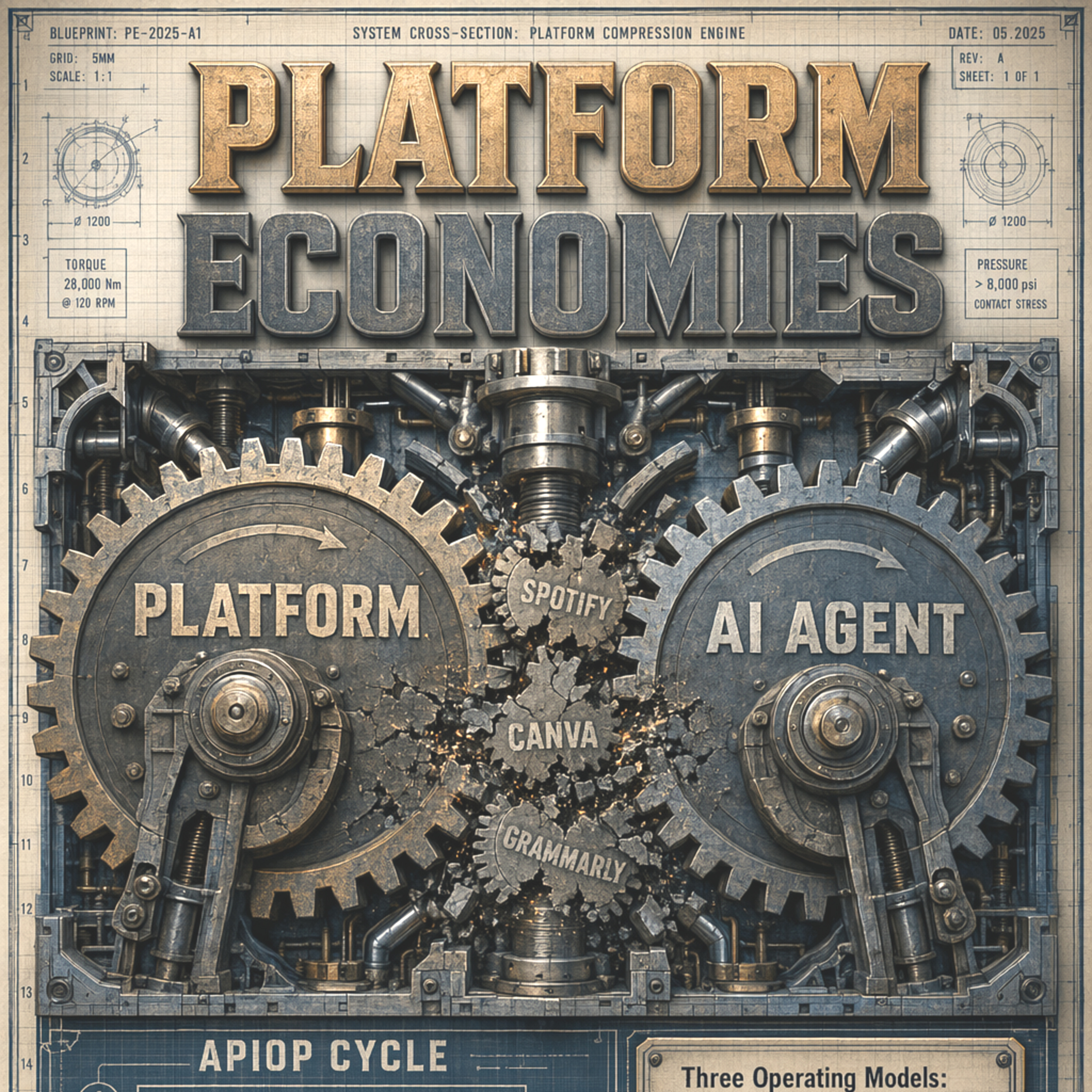
Software Survival in the Agentic Economy! Platform Compression Is Here...
May 5, 202624 minS8
Your API is already an agent-to-agent interface. Your playbook just has not caught up. Platform compression does not send a warning email. It reshapes your market while you are still optimizing last quarter's metrics. The traditional business middle ground is vanishing — not gradually, but structurally — because computational power is replacing manual labor at the integration layer faster than most organizations can ship. This episode unpacks the three operating models available right now: the Platform Pivot, the Hybrid AI Play, and the Status-Quo Trap. Most companies are on the third path by default. We explain how to diagnose which path you are actually on, why the 48-Hour Rule determines whether partners convert or leak, and what "good API design" means when autonomous agents — not human developers — are your primary consumers. The discussion draws on Platform Economies: How AI Is Rewriting the Rules of Platforms, APIs, and Partnerships by M. Brückner, a strategic manual for leaders navigating the shift from product to platform in an AI-accelerated market. Pre-order the book: https://www.amazon.com/dp/B0GXN4PRB5 Landing page: https://platformeconomies.com
Software Survival in the Agentic Economy! Platform Compression Is Here...
May 5, 202624 minS8
<p>Your API is already an agent-to-agent interface. Your playbook just has not caught up.</p><p><br></p><p>Platform compression does not send a warning email. It reshapes your market while you are still optimizing last quarter's metrics. The traditional business middle ground is vanishing — not gradually, but structurally — because computational power is replacing manual labor at the integration layer faster than most organizations can ship.</p><p><br></p><p>This episode unpacks the three operating models available right now: the Platform Pivot, the Hybrid AI Play, and the Status-Quo Trap. Most companies are on the third path...
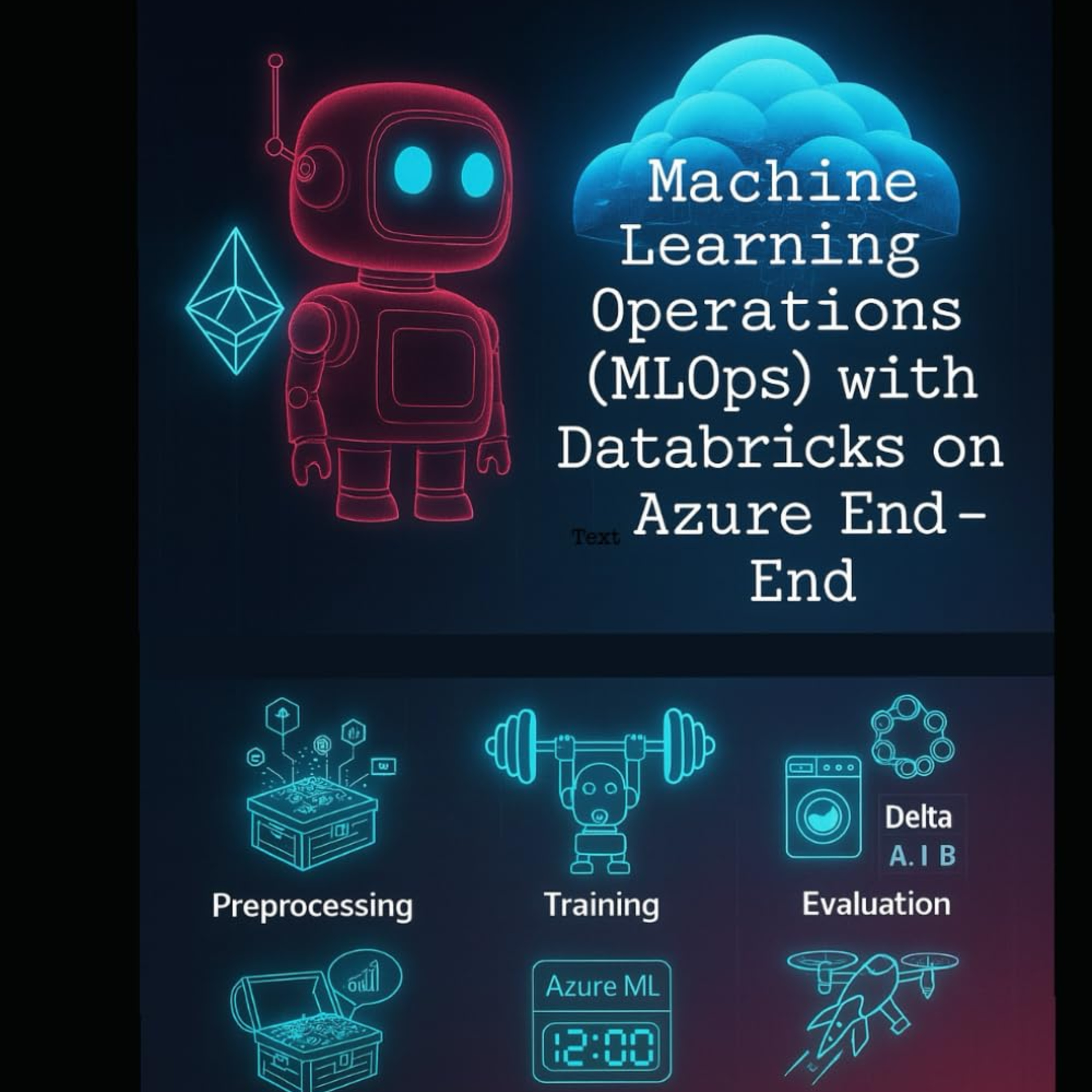
The MLOps Imperative: Scaling AI with Databricks on Azure
Dec 12, 202510 minS7
<p>On "The Platform Economist," we explore the infrastructure that underpins our digital economy. And today, there's no greater challenge—or opportunity—than scaling machine learning from experiment to production. The bottleneck isn't genius; it's plumbing. You don't need more geniuses, you need better plumbing.</p><p>This episode, we're dissecting the practical roadmap to mastering that plumbing: "Machine Learning Operations (MLOps) with Databricks on Azure: End-to-End in 2025." This isn't just theory; it's a hands-on guide designed to give data engineers, analysts, and ML enthusiasts the tools to build and optimize data pipelines that don't buckle under pressure.</p><p>We'l...
Gamifying the Grind! A Simulation of Digital Transformation
Dec 7, 202514 minS7
<p>On "The Platform Economist," we often analyze digital transformation from a 30,000-foot view—the capital investments, the platform shifts, the market disruption. But what happens when that multi-million dollar strategy hits the ground floor and collides with Bob from accounting, a sentient coffee machine, and an endless loop of printer errors?</p><p>This episode, we're examining a fascinating and unconventional tool that models this very chaos: "The Office Adventure - Digital Transformation Quest." At first glance, it's a pen-and-paper gamebook. But look closer, and you'll find a brilliant, low-stakes simulation for the most unpredictable variable in any economic mo...
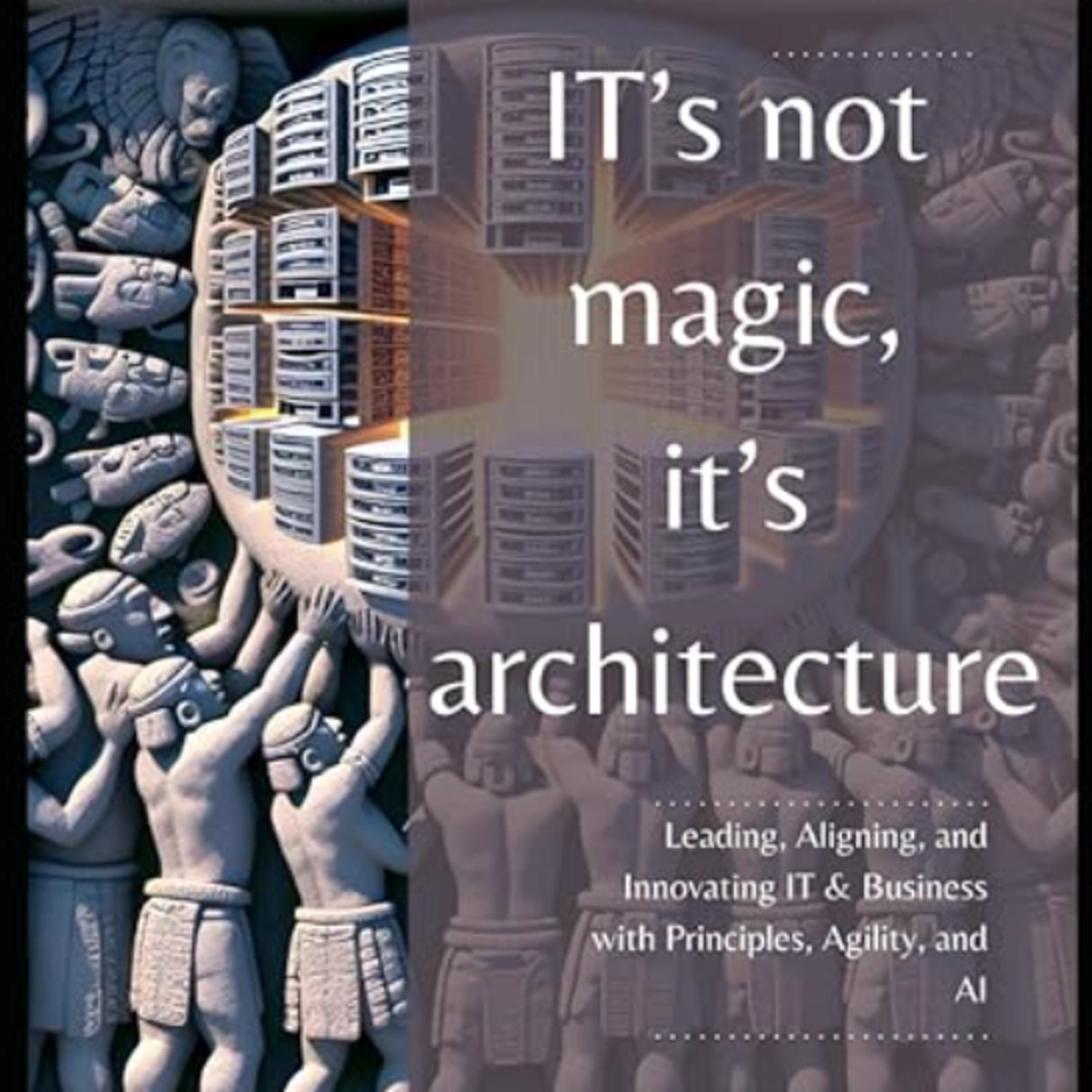
<p>This book asks the questions that often go unanswered: what value do IT architects create, and how can they do it better? It offers a practical guide drawn from lived experience, showing how architects bridge business and IT, design adaptable solutions, and lead with clarity in a world shaped by agility, AI, and inclusive design. It’s a resource not just for architects, but for anyone who wants to understand how architecture shapes organizations and society.</p><p>This episode is presented by platformeconomies.com - and if you are interested in matters of architecture, make sure to get my...
Every question we get asked before someone starts their trial.
If you have a concern about deliverability, AI quality, data privacy, or whether this will actually work for your specific situation, it's probably answered below.
What is the difference between Founder Solo and Founder Pro?
Founder Solo gives you 50 AI pitches per month using the credit model (Standard pitches cost 1 credit, Enriched pitches cost 2). Founder Pro raises that to 200 credits per month and adds full Booking Probability access, unlimited Magic Match, Apollo enrichment credits, and data export capabilities. Both plans use the same credit system, so you can stretch your monthly budget further by using Standard-mode drafting.
How do agency tiers work?
Agency tiers have no base fee. You pay per managed client and per talent profile. Agency Standard is $199 per client per month; Agency Pro is $399 per client per month. Both add $39 per talent profile per month. Your own team's user seats are always free.
What is a talent profile?
A talent profile represents one person (founder, executive, or spokesperson) you are booking onto podcasts. It includes their bio, topics, headshots, and outreach history. Team plans include 5 profiles; agency plans are pay-as-you-go.
Can I switch plans later?
Yes, at any time. Upgrades take effect immediately; downgrades apply at the end of the current billing period. Contact support if you need help migrating between plan families.
Do you offer a free trial?
Every paid plan includes a 15-day free trial. Your card is saved at signup but you will not be charged until day 16. Cancel any time from your dashboard.
What happens if I cancel?
You keep access until the end of your current billing period. No charges after that. Your data is retained for 30 days in case you reactivate.
Is the 20% annual discount automatic?
Yes. Select Annual on the pricing toggle and the discounted price is applied automatically at checkout. The annual price shown is the full year cost.
What if I have more than 50 profiles or 20 clients?
That is our Enterprise tier. Contact our sales team and we will build a custom plan with volume pricing, a dedicated account manager, and SLA guarantees.