Just like the slides you get before a big meeting, The Pre-Read prepares CFOs and senior leaders for the decisions ahead. This is the global podcast for the modern office of the CFO, focused on how finance leaders drive performance, resilience, and long-term value in a constantly shifting environment. Designed for executives operating at scale, the show features candid conversations with CFOs, board advisors, regulators, and business leaders shaping how companies compete, comply, and grow. Hosts Alyssa Zucker and Steve Soter connect financial performance, data integrity, regulation, and technology to the real questions CFOs are being asked by boards, investors, and stakeholders. From AI adoption and enterprise data trust to evolving disclosure expectations and global regulatory pressure, The Pre-Read focuses on what matters now and what's coming next. Each episode cuts through noise to surface practical insight, strategic perspective, and the signals CFOs need to lead with clarity. If you're responsible for stewarding capital, managing risk, and creating value over time, you're in the right place.
Pitch Analysis
Required Pod Score for this show. PitchCentric checks your profile against host openness, topical fit, and audience signals before you generate a pitch.
Contact path
Verified email
Booking probability
36%
Guest openness
Selective
Verified email on file
80/100
Required Score
Sign up to generate a grounded pitch for The Pre-Read.
The Pre-Read is a business podcast hosted by Unknown Host, with 178 episodes on record and a Required Pod Score of 80. PitchCentric scores this show on Booking Probability, Listen Score, and live audience signals refreshed every 24 hours.
About the host
Unknown Host hosts The Pre-Read, a business show with 178 episodes published.
Our AI reads these to draft pitches. Use them as grounding for a pitch that cites a real guest and a specific topic.
The Pre-Read
Who’s Building the Next CFO?
Aug 17, 202619 min
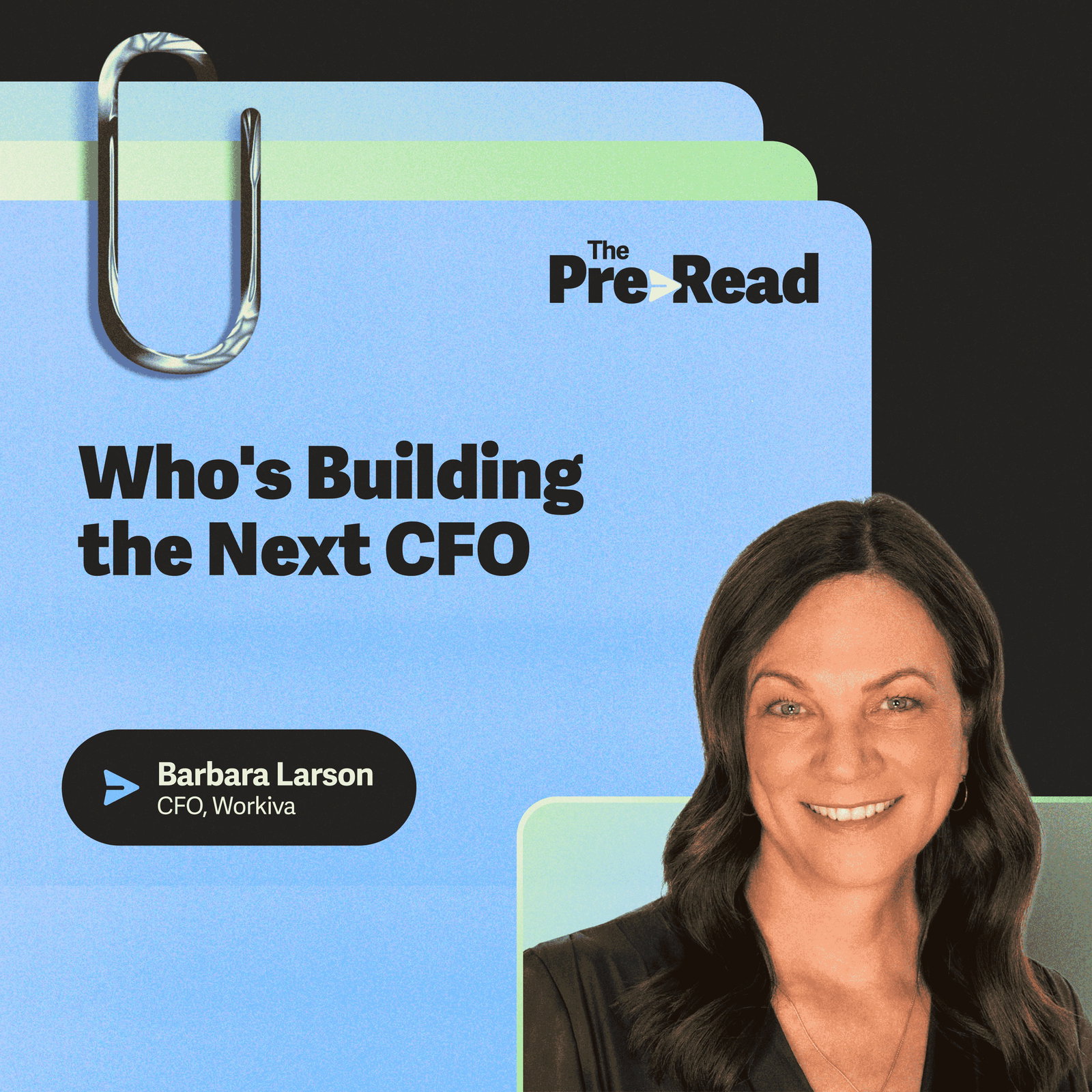
Finance leaders build judgment and gain experience by doing the work throughout their career. But what happens when agents do the work instead? Workiva CFO Barbara Larson joins The Pre-Read to talk about her first six months in the role and the talent pipeline risk she thinks is flying under the radar: a generation of finance leaders who are skilled at directing AI but may not have the experience to recognize when something breaks. In this episode: • Why the path to CFO is about doing work and growing financial skills alongside AI • How to build a finance culture where people are ready to lead • What the CFO of 2035 will need to prove to compete against AI numbers • Why finance leaders should focus less on pursuing the CFO title, and more time learning the skills necessary to identify and respond to risk Subscribe for episodes on the issues shaping finance, audit, risk, and sustainability at the C-suite level.
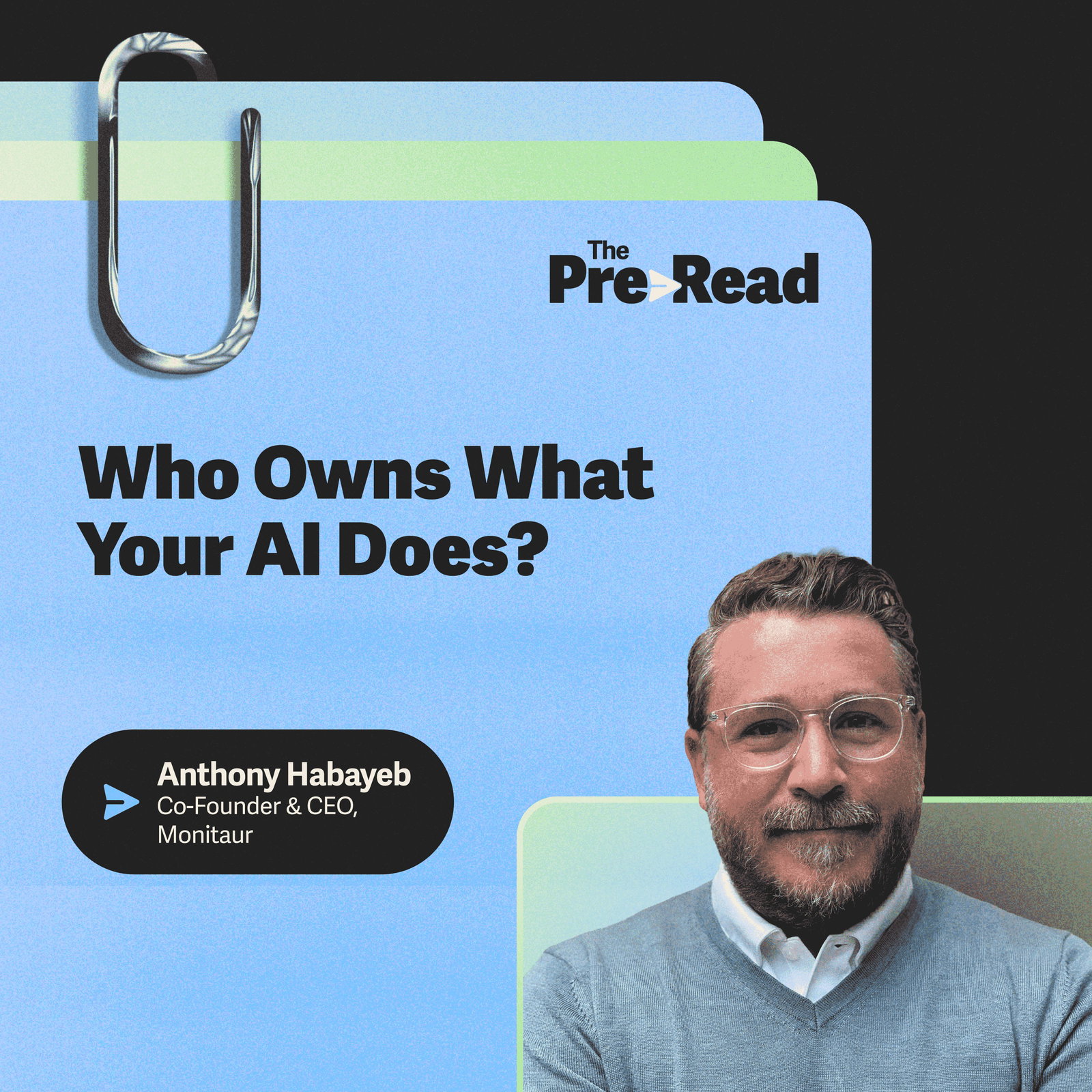
AI transformation is a problem of governance, not technology. Anthony Habayeb, CEO of Monitaur, argues that organizations don’t need to spin up a new AI governance framework, but they need better use of the controls CFOs and auditors already own. In this episode: -Why AI pilots stall and what it reveals about governance gaps -How to build an AI governance framework from structures you already have -Why the agent isn’t the risk, but the use case is -Who owns accountability when an autonomous system takes action? -How CFOs and audit teams are becoming the forcing function for AI quality Subscribe for episodes on the issues shaping finance, audit, risk, and sustainability at the C-suite level.
Most climate risk assessments are missing hazards, scoping too narrowly, and leaving physical climate risk under-analyzed. Linda Romanovska helped write the rules, and she’s here to explain what better reporting looks like. As co-author of the European Sustainability Reporting Standards and a member of the EU Sustainability Reporting Board, Linda has spent 20 years working on climate risk assessment across sectors and jurisdictions. She joined The Pre-Read to break down what mandatory climate-related financial disclosure requires. In this episode: Why most climate risk assessments assess too few hazards The key differences between physical climate risk and transition risk How to scope scenarios and time horizons without cutting corners What climate-related financial disclosure users want to see Where AI is making climate risk assessment faster and more audit-ready
The M&A market is heating up, and AI is compressing deal timelines from weeks to days. In this episode of The Pre-Read, guest host Josh Gertsch and Troy Hooper of Mergermarket provide a capital markets update that touches on the SpaceX IPO, the quiet M&A surge, and why quality assets with resilient cash flows are winning. Then, guest host Esther Toth talks with Latitude Financial Services CFO Guillaume Leger about leading finance teams through change, AI, and why sustainability reporting is a frontier CFOs can’t ignore. 0:00 What’s in this episode 1:56 Capital markets & M&A update with Josh and Troy 3:32 The IPO boom and M&A recovery 4:39 Trends driving M&A 13:18 Esther asks Guillaume about guiding finance teams through change 16:55 Upsides and downsides to AI in finance 19:48 The new frontier of financial reporting Subscribe to The Pre-Read for weekly conversations at the intersection of finance, sustainability, audit, and risk.
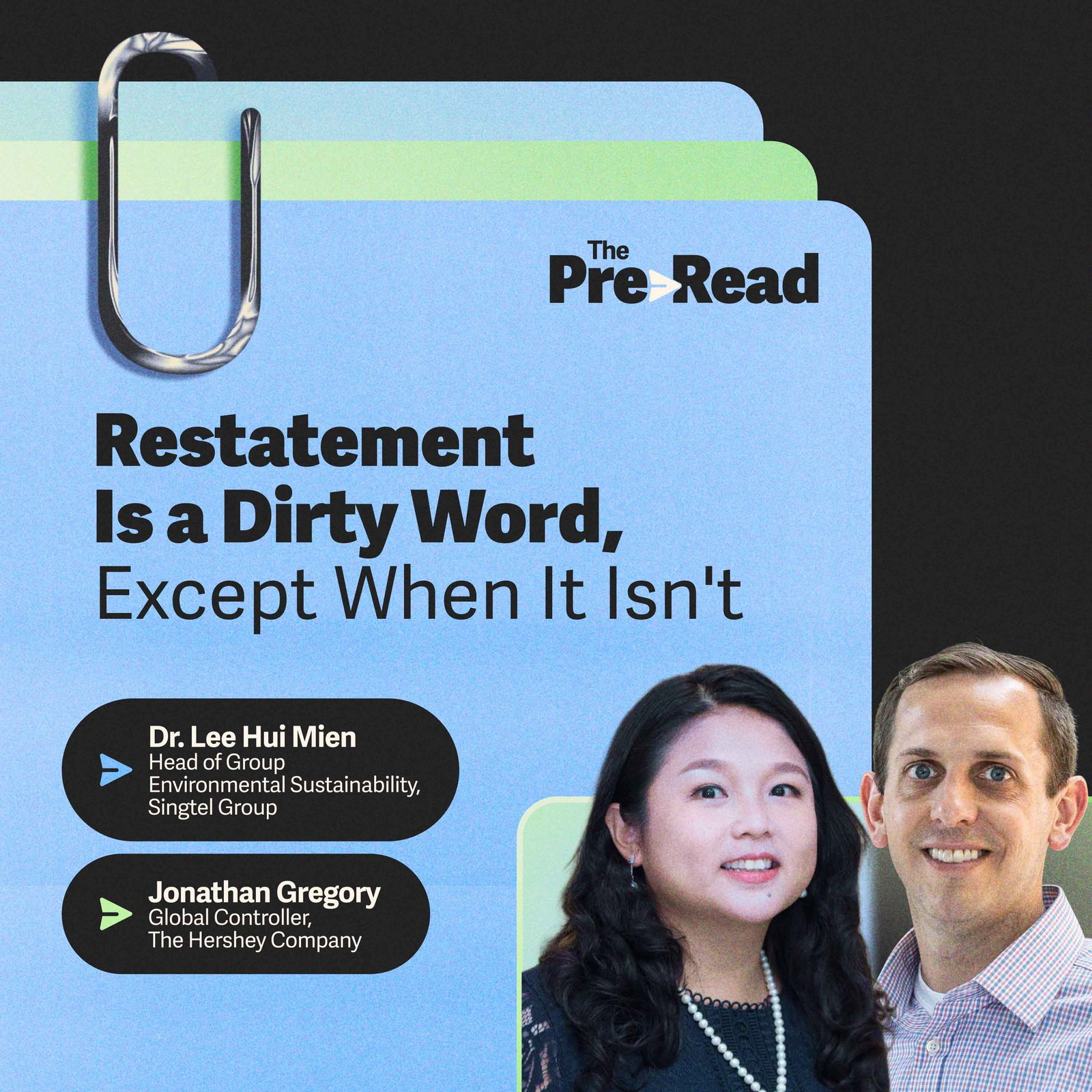
Sustainability reporting and financial reporting are converging fast. But the controller who treats them as the same thing could get burned. In this episode, Dr. Lee Hui Mien of Singtel and Jonathan Gregory of The Hershey Company offer their views on one urgent question: what does it actually mean to bring sustainability reporting under the finance umbrella, and where does that process break down? Chapters: 0:00 — Intro 2:30 — Dr. Lee Hui Mien on why sustainability data is fundamentally different 8:45 — Why restatement in sustainability is a feature, not a failure 13:20 — Scope 3 and why supply chain visibility can break down at tier two 19:10 — Jonathan Gregory, Global Controller at The Hershey Company 24:00 — AI governance and segregation of duties 29:45 — What the next five years demand from controllers Guests: Dr. Lee Hui Mien, Sustainability Leader, Singtel Jonathan Gregory, Global Controller, The Hershey Company Subscribe to The Pre-Read for more conversations at the intersection of finance, sustainability, audit, and risk.
Every question we get asked before someone starts their trial.
If you have a concern about deliverability, AI quality, data privacy, or whether this will actually work for your specific situation, it's probably answered below.
What is the difference between Founder Solo and Founder Pro?
Founder Solo gives you 50 AI pitches per month using the credit model (Standard pitches cost 1 credit, Enriched pitches cost 2). Founder Pro raises that to 200 credits per month and adds full Booking Probability access, unlimited Magic Match, Apollo enrichment credits, and data export capabilities. Both plans use the same credit system, so you can stretch your monthly budget further by using Standard-mode drafting.
How do agency tiers work?
Agency tiers have no base fee. You pay per managed client and per talent profile. Agency Standard is $199 per client per month; Agency Pro is $399 per client per month. Both add $39 per talent profile per month. Your own team's user seats are always free.
What is a talent profile?
A talent profile represents one person (founder, executive, or spokesperson) you are booking onto podcasts. It includes their bio, topics, headshots, and outreach history. Team plans include 5 profiles; agency plans are pay-as-you-go.
Can I switch plans later?
Yes, at any time. Upgrades take effect immediately; downgrades apply at the end of the current billing period. Contact support if you need help migrating between plan families.
Do you offer a free trial?
Every paid plan includes a 15-day free trial. Your card is saved at signup but you will not be charged until day 16. Cancel any time from your dashboard.
What happens if I cancel?
You keep access until the end of your current billing period. No charges after that. Your data is retained for 30 days in case you reactivate.
Is the 20% annual discount automatic?
Yes. Select Annual on the pricing toggle and the discounted price is applied automatically at checkout. The annual price shown is the full year cost.
What if I have more than 50 profiles or 20 clients?
That is our Enterprise tier. Contact our sales team and we will build a custom plan with volume pricing, a dedicated account manager, and SLA guarantees.