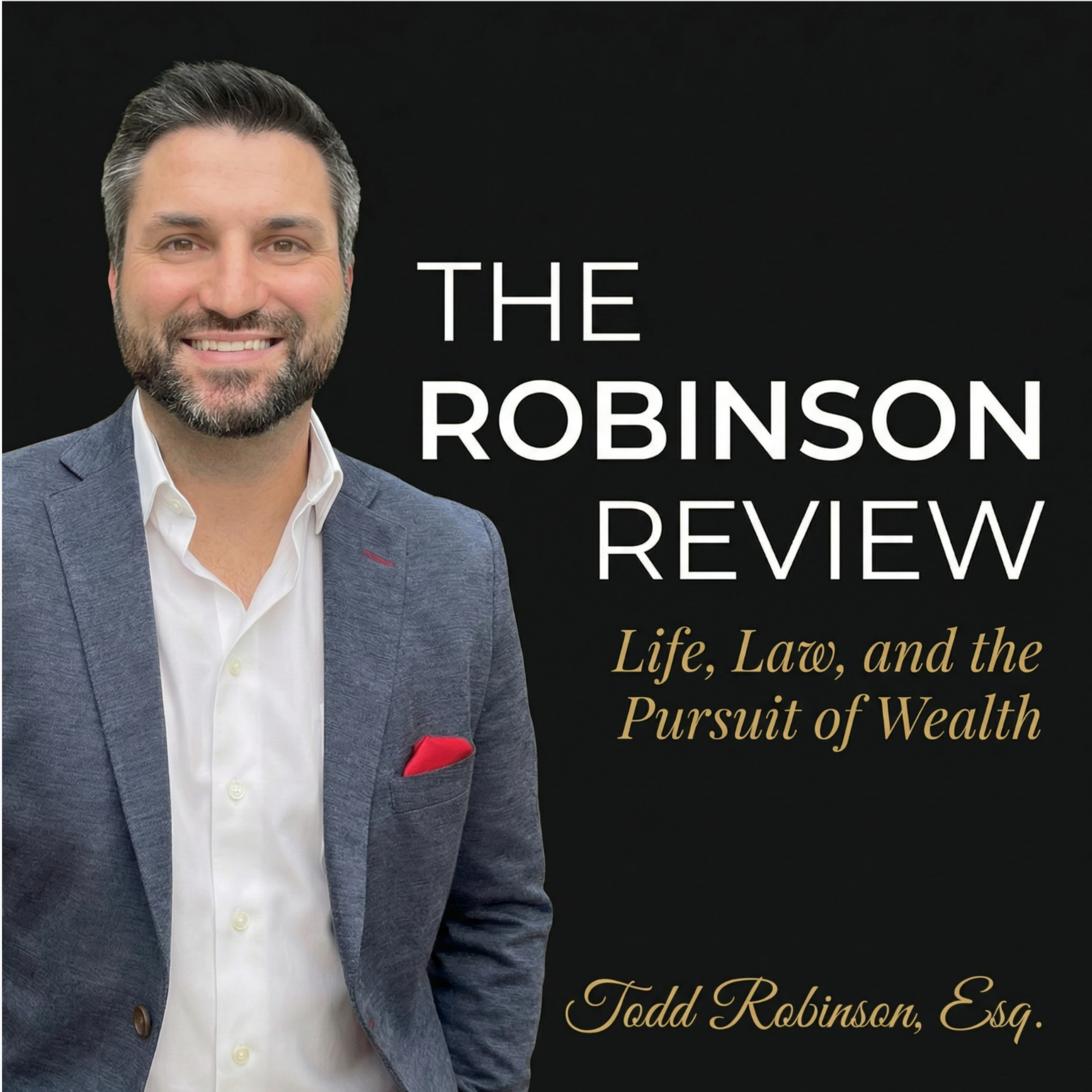
Most wealth podcasts focus on tactics. The Robinson Review focuses on frameworks. Hosted by real estate attorney and investor Todd Robinson, Esq., this show sits at the intersection of business, law, investing, leadership, and life. Yes, we talk real estate. But we also talk about discipline, sobriety, family, capital stewardship, and building something that lasts. Because wealth without structure is fragile. And success without alignment is hollow.
Pitch Analysis
Required Pod Score for this show. PitchCentric checks your profile against host openness, topical fit, and audience signals before you generate a pitch.
Contact path
Public web form
Booking probability
28%
Guest openness
Selective
80/100
Required Score
Sign up to generate a grounded pitch for The Robinson Review: Life, Law, and the Pursuit of Wealth.
What is The Robinson Review: Life, Law, and the Pursuit of Wealth?
The Robinson Review: Life, Law, and the Pursuit of Wealth is a business podcast hosted by Todd Robinson, with 19 episodes on record and a Required Pod Score of 80. PitchCentric scores this show on Booking Probability, Listen Score, and live audience signals refreshed every 24 hours.
About the host
Todd Robinson hosts The Robinson Review: Life, Law, and the Pursuit of Wealth, a business show with 19 episodes published.
Our AI reads these to draft pitches. Use them as grounding for a pitch that cites a real guest and a specific topic.
The Robinson Review: Life, Law, and the Pursuit of Wealth
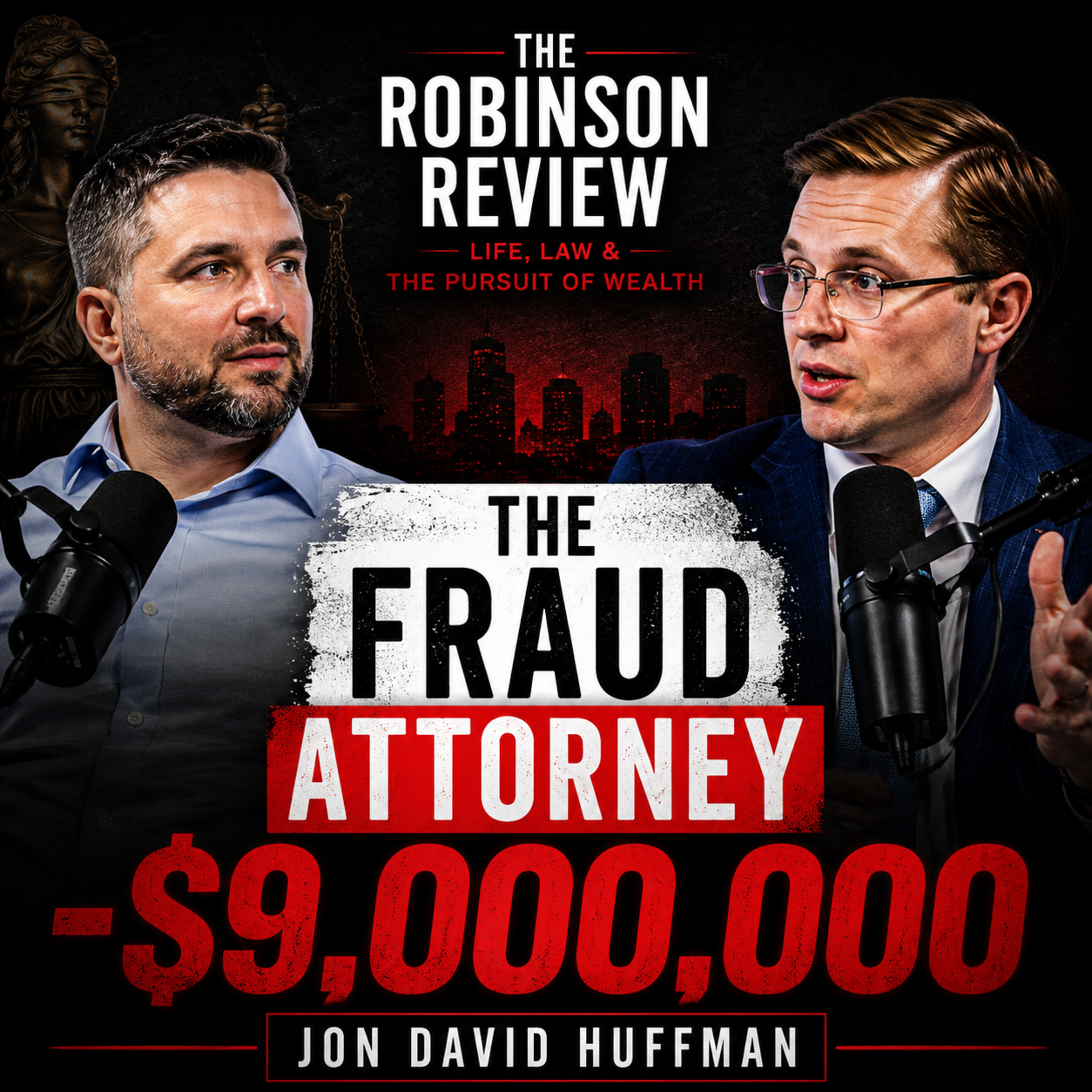
You’ve Been Defrauded. Now What? | The Fraud Attorney Jon David Huffman
Aug 10, 202637 min
What happens when you realize you’ve been defrauded — and what can you actually do about it? In this episode of The Robinson Review: Life, Law & the Pursuit of Wealth , I sit down with Jon David Huffman — “The Fraud Attorney” — for a wide-ranging conversation about fraud, law firm leadership, real estate partnerships, and the business of practicing law. We break down real-world examples of fraud cases , how fraud happens, the warning signs people often overlook, and what victims should do when they discover they’ve been deceived. But the conversation goes well beyond fraud. Jon and I also dive into building and leading a law firm , creating a strong firm culture, managing attorneys and teams, and the lessons we’ve both learned as lawyers and business owners. We also get into real estate partnerships — how they’re structured, where they can go wrong, and why choosing the right partners can be just as important as choosing the right deal. This episode covers: What to do when you’ve been defrauded Real-world fraud cases and lessons from the courtroom Red flags that investors and business owners should recognize Real estate partnerships and partnership disputes Law firm leadership and management Building a strong culture inside a law firm The intersection of law, business, real estate, and wealth Whether you’re an entrepreneur, investor, attorney, business owner, or real estate professional , there are lessons in this conversation that could save you from an expensive mistake. ️ You’ve Been Defrauded. Now What? | The Fraud Attorney Jon David Huffman Listen to the full episode of The Robinson Review .
Crypto, Stablecoins, Real Estate Tokenization, and Scam Risks with Blockchain Lawyer Ari Good
Jul 14, 202637 min
Todd Robinson interviews blockchain and cryptocurrency lawyer Ari Good about what cryptocurrency and blockchain are and how they may be used in wealth-building and real estate. Good explains a blockchain as a distributed database run on nodes worldwide, with Bitcoin enabling peer-to-peer value transfer without banks, and notes there is no central Bitcoin company or CEO. He argues crypto will not replace traditional finance; instead, Wall Street and banks are adopting select blockchain use cases, with stablecoins likely serving as “plumbing” behind familiar payment apps. Good distinguishes Bitcoin from stablecoins like USDC, which digitally represent and are pegged to the US dollar. They discuss real-world asset tokenization for real estate, currently more feasible via tokenizing entities (e.g., SPVs/LLCs) than tokenizing deeds directly due to recorder/ownership-chain issues. Good warns about irreversible crypto scams, shares red flags, and addresses tax-evasion claims as warning signs. How To Connect with Todd: https://www.instagram.com/officialtoddrobinson https://www.linkedin.com/in/toddnrobinson https://www.tiktok.com/@syndicationexpert
The Robinson Review: Life, Law, and the Pursuit of Wealth
How I Bought a $5.6M Apartment Building with Zero Dollars Out-of-Pocket
Jul 12, 202610 min
What if you could acquire a multimillion-dollar apartment building without investing any of your own money? In this episode, I break down exactly how I purchased a $5.6 million multifamily property with zero dollars out-of-pocket —from finding the deal and structuring the financing to raising capital and navigating negotiations.You’ll learn the creative strategies, key relationships, and calculated risks that made the acquisition possible, along with the challenges and lessons that came with it. Whether you’re an experienced investor or just getting started in real estate, this episode offers a behind-the-scenes look at how large deals can be done without a massive personal bank account. This episode is for educational purposes only and does not constitute financial, legal, or investment advice.
The Robinson Review: Life, Law, and the Pursuit of Wealth
🚀 Steal My Real Estate Scaling System (The Exact Framework I Use)
Jun 28, 202610 min
👉🏻 Ready to close your first multifamily deal in the next 90 days? Book a free call with my team here: https://calendly.com/d/cxjf-kt8-s4m/multifamily-dealmakers-strategy-call?utm_id=97757_v0_s00_e0_tv0&month=2026-06 I went from zero to 974 units and $100 million in multifamily real estate using a simple six-step system I call the Dealmaker Scaling System. In this video I break down every step — exactly how I did it, and exactly what my students inside Multifamily Dealmakers are using right now to close their first deals. This isn't theory. It's the real framework: how to build your reputation, lock in your legal foundation, learn to underwrite deals, partner with the right people, raise capital from your existing network, and get into the rooms where deals actually happen.If you're a high earner, a single family investor, or someone ready to break into multifamily — this is your roadmap.📞 Ready to close your first multifamily deal in the next 90 days? Book a free call with my team here: https://calendly.com/d/cxjf-kt8-s4m/multifamily-dealmakers-strategy-call?utm_id=97757_v0_s00_e0_tv0&month=2026-06 📲 Follow me on Instagram: @officialtoddrobinson
From Zero Cash to an 80-Unit: William Bertolasio’s Multifamily Breakthrough
Jun 2, 202628 minS0
<p>Todd Robinson interviews Houston investor William Bertolasio about launching his real estate career through the Multifamily Dealmakers program and joining the GP on an 80-unit apartment acquisition without investing his own money, largely due to 90% seller financing. William shares his background running a roofing/storm restoration contracting business, his long-standing interest in real estate, initial skepticism about coaching, and how learning underwriting and using provided Excel tools helped him add value. After being encouraged to network, he pitched a 22-unit deal on a local Zoom call, met community member MD, and was brought into the 80-unit where he handled...
Every question we get asked before someone starts their trial.
If you have a concern about deliverability, AI quality, data privacy, or whether this will actually work for your specific situation, it's probably answered below.
What is the difference between Founder Solo and Founder Pro?
Founder Solo gives you 50 AI pitches per month using the credit model (Standard pitches cost 1 credit, Enriched pitches cost 2). Founder Pro raises that to 200 credits per month and adds full Booking Probability access, unlimited Magic Match, Apollo enrichment credits, and data export capabilities. Both plans use the same credit system, so you can stretch your monthly budget further by using Standard-mode drafting.
How do agency tiers work?
Agency tiers have no base fee. You pay per managed client and per talent profile. Agency Standard is $199 per client per month; Agency Pro is $399 per client per month. Both add $39 per talent profile per month. Your own team's user seats are always free.
What is a talent profile?
A talent profile represents one person (founder, executive, or spokesperson) you are booking onto podcasts. It includes their bio, topics, headshots, and outreach history. Team plans include 5 profiles; agency plans are pay-as-you-go.
Can I switch plans later?
Yes, at any time. Upgrades take effect immediately; downgrades apply at the end of the current billing period. Contact support if you need help migrating between plan families.
Do you offer a free trial?
Every paid plan includes a 15-day free trial. Your card is saved at signup but you will not be charged until day 16. Cancel any time from your dashboard.
What happens if I cancel?
You keep access until the end of your current billing period. No charges after that. Your data is retained for 30 days in case you reactivate.
Is the 20% annual discount automatic?
Yes. Select Annual on the pricing toggle and the discounted price is applied automatically at checkout. The annual price shown is the full year cost.
What if I have more than 50 profiles or 20 clients?
That is our Enterprise tier. Contact our sales team and we will build a custom plan with volume pricing, a dedicated account manager, and SLA guarantees.