
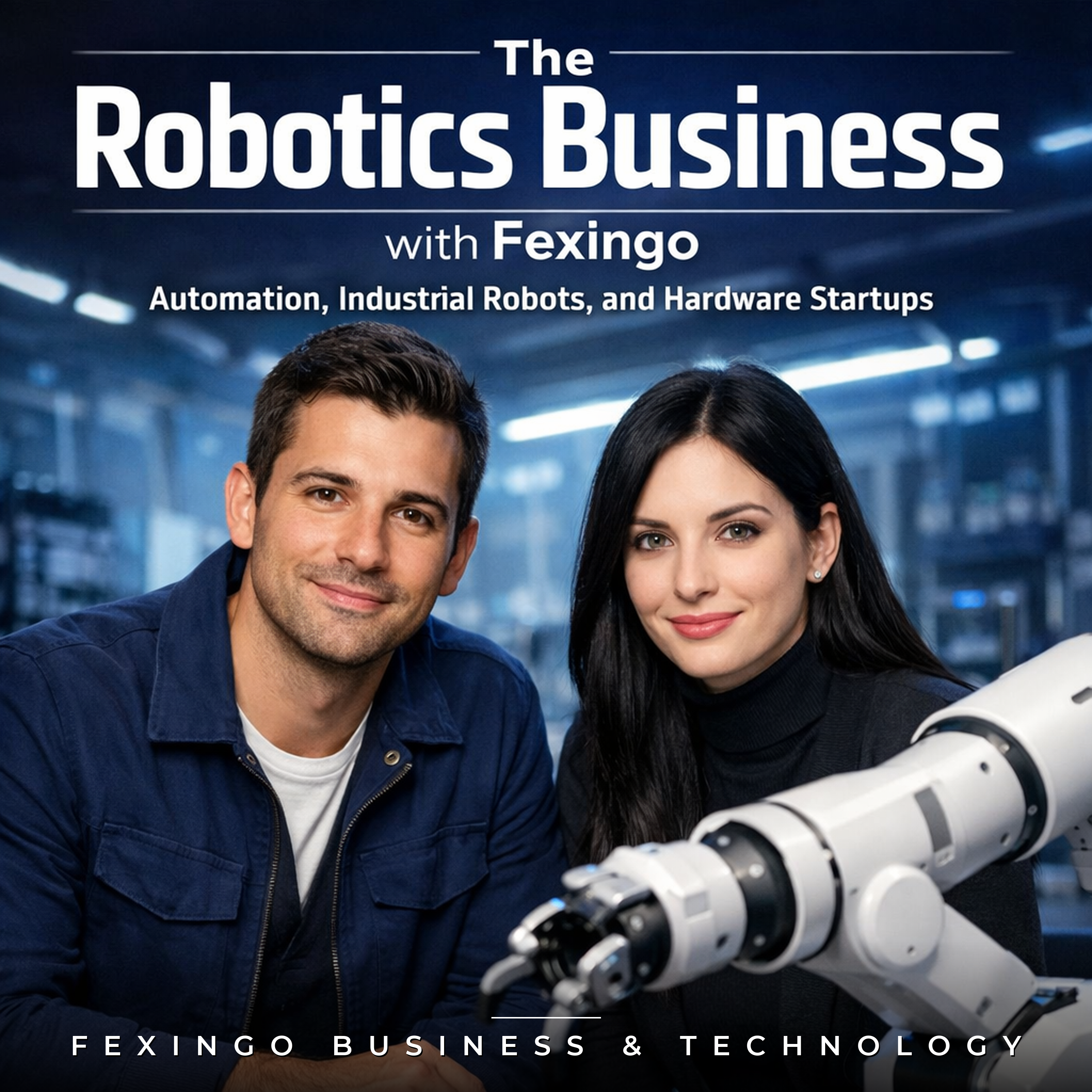
Lucas and Luna examine the business of robotics — not as a collection of sci-fi promises but as an industrial sector with real P&L statements, supply chains, and return-on-capital questions. Each episode picks one thread: why ABB and Fanuc dominate factory automation while startups like Covariant and Dexterity chase warehouse picking; the unit economics of a collaborative robot arm versus a human worker at current wage rates; the patent landscape in actuator design and what it tells you about who owns the next decade of hardware. Lucas walks through balance sheets and teardown costs; Luna presses on adoption barriers, labor market friction, and the venture math that separates a viable robot company from a perpetual prototype. They do not ignore the hype — they weigh it against shipping volumes, customer churn, and actual deployment data. The listener is someone who wants to understand where the money actually flows in robotics: which verticals (automotive, logistics, food processing) a
Pitch Analysis
Required Pod Score for this show. PitchCentric checks your profile against host openness, topical fit, and audience signals before you generate a pitch.
Contact path
Verified email
Booking probability
35%
Guest openness
Selective
Verified email on file
80/100
Required Score
Sign up to generate a grounded pitch for The Robotics Business with Fexingo: Automation, Industrial Robots, and Hardware Startups.
What is The Robotics Business with Fexingo: Automation, Industrial Robots, and Hardware Startups?
The Robotics Business with Fexingo: Automation, Industrial Robots, and Hardware Startups is a business podcast hosted by Fexingo, with 155 episodes on record and a Required Pod Score of 80. PitchCentric scores this show on Booking Probability, Listen Score, and live audience signals refreshed every 24 hours.
About the host
Fexingo hosts The Robotics Business with Fexingo: Automation, Industrial Robots, and Hardware Startups, a business show with 155 episodes published.
Our AI reads these to draft pitches. Use them as grounding for a pitch that cites a real guest and a specific topic.
Episode #159
Why Robot Arms Can't Pick a Single Strawberry
Aug 18, 202611 minS4
In this episode of The Robotics Business, Lucas and Luna explore why picking a single ripe strawberry remains one of the hardest unsolved problems in agricultural robotics. They discuss the physics of soft fruit, the economics of labor shortages, and the surprising reason why machine learning hasn't cracked it yet. With a focus on the $3 billion fresh berry market and the startups attempting to solve it, they explain why a robot that can beat a human at chess still struggles with a delicate fruit. The episode also touches on the broader implications for automation in agriculture and what this means for the future of food production. Tune in for a deep dive into the messy, real-world challenges that keep roboticists up at night. #AgriculturalRobotics #StrawberryPicking #SoftFruitHarvest #RoboticsStartups #Automation #LaborShortage #MachineLearning #ComputerVision #PrecisionAgriculture #FreshBerryMarket #RobotArms #BusinessAndTechnology #FexingoBusiness #BusinessPodcast #TechTrends #AgTech #RoboticsEngineering #HarvestAutomation Keep every episode free: buymeacoffee.com/fexingo
On this episode of The Robotics Business, Lucas and Luna dig into the surprisingly stubborn problem of sharpening a pencil with a robot arm. They break down why a task that seems simple—inserting a pencil into a hole and rotating it—is actually a masterclass in precision, force control, and sensory feedback. The hosts explore real-world attempts, from high-end industrial arms to hobbyist hacks, and what this tells us about the gap between human dexterity and robotic capability. They also discuss the broader business implications: why companies are pouring millions into solving such 'trivial' tasks and how the lessons from pencil sharpening could apply to everything from surgical robots to automated manufacturing. If you've ever wondered why your Roomba can't pick up a stray sock, this episode offers a tangible entry point into the world of robotic manipulation. Tune in for a mix of engineering insights, business strategy, and a few laughs at the expense of our metallic overlords. #RoboticsBusiness #Automation #IndustrialRobots #HardwareStartups #RoboticManipulation #PrecisionEngineering #ForceControl #Dexterity #MachineLearning #RoboticsInnovation #BusinessTechnology #TechnologyTrends #RoboticsEngineering #PencilSharpening #RobotArms #ManufacturingTech #FexingoBusiness #BusinessPodcast Keep every episode free: buymeacoffee.com/fexingo
How Robot Arms Are Learning to Pick Your Online Orders
Aug 16, 20269 minS4
E-commerce warehouses are wrestling with one of the hardest problems in robotics: the 'bin-picking' challenge. This episode of The Robotics Business digs into why grabbing a random item from a tote is so tough for machines, and how companies like Covariant and Osaro are using reinforcement learning to crack it. We look at the economics — why a robot that can pick one item per second still can't replace a human picker on cost alone — and the domino effect on logistics giants like Amazon. Lucas and Luna break down the tech, the business case, and what happens when the picking rate finally tips the scale. #BinPicking #WarehouseRobotics #Covariant #Osaro #AmazonRobotics #ReinforcementLearning #LogisticsTech #EcommerceFulfillment #Automation #IndustrialRobots #RoboticsStartups #SupplyChainTech #MachineLearning #RoboticsBusiness #FexingoBusiness #BusinessPodcast #Technology #HardwareStartups Keep every episode free: buymeacoffee.com/fexingo
In episode 156 of The Robotics Business, Lucas and Luna explore the surprisingly hard problem of teaching a robot arm to thread a needle. They break down the physics of a 0.3-millimeter eye, the precision limits of off-the-shelf arms, and why a team at the University of Tokyo used two cameras and reinforcement learning to crack it. The conversation covers the gap between lab breakthroughs and factory deployment, the business case for micron-level automation, and what this means for sewing, surgery, and micro-assembly. Expect concrete numbers, a candid look at why most industrial arms fall short, and a discussion of when the tech will actually pay off. #Robotics #RobotArms #NeedleThreading #IndustrialAutomation #PrecisionEngineering #ReinforcementLearning #UniversityOfTokyo #MicroAssembly #Business #Technology #FexingoBusiness #BusinessPodcast #Automation #Manufacturing #RoboticsStartup #SewingRobots #SurgicalRobots #HardwareStartups Keep every episode free: buymeacoffee.com/fexingo
In this episode, Lucas and Luna explore the high-stakes world of bomb disposal robotics. They dig into the specific engineering problem of 'fine manipulation under uncertainty' — how a robot arm can cut a wire with millimeter precision when it's mounted on a shaky, remote-controlled platform. The conversation centers on real-world systems like the PackBot and the Talon, and how operators train these machines to handle improvised explosive devices. Lucas breaks down the sensory feedback loop of force-torque sensing and why haptic feedback is still a distant dream for most EOD teams, while Luna brings up the emotional weight of teleoperation and the 'human in the loop' conundrum. They also touch on the economics of defense robotics — why a bomb disposal robot costs as much as a luxury car, and how the market is shifting toward modular, software-defined platforms. By the end, listeners will understand why the hardest part of defusing a bomb is not the wrist joint, but the confidence to trust a machine with your life. #RoboticsBusiness #BombDisposal #EODRobots #DefenseTech #Teleoperation #ForceTorqueSensing #HapticFeedback #PackBot #TalonRobot #ImprovisedExplosiveDevices #MilitaryRobotics #HumanInTheLoop #FineManipulation #RoboticsEngineering #BusinessAndTechnology #Automation #FexingoBusiness #BusinessPodcast Keep every episode free: buymeacoffee.com/fexingo
Every question we get asked before someone starts their trial.
If you have a concern about deliverability, AI quality, data privacy, or whether this will actually work for your specific situation, it's probably answered below.
What is the difference between Founder Solo and Founder Pro?
Founder Solo gives you 50 AI pitches per month using the credit model (Standard pitches cost 1 credit, Enriched pitches cost 2). Founder Pro raises that to 200 credits per month and adds full Booking Probability access, unlimited Magic Match, Apollo enrichment credits, and data export capabilities. Both plans use the same credit system, so you can stretch your monthly budget further by using Standard-mode drafting.
How do agency tiers work?
Agency tiers have no base fee. You pay per managed client and per talent profile. Agency Standard is $199 per client per month; Agency Pro is $399 per client per month. Both add $39 per talent profile per month. Your own team's user seats are always free.
What is a talent profile?
A talent profile represents one person (founder, executive, or spokesperson) you are booking onto podcasts. It includes their bio, topics, headshots, and outreach history. Team plans include 5 profiles; agency plans are pay-as-you-go.
Can I switch plans later?
Yes, at any time. Upgrades take effect immediately; downgrades apply at the end of the current billing period. Contact support if you need help migrating between plan families.
Do you offer a free trial?
Every paid plan includes a 15-day free trial. Your card is saved at signup but you will not be charged until day 16. Cancel any time from your dashboard.
What happens if I cancel?
You keep access until the end of your current billing period. No charges after that. Your data is retained for 30 days in case you reactivate.
Is the 20% annual discount automatic?
Yes. Select Annual on the pricing toggle and the discounted price is applied automatically at checkout. The annual price shown is the full year cost.
What if I have more than 50 profiles or 20 clients?
That is our Enterprise tier. Contact our sales team and we will build a custom plan with volume pricing, a dedicated account manager, and SLA guarantees.
