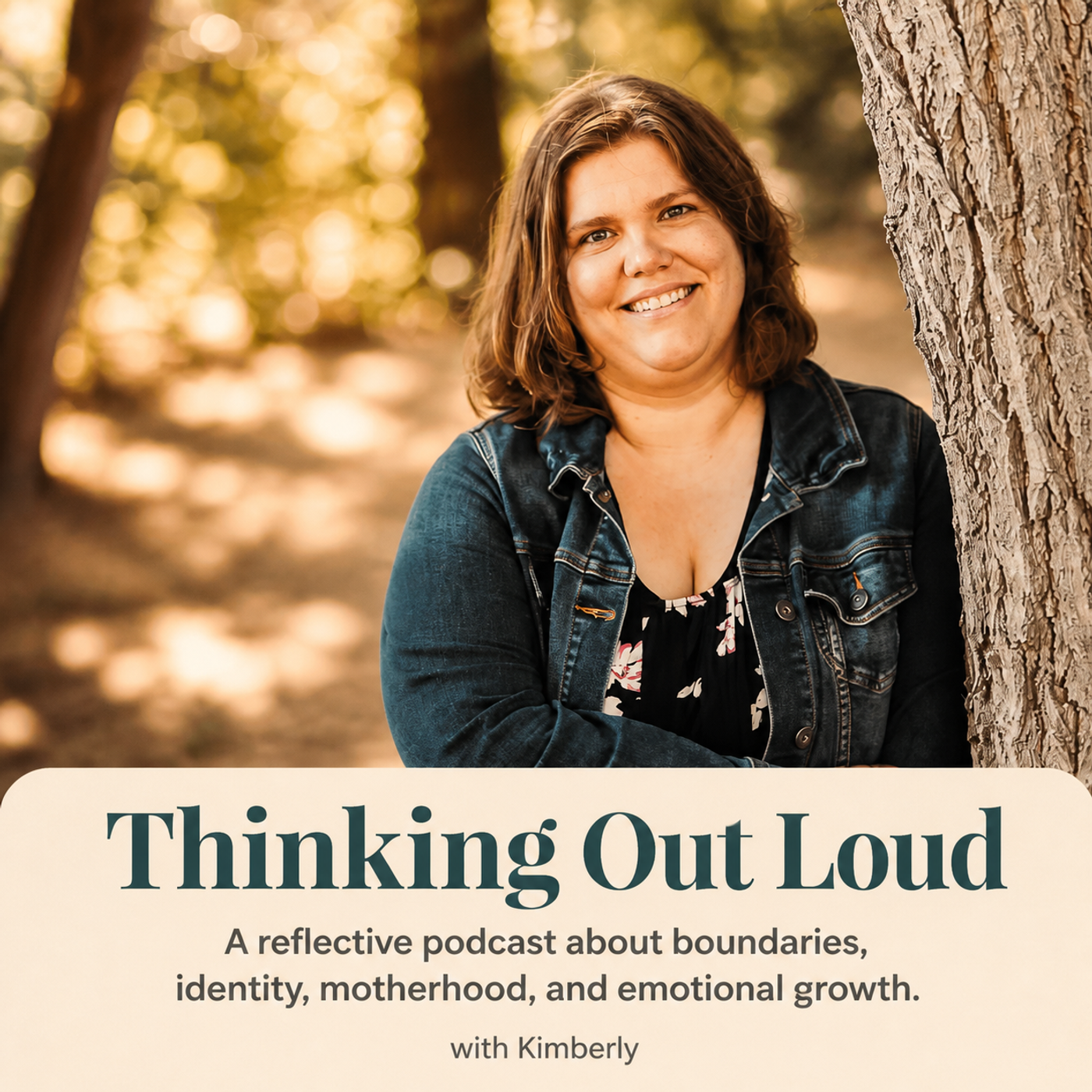
Welcome to Thinking Out Loud! Hi. It's me, Kimberly. I'm a rambler by nature. I ask a lot of questions, chase nuance, and rarely believe life fits neatly into "good" and "evil." I'm more interested in understanding why we think the way we do than winning an argument. Here, we explore culture through a philosophical lens, using everyday life as the commentary—sometimes through movies, music, and pop culture, and other times through psychology, family systems, motherhood, relationships, budgeting, or whatever else has me thinking that week. Life doesn't happen in neat categories, so neither does this channel. We do try to have fun, though. Life can be heavy, and I believe it's important to leave room for laughter while still making space for pain, grief, and those moments where all you can honestly say is, "Well...that sucks." I'm a mom untangling my own experiences while trying to build a healthier life for my family. Along the way, I've learned that w
Pitch Analysis
Required Pod Score for this show. PitchCentric checks your profile against host openness, topical fit, and audience signals before you generate a pitch.
Contact path
Verified email
Booking probability
32%
Guest openness
Selective
Verified email on file
80/100
Required Score
Sign up to generate a grounded pitch for Thinking Out Loud | Kimberly.
Our AI reads these to draft pitches. Use them as grounding for a pitch that cites a real guest and a specific topic.
Episode #50
What Does it Mean to Have Capacity? | Thinking Out Loud
Oct 1, 202630 minS1
EP50: Understanding Capacity Welcome back to Thinking Out Loud ! I’m Kimberly, and in this episode, we’re diving into the essential question: What does it mean to have capacity? We often discuss capacity in simplistic terms, but it’s nuanced. Sometimes it refers to physical energy, while other times, it’s emotional or mental resilience. As we explore this concept, I’ll introduce three metaphors—spoons, cake, and cauldrons—to illustrate how capacity is not just about how much we can do, but also about recognizing what we can responsibly give without depleting ourselves. Key Topics Covered: Spoon Theory: Understanding how energy is finite and must be managed wisely, especially for those with chronic conditions or life demands. Cake Metaphor: Visualizing our capacity as a beautifully crafted cake, where we decide how to allocate our energy and resources. Are we sharing willingly, or are others taking without consent? Overflowing Cauldron: Exploring the complexities of capacity and the impact of life’s demands, both good and bad, and how they can spill over into our emotional well-being. I’ll also discuss how to navigate the boundaries of our capacity. It’s perfectly okay to say no and prioritize self-care without guilt. We’ll reflect on how respecting our own limits and the limits of others is a vital part of fostering healthy relationships. This podcast is for reflection and conversation, not professional advice. Take what resonates, leave the rest, and remember your capacity is yours. Subscribe & Follow Thinking Out Loud Facebook www.facebook.com/thinkingoutloud.kimberly/ Instagram Blog hi.itsmekimberly | Substack For questions, collaborations, or guest inquiries: thinkingoutloudkimberly@gmail.com
EP49: Why Can I Get Over the Past? Welcome back to Thinking Out Loud ! I'm Kimberly, and in this episode, we’re tackling a deeply relatable question: How do I get over it? We often envision healing as a straightforward hurdle to jump over, but the reality is far more complex. What if moving on isn’t just about clearing obstacles but understanding what we’re really grieving? Sometimes we put time limits on our healing, but that can lead to feelings of inadequacy and confusion. Join me as I explore the nuances of processing grief versus disappointment, and the importance of recognizing that everyone's experience is different. From lost friendships to changes in life plans, the things we grieve are as varied as the individuals we are. Get curious about your pain: Rather than asking "why am I not over this yet?", let’s explore what you’re truly grieving . Build your capacity to carry grief: Healing isn’t about getting rid of pain; it’s about learning how to carry it while still moving forward. Embrace the complexity: Discover that it’s okay to grieve without rushing the process or minimizing your feelings. Join me as I don't offer concrete solutions rather create space for reflection and honest conversation. Together, we’ll learn that it’s okay to show up while still hurting and that living fully doesn’t require us to leave our grief behind. This podcast is for reflection and conversation, not professional advice. Take what resonates, leave the rest, and remember sometimes healing is learning how to build the capacity to carry what happened. Subscribe & Follow Thinking Out Loud Facebook www.facebook.com/thinkingoutloud.kimberly/ Instagram Blog hi.itsmekimberly | Substack For questions, collaborations, or guest inquiries: thinkingoutloudkimberly@gmail.com
EP48: Healing Isn't a Race Welcome back to Thinking Out Loud ! I’m Kimberly, and today we’re addressing a fundamental question: Why do we rush healing? In a world that often places a premium on speed and productivity, healing can feel like just another checkbox on our to-do list. We want to feel better now, to create something meaningful now, and to prove to ourselves that our choices were worth it. In this episode, I’ll explore: The Pressure of Performance: How the desire to look healed can overshadow the genuine process of recovery, leading to feelings of resentment and self-doubt. Untangling Identity from Expectations: The importance of differentiating between who we are and who others want us to be, and how societal and personal expectations can cloud our self-perception. The Complexity of Healing: Using gardening as a metaphor, we’ll delve into the nuances of tending to our emotional landscapes—acknowledging that healing is not about eradicating all “weeds” but about understanding their role and nurturing healthy growth. The Importance of Patience: Why it’s vital to allow ourselves the time and space to heal, recognizing that true recovery isn’t a destination but an ongoing journey. Join me as we create a space for honesty, vulnerability, and slow, intentional growth. Let’s get to thinking out loud! This podcast is for reflection and conversation, not professional advice. Take what resonates, leave the rest, and remember not every coping strategy is a weed we need to pull out. Subscribe & Follow Thinking Out Loud Facebook www.facebook.com/thinkingoutloud.kimberly/ Instagram Blog hi.itsmekimberly | Substack For questions, collaborations, or guest inquiries: thinkingoutloudkimberly@gmail.com
Why Does Healing Sometimes Feel Performative? | Thinking Out Loud
Sep 22, 202619 minS1
EP47: The Performance of Healing Welcome back to Thinking Out Loud ! I’m Kimberly, and today we’re diving deep into a crucial question: Why does healing sometimes feel performative? Healing is often framed as a journey toward self-awareness and growth, what happens when the act of healing becomes a performance? In our quest for validation, we may find ourselves more focused on appearing healed than actually doing the inner work. When we share our hurt, it can feel like we’re met with comparisons or judgments instead of understanding. In this episode, we’ll explore: The Pressure to Look Healed: How societal expectations can turn the genuine process of healing into a performance. Are we more concerned with looking self-aware or with truly feeling and processing our pain? Healing Language and Its Pitfalls: Understanding terms like gaslighting, boundaries, and trauma bonding, and how superficial comprehension can lead to misunderstanding and harm. Comparison Culture: The ways in which we compare wounds and struggles, often undermining the individuality of our experiences. Real vs. Performative Healing: What it means to truly engage with your emotions and the importance of honesty in your healing journey, free from the pressure to conform to others' expectations. This conversation is an invitation to reflect, not only on your experiences but on what healing looks like for you—beyond the surface. Healing doesn’t require us to turn our pain into beautiful stories or to constantly prove we’re “better.” Join me as we navigate the complexities of healing, allowing space for discomfort, uncertainty, and authenticity. This podcast is for reflection and conversation, not professional advice. Take what resonates, leave the rest, and remember you don't have to perform for your healing to be real. Subscribe & Follow Thinking Out Loud Facebook www.facebook.com/thinkingoutloud.kimberly/ Instagram Blog hi.itsmekimberly | Substack For questions, collaborations, or guest inquiries: thinkingoutloudkimberly@gmail.com
When Does Influence or a Deeply Held Belief Become Indoctrination? | Thinking Out Loud
Sep 17, 202611 minS1
EP46: When Does Influence Become Indoctrination? Welcome back to Thinking Out Loud ! I’m Kimberly, and today we’re diving into a topic that often stirs up strong emotions: When does influence or a deeply held belief cross the line into indoctrination? We often picture indoctrination as a black-and-white scenario involving cults or strict regimes, but what if it manifests more subtly in our daily lives? What if indoctrination is wrapped in the guise of advice, tradition, or even love? When someone tells you, “This is just how things are” or “Good people believe this,” it might not feel like control, but it raises important questions. In this episode, we’ll explore: The Fine Line Between Influence and Indoctrination: Understanding that being influenced is a part of life. Parents, cultures, communities, and media all shape our beliefs. When does this become an uncritical acceptance of ideas? The Role of Curiosity: How questioning our beliefs is essential for growth. We’ll tackle the dangers of an environment where questioning is discouraged, and explore what happens when curiosity is replaced by conformity. Recognizing Healthy Influence: Discussing how education, diverse perspectives, and exposure to different beliefs can enrich our understanding without crossing into indoctrination. Navigating the Gray Areas: We’ll uncover the complexities involved in discussing religion and beliefs, emphasizing the importance of understanding context and respecting diverse interpretations. Join me as we move beyond binary thinking, unpack the nuances of thought and influence, and encourage a space where asking questions is celebrated. Let’s get to thinking out loud! This podcast is for reflection and conversation, not professional advice. Take what resonates, leave the rest, and remember influence isn't the same thing as indoctrination. Subscribe & Follow Thinking Out Loud Facebook www.facebook.com/thinkingoutloud.kimberly/ Instagram Blog hi.itsmekimberly | Substack For questions, collaborations, or guest inquiries: thinkingoutloudkimberly@gmail.com
Every question we get asked before someone starts their trial.
If you have a concern about deliverability, AI quality, data privacy, or whether this will actually work for your specific situation, it's probably answered below.
What is the difference between Founder Solo and Founder Pro?
Founder Solo gives you 50 AI pitches per month using the credit model (Standard pitches cost 1 credit, Enriched pitches cost 2). Founder Pro raises that to 200 credits per month and adds full Booking Probability access, unlimited Magic Match, Apollo enrichment credits, and data export capabilities. Both plans use the same credit system, so you can stretch your monthly budget further by using Standard-mode drafting.
How do agency tiers work?
Agency tiers have no base fee. You pay per managed client and per talent profile. Agency Standard is $199 per client per month; Agency Pro is $399 per client per month. Both add $39 per talent profile per month. Your own team's user seats are always free.
What is a talent profile?
A talent profile represents one person (founder, executive, or spokesperson) you are booking onto podcasts. It includes their bio, topics, headshots, and outreach history. Team plans include 5 profiles; agency plans are pay-as-you-go.
Can I switch plans later?
Yes, at any time. Upgrades take effect immediately; downgrades apply at the end of the current billing period. Contact support if you need help migrating between plan families.
Do you offer a free trial?
Every paid plan includes a 15-day free trial. Your card is saved at signup but you will not be charged until day 16. Cancel any time from your dashboard.
What happens if I cancel?
You keep access until the end of your current billing period. No charges after that. Your data is retained for 30 days in case you reactivate.
Is the 20% annual discount automatic?
Yes. Select Annual on the pricing toggle and the discounted price is applied automatically at checkout. The annual price shown is the full year cost.
What if I have more than 50 profiles or 20 clients?
That is our Enterprise tier. Contact our sales team and we will build a custom plan with volume pricing, a dedicated account manager, and SLA guarantees.