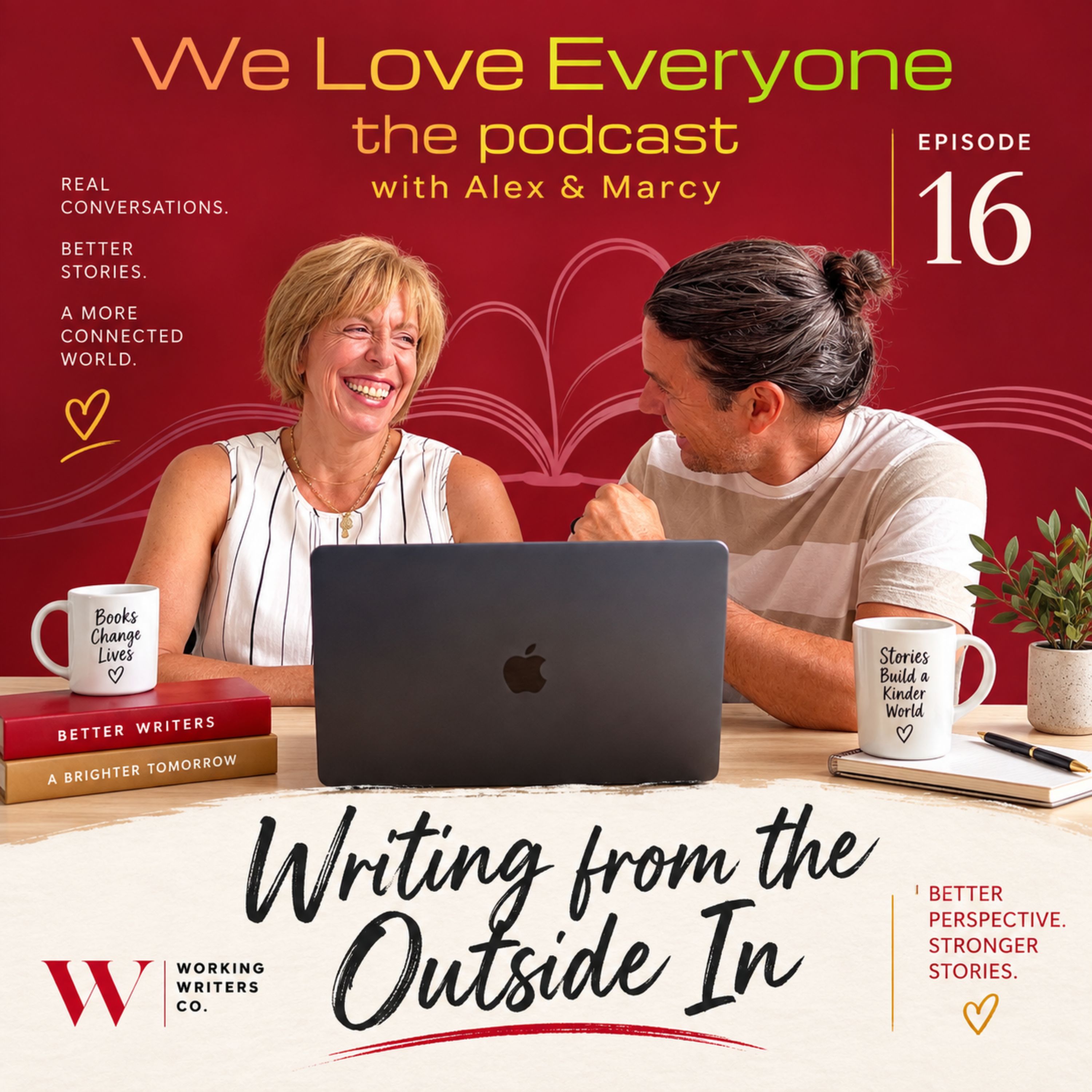
Episode #16
Writing From the Outside In
What happens when you know your story too well? As writers, we live inside our manuscripts. We know the backstory, the characters' motivations, the significance of every scene, and exactly what we intended the reader to feel. But the reader doesn't have any of that information. They only have what's on the page. In Episode 16 of We Love Everyone , Alex and Marcy explore one of the most important—and often overlooked—aspects of writing: the reader's experience. We discuss the difference between what an author intends and what a reader actually experiences, and why becoming a better writer sometimes requires stepping outside your own work and encountering it as if you've never seen it before. Because a reader is constantly asking questions: What is happening? Why does this matter? What happens next? What does this character really want? What are they hiding? And perhaps most importantly: Why should I keep reading? We explore the delicate distinction between curiosity and confusion, and why leaving a question unanswered can be one of the most powerful tools a writer possesses—provided the reader understands enough to want the answer. We also introduce the Reader Experience Audit, a practical revision technique that encourages writers to stop immediately editing their prose and instead pay attention to what they're actually experiencing as they read. In This Episode, We Explore: Why writers naturally experience their stories differently than readers do The difference between authorial intention and reader experience The five elements every writer should watch for: curiosity, clarity, emotion, trust, and momentum How unanswered questions create narrative tension The crucial difference between making a reader curious and making them confused Why strong writing gives readers a reason to keep turning the page How character development can influence the reader's emotional investment The importance of identifying where a reader's attention begins to drift The Reader Experience Audit as a revision tool Why writers should ask not simply, “Is this well written?” but “What does this make my reader experience?”