
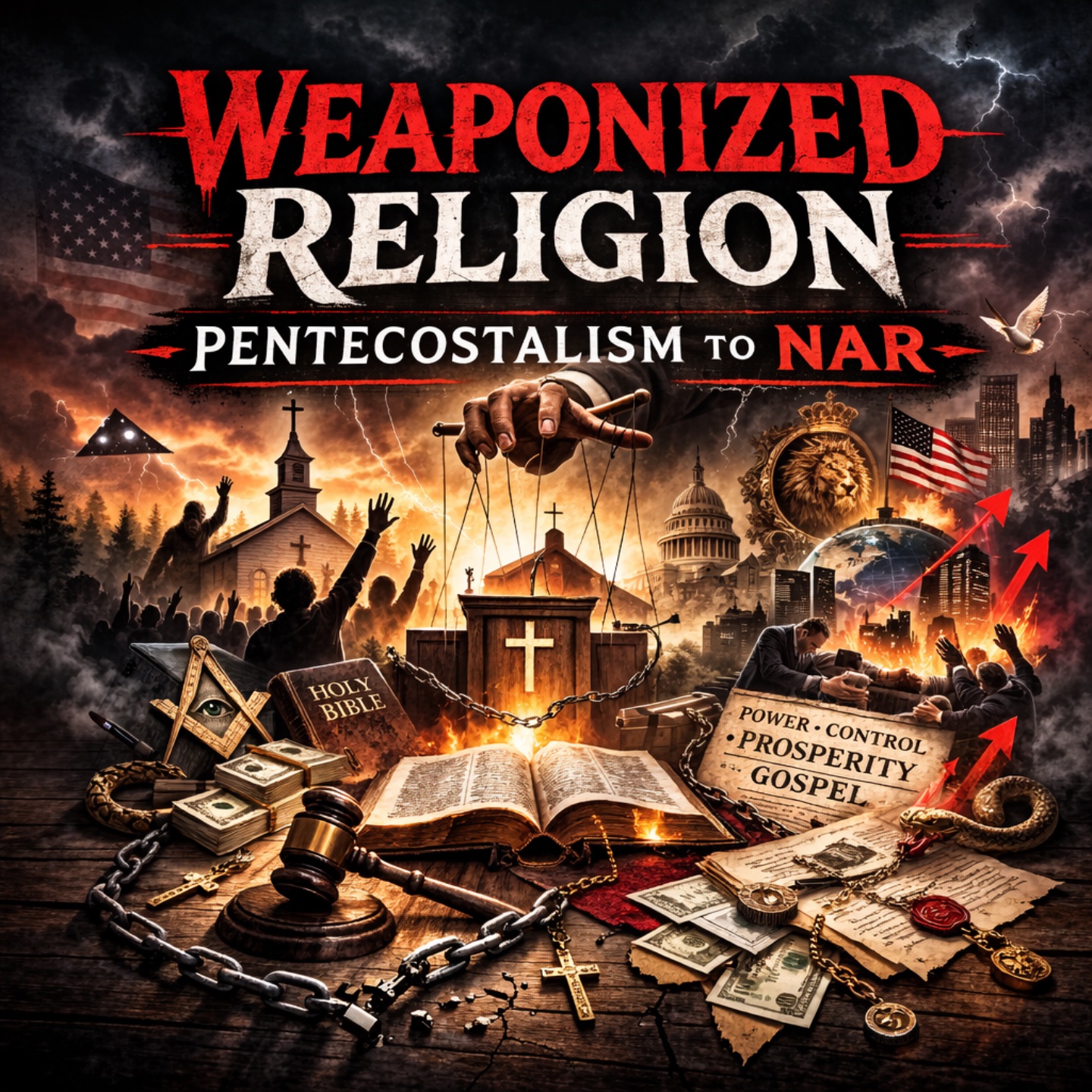
Weaponized Religion: Pentecostalism To NAR traces how spiritual language can be turned into a tool of power. From early Pentecostal currents to Latter Rain and modern NAR networks, John Collins follows the ideas, leaders, and systems that reshape faith into influence campaigns, loyalty machines, and political projects. Each episode connects doctrine to outcomes: prophecy culture, spiritual warfare frameworks, dominion claims, "apostolic" authority, prosperity messaging, and the patterns of control that follow. Expect historical context, receipts, and plain-language analysis aimed at helping listeners recognize manipulation, protect their communities, and separate genuine belief from manufactured pressure. Views expressed by guests or co-hosts are their own and do not necessarily reflect those of Derby Media Group LLC. Legal: https://www.william-branham.org/site/legal
Pitch Analysis
Required Pod Score for this show. PitchCentric checks your profile against host openness, topical fit, and audience signals before you generate a pitch.
Contact path
Verified email
Booking probability
12%
Guest openness
Selective
Verified email on file
80/100
Required Score
Sign up to generate a grounded pitch for Weaponized Religion: Pentecostalism to NAR.
What is Weaponized Religion: Pentecostalism to NAR?
Weaponized Religion: Pentecostalism to NAR is a religion podcast hosted by William Branham Historical Research, with 0 episodes on record and a Required Pod Score of 80. PitchCentric scores this show on Booking Probability, Listen Score, and live audience signals refreshed every 24 hours.
About the host
William Branham Historical Research hosts Weaponized Religion: Pentecostalism to NAR, a religion show with 0 episodes published.
Our AI reads these to draft pitches. Use them as grounding for a pitch that cites a real guest and a specific topic.
Weaponized Religion: Pentecostalism to NAR
When the Prophet Lies: The Warning of 1 Kings 13
Jul 29, 202655 min
John Collins and McKinnon discuss 1 Kings 13 and the sobering story of the prophet from Judah, the old prophet from Bethel, and the danger of allowing a claimed revelation to override the clear command of God. The discussion connects the biblical account to questions about prophecy, sincerity, obedience, spiritual authority, and the responsibility to test every claim by Scripture. They also examine concerns about William Branham, failed prophetic claims, religious authority, half-truths, and the way followers can become dependent on a messenger's interpretation instead of reading Scripture directly. The conversation emphasizes the need to separate truth from error, reject claims that contradict the Bible, and keep God's Word as the final foundation. ______________________ Weaponized Religion: From Christian Identity to the NAR: Paperback: https://www.amazon.com/dp/1735160962 Kindle: https://www.amazon.com/dp/B0DCGGZX3K ______________________ - Support the channel: https://www.patreon.com/branham - Visit the website: https://william-branham.org

John and John McKinnon expose how fake supernatural experiences, staged healings, miracle props, and unverifiable signs became "bait on the hook" for high-control religious movements. In this episode, they examine William Branham, John Alexander Dowie, Jim Jones, healing-revival spectacle, gold dust, oil Bibles, staged wheelchair healings, and other claims used to build loyalty around revivalists instead of Jesus. The discussion follows the rise of signs-and-wonders culture from early healing movements into modern charismatic and N.A.R. patterns, showing how spectacle can replace Scripture, critical thinking, and the gospel itself. ______________________ Weaponized Religion: From Christian Identity to the NAR: Paperback: https://www.amazon.com/dp/1735160962 Kindle: https://www.amazon.com/dp/B0DCGGZX3K ______________________ - Support the channel: https://www.patreon.com/branham - Visit the website: https://william-branham.org
How Charismatic Leaders Turn The Unknown Into Fear
Jun 18, 202653 min
John and Timothy examine the strange overlap between charismatic Christianity, UFO speculation, conspiracy thinking, deliverance ministry, prosperity gospel motives, and spiritual fear. They discuss Perry Stone, Fate Magazine, Voice of Healing, William Branham, Christ for the Nations, Derek Prince-style deliverance culture, and the way religious leaders can use mystery, fear, and spiritual language to keep people dependent on gurus. The conversation also explores how money, politics, factionalism, and weaponized preaching can reshape the gospel into something driven by fear and control instead of compassion, truth, and spiritual maturity. John and Timothy reflect on leaving high-control religious systems, learning to dialogue with people outside the movement, and recognizing that many people who leave abusive religion are still on a journey toward truth. ______________________ Weaponized Religion: From Christian Identity to the NAR: Paperback: https://www.amazon.com/dp/1735160962 Kindle: https://www.amazon.com/dp/B0DCGGZX3K ______________________ - Support the channel: https://www.patreon.com/branham - Visit the website: https://william-branham.org
Why Fear-Based Prediction Is Not Biblical Prophecy
Jun 17, 202658 min
John Collins and John McKinnon examine why failed prophecies often strengthen high-control religious movements instead of destroying them. They contrast fear-based prediction systems with the New Testament purpose of prophecy: edification, exhortation, comfort, and careful testing. The discussion covers William Branham's 1933 prophecy claims, the 1977 prediction, the woman president prediction, the driverless car claim, the India meetings, the Los Angeles sinking prophecy, and the way followers reinterpret failed claims to preserve loyalty, identity, and belief.
John Collins and John McKinnon examine why followers often remain committed after prophecies fail, using William Branham, Millerism, Seventh-day Adventist origins, Jehovah's Witnesses, and modern prophetic movements as case studies. They explain how date-setting, doomsday expectation, invisible fulfillment claims, and spiritualized reinterpretations can turn failed predictions into loyalty tests. The discussion connects failed prophecy to authority control, information restriction, identity fusion, doctrinal revision, and the emotional difficulty of leaving a high-control religious system. Rather than attacking people trapped inside these movements, the episode encourages critical thinking, historical documentation, and careful testing of prophetic claims. ______________________ Weaponized Religion: From Christian Identity to the NAR: Paperback: https://www.amazon.com/dp/1735160962 Kindle: https://www.amazon.com/dp/B0DCGGZX3K ______________________ - Support the channel: https://www.patreon.com/branham - Visit the website: https://william-branham.org
Every question we get asked before someone starts their trial.
If you have a concern about deliverability, AI quality, data privacy, or whether this will actually work for your specific situation, it's probably answered below.
What is the difference between Founder Solo and Founder Pro?
Founder Solo gives you 50 AI pitches per month using the credit model (Standard pitches cost 1 credit, Enriched pitches cost 2). Founder Pro raises that to 200 credits per month and adds full Booking Probability access, unlimited Magic Match, Apollo enrichment credits, and data export capabilities. Both plans use the same credit system, so you can stretch your monthly budget further by using Standard-mode drafting.
How do agency tiers work?
Agency tiers have no base fee. You pay per managed client and per talent profile. Agency Standard is $199 per client per month; Agency Pro is $399 per client per month. Both add $39 per talent profile per month. Your own team's user seats are always free.
What is a talent profile?
A talent profile represents one person (founder, executive, or spokesperson) you are booking onto podcasts. It includes their bio, topics, headshots, and outreach history. Team plans include 5 profiles; agency plans are pay-as-you-go.
Can I switch plans later?
Yes, at any time. Upgrades take effect immediately; downgrades apply at the end of the current billing period. Contact support if you need help migrating between plan families.
Do you offer a free trial?
Every paid plan includes a 15-day free trial. Your card is saved at signup but you will not be charged until day 16. Cancel any time from your dashboard.
What happens if I cancel?
You keep access until the end of your current billing period. No charges after that. Your data is retained for 30 days in case you reactivate.
Is the 20% annual discount automatic?
Yes. Select Annual on the pricing toggle and the discounted price is applied automatically at checkout. The annual price shown is the full year cost.
What if I have more than 50 profiles or 20 clients?
That is our Enterprise tier. Contact our sales team and we will build a custom plan with volume pricing, a dedicated account manager, and SLA guarantees.