
Loading…

Loading…
history
Hosted by Clive Aslet & John Goodall · history · EN-GB · 62 episodes
A podcast about places and buildings, with tales about history and people. From author and publisher Clive Aslet and the architectural editor of Country Life, & John Goodall
Required Pod Score for this show. PitchCentric checks your profile against host openness, topical fit, and audience signals before you generate a pitch.
Contact path
Public web form
Booking probability
31%
Guest openness
Selective
Sign up to generate a grounded pitch for Your Places or Mine.
Signup to Generate a PitchYour Places or Mine is a history podcast hosted by Clive Aslet & John Goodall, with 62 episodes on record and a Required Pod Score of 80.
Clive Aslet & John Goodall hosts Your Places or Mine, a history show with 62 episodes published.
Our AI reads these to draft pitches. Use them as grounding for a pitch that cites a real guest and a specific topic.

Episode #61
Send us Fan Mail Worcester Cathedral rises above the banks of the River Severn as one of England's great medieval buildings, its honey-coloured stone and soaring central tower dominating the city's skyline much as they have for over nine centuries. Who better to discuss its architecture and history than John Goodall? Founded in 680 as a monastic community, the earliest fabric of the cathedral dates from a rebuilding begun in 1084 under Bishop Wulfstan, the only English-born bishop to retain his see after the Norman Conquest and later canonised as a saint. His original crypt survives intact, a rare and atmospheric example of Norman architecture that still forms part of the working cathedral. Yes, yes – we know that during the following four centuries the building was steadily transformed, absorbing Gothic additions in the Early English, Decorated, and Perpendicular styles, so that a walk through its nave and choir amounts to a tour through the evolution of English medieval architecture. But what about the cathedral’s TWO royal tombs? One is that of King John, whose effigy is one of the earliest depicting an English monarch. John died at Newark but chose to be buried here between the shrines of two Worcester saints, Wulfstan and Oswald. Nearby lies the exquisite Prince Arthur's Chantry Chapel, built for Henry VIII's elder brother, whose early death in 1502 unexpectedly cleared the path to the throne for the future Henry VIII. As Prince of Wales, Arthur had been at Ludlow, the centre of administration for Wales. Beyond its royal connections, Worcester Cathedral is celebrated for its cloisters, chapter house, and the peaceful green of College Green, as well as for its role as one of the three cathedrals hosting the Three Choirs Festival, the oldest music festival in the world. Its bells, stained glass, and Victorian restorations by Sir George Gilbert Scott add further layers to a building that has survived civil war, Reformation upheaval, and the passage of nearly a thousand years. What riches for a podcast with John and Clive.
Episode #60
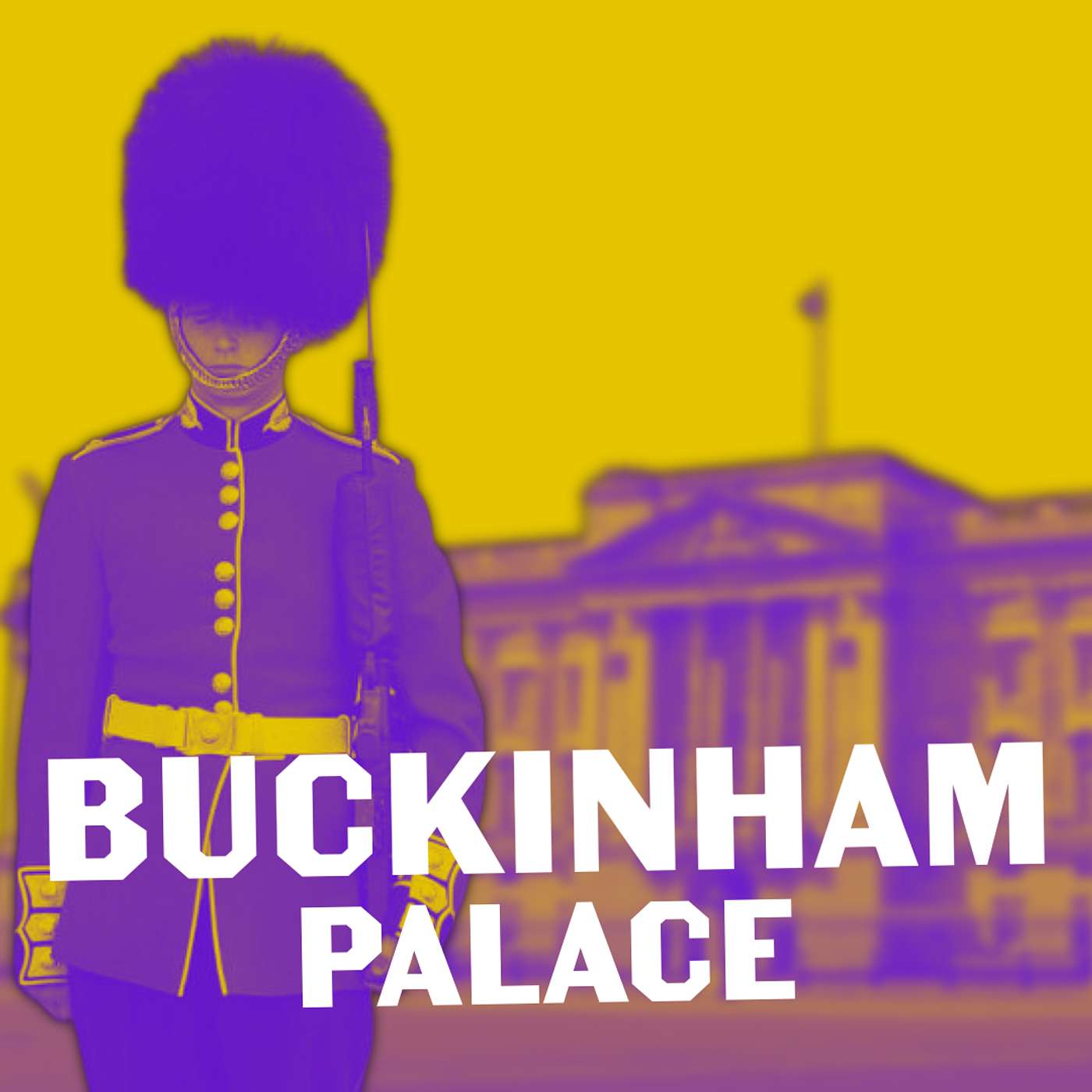
Send us Fan Mail Everybody in the world has heard of Buckingham Palace. The official London residence of the British monarch, it stands at the western end of St James’s Park, very near St James’s Palace. As well as being used for great occasions of State, accompanied by the daily ritual of the changing of the guard, it was also somewhere that successive kings and queens lived when they were in town. Now the decision has been made for HM the King to move out, giving Clive and John the excuse to consider its evolution as a work of architecture and changing taste. The architectural story begins in 1703 when the Duke of Buckingham commissioned a house from the soldier-architect William Winde. Winde’s design for Buckingham House, published in Vitruvius Britannicus, would prove highly influential on the development of later Georgian country houses. Little remains to be seen of it now but it set the scale for what came later. In 1761 George III acquired Buckingham House as a private retreat for Queen Charlotte, to which he added several libraries for his famous collection of books: the foundation of the British Library. George IV turned the house into a palace, persuading Parliament to commission John Nash for the purpose. Nash produced a scheme that was both characteristically elegant in concept and slapdash in execution. The old brick building was clad in Bath stone, doubled in size towards the garden front, provided with wings to either side of a central courtyard, whose termination was a triumphal arch – later moved to the top of Park Lane and called the Marble Arch. Nash was by then an old man and the project ran hopelessly over budget. By the time Queen Victoria ascended the throne in 1837, it also looked impractical: there were too few bedrooms and nurseries. Edward Blore to close the courtyard with a new East Front facing the Mall. When Victoria died in 1901, after a long reign and with the British Empire at its zenith, a fund was established to remember her. This not only produced the sculptural composition of the Queen Victoria Memorial by the sculptor Sir Thomas Brock on a ronde-point (roundabout) in front of the palace but a revamp of The Mall culminating in Admiralty Arch by Sir Aston Webb – a set piece of imperial town planning. There was even enough money to reface the east front of the palace – work that amazingly was carried out in three months while George V was at Balmoral. Central is the most famous balcony in the world, on which successive generations of the royal family stood to wave to the crowd. Presumably there will be less waving now, given the palace’s change of function – which is all the more reason to consider it as a work of architecture and art.

Your Places or Mine
Send us Fan Mail The Monument, rising above the streets near London Bridge, is one of the City of London's most striking historical landmarks - a soaring Doric column erected to commemorate the Great Fire of London of 1666. Begun in 1671 and completed in 1677, it stands 202 feet tall, a height chosen deliberately: the distance from its base to the spot on Pudding Lane where the fire is believed to have started. But who designed it? The candidates are Sir Christopher Wren and Robert Hooke - Clive and John weigh their respective contributions in the light of new scholarship, discussing what it meant to design a building (with your name on it) in the 17th and 18th centuries. What a structure it is. Built from Portland stone, the column is topped with a gilded urn of flames, symbolising the fire itself. Inside, a narrow spiral staircase of 311 steps winds upward to a viewing platform, offering visitors panoramic views across London - a reward that has drawn sightseers since the 18th century. At its base, elaborate inscriptions in Latin recount the devastation of the fire, which destroyed much of medieval London, gutting over 13,000 houses and 87 parish churches, while a sculpted relief by Caius Gabriel Cibber depicts the City's destruction and subsequent restoration. The Monument was more than a memorial. In its early years it also served a scientific purpose: Hooke and Wren designed the structure as a giant zenith telescope, with a hollow central shaft intended for astronomical and gravitational experiments, though vibrations from passing traffic ultimately made such precise observations impractical. Standing at the junction of Monument Street and Fish Street Hill, the column remains a quiet but powerful reminder of destruction and renewal at the very heart of the City.
Your Places or Mine
Send us Fan Mail As a great expert on the English castle, John has been thinking about one of the great icons of England: Warwick Castle. This extraordinary building, created over centuries, has come down to us intact, not having been slighted after the Civil War in the 17th century – something exceptional. Equally remarkable is the mythology that surrounds the place, including the medieval legends attached to Guy of Warwick, after whom one of the castle’s famous towers is named. Although Guy may never have existed, his story was revered by the Earls of Warwick as their foundation myth. In an attempt to contain the Earl of the day, Henry I took away a portion of his earldom from the Earl of the day and bestowed it on a favourite, who built Kennilworth Castle, only five miles away. The result was a rivalry that lasted through the Middle Ages, which was conclusively ended when Kennilworth was reduced to the ruin that it is now. Founded by William the Conqueror, when travelling to Yorkshire to inflict the vengeful punishment known as the Harrying of the North, Warwick Castle occupied a powerful position at the heart of the country, overlooking the river Avon. The 16th Earl of Warwick became known as Warwick the Kingmaker, from his ability to tilt the scales of the Wars of the Roses in favour of the side he supported at the time. Later centuries associated Warwick Castle with the England of Shakespeare, who was born in Warwickshire. It was arguably the first building to have been copied in recognisable form during the early Gothic Revival. A visit to Warwick Castle still stirs the imagination. Listen to John’s account and you’ll see it with fresh eyes.
Recent guests on Your Places or Mine. Study who booked and why before you pitch.
Sponsor detection runs nightly. Check back soon.
Based on semantic analysis of episode topics and host coverage, this show is a strong guest fit for executives in:
Industry fit is computed by PitchCentric using vector embeddings of the show's episode catalog.
Is this podcast yours and you'd like to remove or correct details? Request removal or email privacy@pitchcentric.com.
FAQs
If you have a concern about deliverability, AI quality, data privacy, or whether this will actually work for your specific situation, it's probably answered below.
Founder Solo gives you 50 AI pitches per month using the credit model (Standard pitches cost 1 credit, Enriched pitches cost 2). Founder Pro raises that to 200 credits per month and adds full Booking Probability access, unlimited Magic Match, Apollo enrichment credits, and data export capabilities. Both plans use the same credit system, so you can stretch your monthly budget further by using Standard-mode drafting.
Agency tiers have no base fee. You pay per managed client and per talent profile. Agency Standard is $199 per client per month; Agency Pro is $399 per client per month. Both add $39 per talent profile per month. Your own team's user seats are always free.
A talent profile represents one person (founder, executive, or spokesperson) you are booking onto podcasts. It includes their bio, topics, headshots, and outreach history. Team plans include 5 profiles; agency plans are pay-as-you-go.
Yes, at any time. Upgrades take effect immediately; downgrades apply at the end of the current billing period. Contact support if you need help migrating between plan families.
Every paid plan includes a 15-day free trial. Your card is saved at signup but you will not be charged until day 16. Cancel any time from your dashboard.
You keep access until the end of your current billing period. No charges after that. Your data is retained for 30 days in case you reactivate.
Yes. Select Annual on the pricing toggle and the discounted price is applied automatically at checkout. The annual price shown is the full year cost.
That is our Enterprise tier. Contact our sales team and we will build a custom plan with volume pricing, a dedicated account manager, and SLA guarantees.
