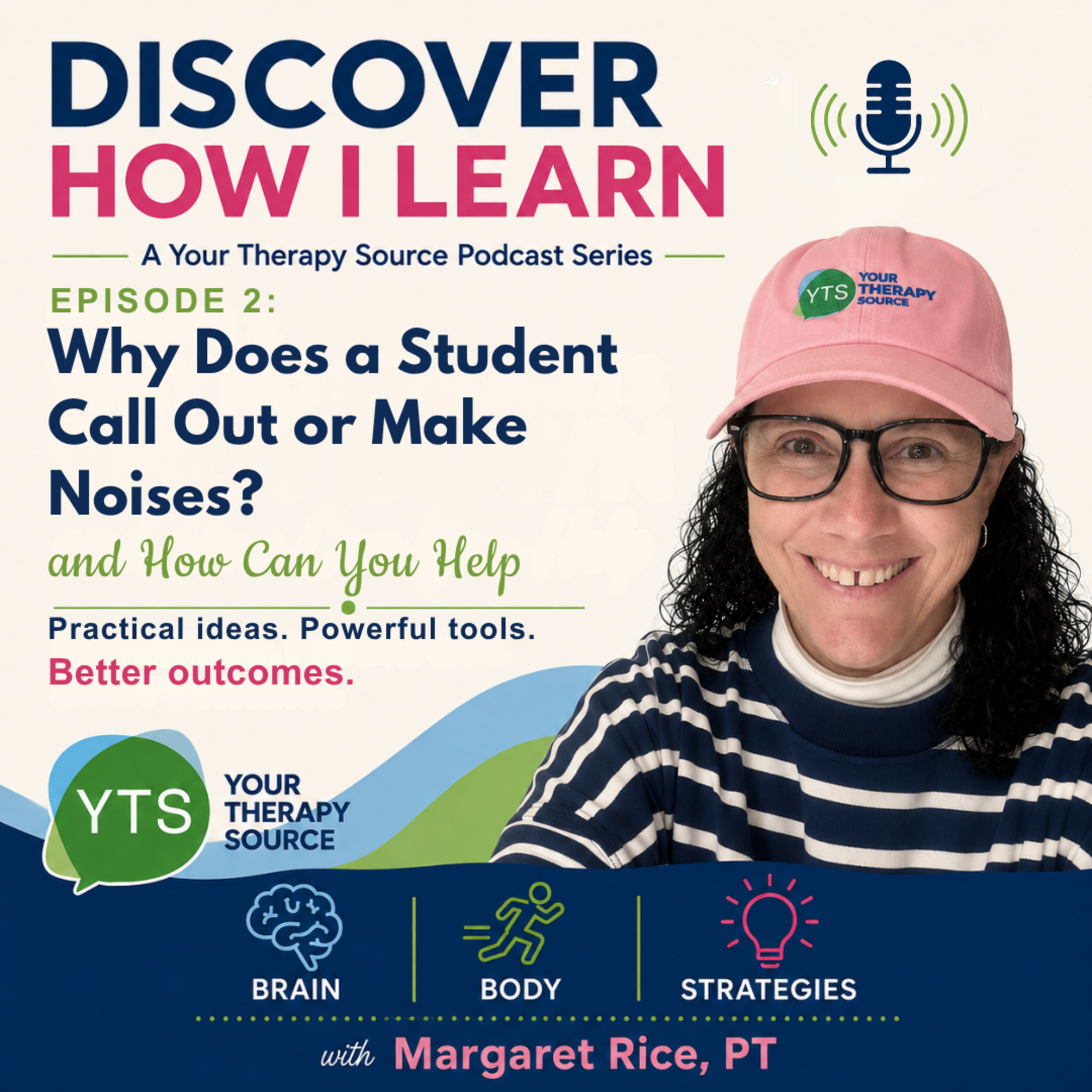
The Your Therapy Source Podcast shares practical, research-informed ideas to help educators, therapists, and families better understand how children learn, move, regulate, and participate. Hosted by Margaret Rice, PT, each episode explores topics related to the brain, body, learning, movement, sensory processing, self-regulation, executive functioning, school-based therapy, classroom challenges, and current research. The goal is simple: turn complex ideas into useful strategies you can understand and apply. Practical ideas. Powerful tools. Better outcomes.
Pitch Analysis
Required Pod Score for this show. PitchCentric checks your profile against host openness, topical fit, and audience signals before you generate a pitch.
Contact path
Public web form
Booking probability
36%
Guest openness
Selective
80/100
Required Score
Sign up to generate a grounded pitch for Your Therapy Source Podcast.
Your Therapy Source Podcast is a general podcast hosted by Unknown Host, with 0 episodes on record and a Required Pod Score of 80. PitchCentric scores this show on Booking Probability, Listen Score, and live audience signals refreshed every 24 hours.
About the host
Unknown Host hosts Your Therapy Source Podcast, a general show with 0 episodes published.
Our AI reads these to draft pitches. Use them as grounding for a pitch that cites a real guest and a specific topic.
Your Therapy Source Podcast
When Helping Too Much Gets in the Way of Independence
Aug 23, 202623 minS0
<p>Episode 6: When Helping Too Much Gets in the Way of Independence</p><p>Sometimes helping a student is simply faster. We find the folder, give the next direction, identify the first step, suggest the movement break, or remind them what comes next. In a busy classroom, that makes perfect sense.</p><p>But could some of those everyday helping habits accidentally reduce opportunities for students to practice doing more for themselves?</p><p>In this episode of Discover How Your Students Learn, Margaret from Your Therapy Source explores this question without judgment. You’ll hear practical microchanges that can he...
<p>Episode 5: Why Does a Student Wander Around the Classroom?</p><p><br></p><p>A student gets up during lessons, walks around the classroom, leaves their assigned area, or seems unable to stay connected to instruction from one location. You redirect them, they return, and a few minutes later they’re up again.</p><p><br></p><p>In this episode of Discover How Your Students Learn, Margaret from Your Therapy Source explores what may be happening underneath this common classroom behavior. Movement needs, body position, attention, sensory input, the learning environment, and task demands may all play a ro...
<p>Episode 4: Why Does a Student Lose Focus So Quickly?</p><p><br></p><p>A student starts working, but within minutes their attention is somewhere else. A classmate moves, a pencil drops, someone whispers, or something on the desk catches their eye. You redirect them, they return to work, and a few minutes later it happens again.</p><p><br></p><p>In this episode of Discover How Your Students Learn, Margaret from Your Therapy Source explores what may be happening when a student seems highly distractible. You’ll learn how competing sensory information, sustained attention, movement, and the le...
Why Does a Student Constantly Touch People and Things?
Aug 18, 202616 minS0
<p>A student touches classmates, reaches for other people’s materials, leans into peers, runs their hands along surfaces, or seems to have difficulty maintaining personal space.</p><p><br></p><p>It can be frustrating, especially when the behavior affects other students. But simply repeating “Keep your hands to yourself” may not help the student understand what their brain and body need or what they can do instead.</p><p><br></p><p>In this episode of Discover How Your Students Learn, Margaret from Your Therapy Source explores how sensory processing, body awareness, movement, attention, and inhibitory control may contri...
<p>A friendly, enthusiastic student keeps calling out, making noises, chewing on pencils, and acting before they have time to pause.</p><p><br></p><p>It can be easy to see those behaviors as disruptive or impulsive. But the same student may also be highly social, eager to participate, full of ideas, and genuinely trying to connect with others.</p><p><br></p><p>In Episode 2 of Discover How Your Students Learn, Margaret from Your Therapy Source looks at what may be happening underneath these behaviors. You’ll hear how inhibitory control, working memory, sensory input, attention, and self-regulation ma...
Every question we get asked before someone starts their trial.
If you have a concern about deliverability, AI quality, data privacy, or whether this will actually work for your specific situation, it's probably answered below.
What is the difference between Founder Solo and Founder Pro?
Founder Solo gives you 50 AI pitches per month using the credit model (Standard pitches cost 1 credit, Enriched pitches cost 2). Founder Pro raises that to 200 credits per month and adds full Booking Probability access, unlimited Magic Match, Apollo enrichment credits, and data export capabilities. Both plans use the same credit system, so you can stretch your monthly budget further by using Standard-mode drafting.
How do agency tiers work?
Agency tiers have no base fee. You pay per managed client and per talent profile. Agency Standard is $199 per client per month; Agency Pro is $399 per client per month. Both add $39 per talent profile per month. Your own team's user seats are always free.
What is a talent profile?
A talent profile represents one person (founder, executive, or spokesperson) you are booking onto podcasts. It includes their bio, topics, headshots, and outreach history. Team plans include 5 profiles; agency plans are pay-as-you-go.
Can I switch plans later?
Yes, at any time. Upgrades take effect immediately; downgrades apply at the end of the current billing period. Contact support if you need help migrating between plan families.
Do you offer a free trial?
Every paid plan includes a 15-day free trial. Your card is saved at signup but you will not be charged until day 16. Cancel any time from your dashboard.
What happens if I cancel?
You keep access until the end of your current billing period. No charges after that. Your data is retained for 30 days in case you reactivate.
Is the 20% annual discount automatic?
Yes. Select Annual on the pricing toggle and the discounted price is applied automatically at checkout. The annual price shown is the full year cost.
What if I have more than 50 profiles or 20 clients?
That is our Enterprise tier. Contact our sales team and we will build a custom plan with volume pricing, a dedicated account manager, and SLA guarantees.