
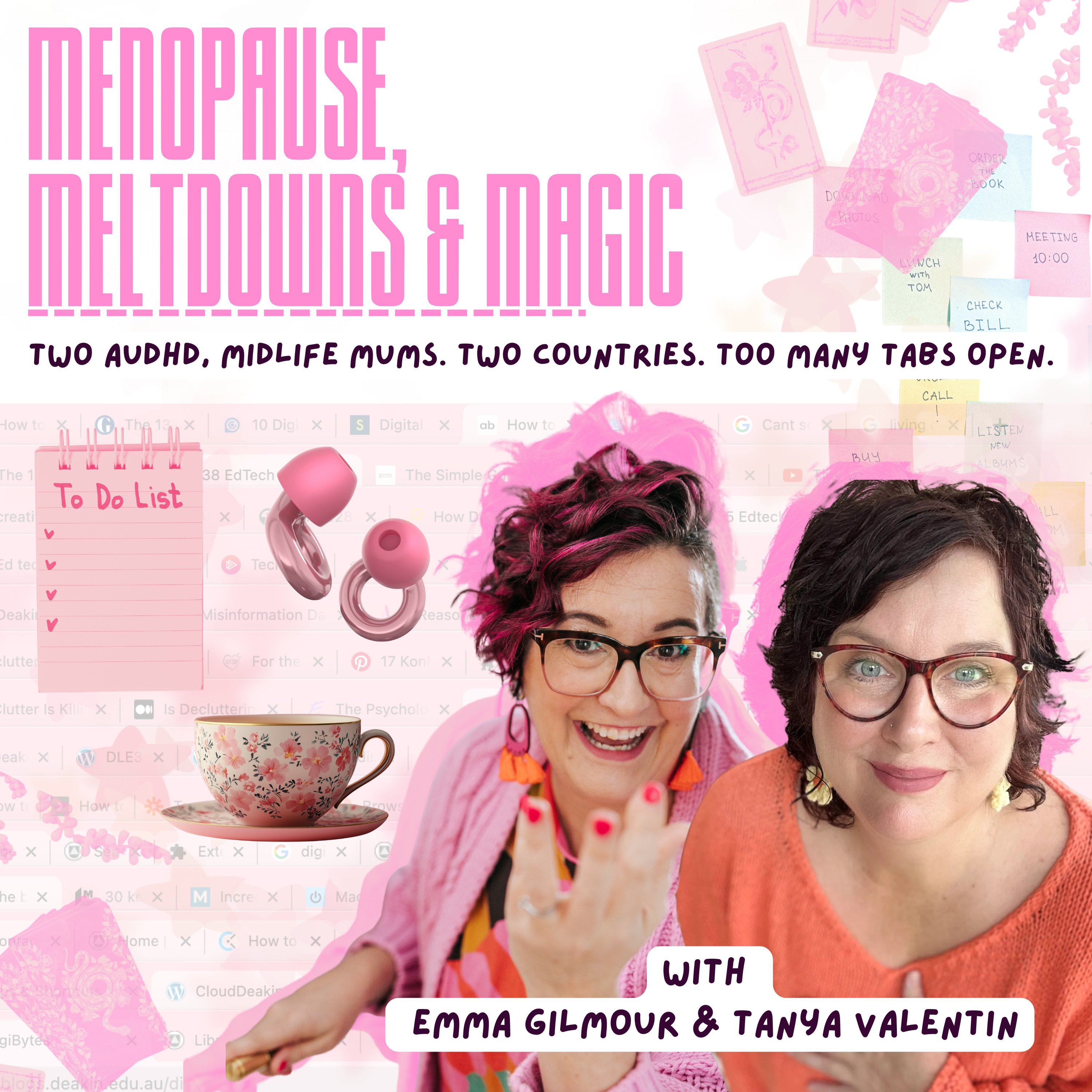
Join Tanya Valentin (NZ neuro-affirming family coach) and Emma Gilmour (AUS alcohol-free & neurodivergent women’s coach) for honest, heart-led chats about being late-diagnosed AuDHD, perimenopausal, parenting teens in burnout, and trying not to lose ourselves (again). We cover masking, menopause, motherhood, identity, friendship, grief, and the messy magic of raising neurodivergent kids.This is a podcast for every mum who’s ever felt like she’s doing it wrong, too much, or not enough.Expect laughter, raw honesty, a little swearing, and a whole lot of validation.
Pitch Analysis
Required Pod Score for this show. PitchCentric checks your profile against host openness, topical fit, and audience signals before you generate a pitch.
Contact path
Verified email
Booking probability
28%
Guest openness
Selective
Verified email on file
80/100
Required Score
Sign up to generate a grounded pitch for Menopause, Meltdowns & Magic - Two AuDHD, midlife mums. Two countries. Too many tabs open..
What is Menopause, Meltdowns & Magic - Two AuDHD, midlife mums. Two countries. Too many tabs open.?
Menopause, Meltdowns & Magic - Two AuDHD, midlife mums. Two countries. Too many tabs open. is a kids podcast hosted by Tanya Valentin and Emma Gilmour, with 10 episodes on record and a Required Pod Score of 80. PitchCentric scores this show on Booking Probability, Listen Score, and live audience signals refreshed every 24 hours.
About the host
Tanya Valentin and Emma Gilmour hosts Menopause, Meltdowns & Magic - Two AuDHD, midlife mums. Two countries. Too many tabs open., a kids show with 10 episodes published.
Our AI reads these to draft pitches. Use them as grounding for a pitch that cites a real guest and a specific topic.
Episode #1
When Trauma and Neurodivergence Get Tangled Together
Aug 19, 202657 minS2
In this episode, Tanya sits down with Emma for a conversation that goes right to the heart of a question so many parents in this community carry quietly: "Is it trauma, or is it neurodivergence?" Together they trace how the two get woven into each other from childhood, why masking costs so much more than it looks like from the outside, and what it means to try toparent differently while still learning the language yourself. This one is honest, a little raw in places, and full of the kind of recognition that makes you feel less alone. Grab a cup of tea before you press play. What we chat about in this episode: Why so many professionals label neurodivergent kids as traumatised, and thefear that stirs up in parents who did nothing wrong The ongoing debate of “is it trauma or is it neurodivergence,” and why Tanya and Emma see it as a false choice. A working definition of complex trauma: a heart that gets broken a million times and has to be put back together. What masking really costs, and how it gets layered into every part of a person rather than sitting on top like a persona. Why trauma is relational and situational, not an inevitable part of being neurodivergent. Power, compliance and why children who question the rules are so often met with cruelty. Situational mutism, freeze mode, and the lifelong echoes of being pushed to “just get the words out” The research linking autism itself to PTSD and complex PTSD, and the relief of realising “it's not just me” Why unmasking isn't always safe, and why that's allowed to stay true rather than be fixed. The reality of advocating for your child within systems that start treating you as the problem. Resources and mentions Sonny Jane Wise — the post on trauma and neurodivergence that sparked this conversation Lindsay's checklist on autism, stimming and CPTSD markers, mentioned as a helpful resource for parents and autistic adults The research paper on trauma and autistic people referenced around the 18–20 minute mark. The book on emotionally immature parents that Emma mentioned “Our hearts get broken a million times, and we have to put them back together. That's complex trauma.” If this episode landed for you, Tanya and Emma would love to hear where. Come share your own experience, your questions, or just tell them it's not just you. This is how we slowly build a world where more of us get to feel less alone in it. If you are a parent of a neurodivergent child in burnout and you would like something to hold you while you hold everyone else, download the free 10 Tiny Anchors Journey If you are a woman who is questioning your relationship with alcohol, get with Emma's membership: https://www.hoperisingcoaching.com/bethelighthouse
Why Fairness Matters So Much: Justice, PDA and the Nervous System
May 31, 202656 minS1
<p>Why do some people seem able to let things go while others feel deeply affected by unfairness, injustice, or double standards?</p><p>In this episode of Meltdowns, Menopause and Magic, Tanya and Emma explore the powerful relationship between neurodivergence, fairness, social justice, and nervous system activation.</p><p>Together, they unpack why many Autistic and PDA individuals experience injustice not simply as an idea, but as a whole-body experience. They discuss how fairness shows up in childhood, schools, workplaces, families, and society more broadly, and why experiences of being misunderstood, excluded, or othered can leave lasting impacts.</p><...
When Support Hurts: Burnout, Belonging and Trusting Ourselves Again
May 22, 20261h 13mS1
<p>In this episode of Menopause, Meltdowns and Magic, Tanya and Emma explore a complicated topic for many neurodivergent families:</p><p>What happens when the “support” being offered actually causes more harm?</p><p>Together, they unpack the long middle of burnout recovery, that messy, uncertain stage where things may appear to be improving on the surface, while nervous systems are still overwhelmed underneath.</p><p>This conversation explores:</p>Why the wrong support can prolong burnout.How even “good” support can become overwhelming during deep nervous system exhaustion.The pressure parents feel to accept therapies, interventions, and professional advice.M...
What Matters Most: Pressure, Parenting, and Repair
May 11, 202658 minS1
<p>In this deeply honest episode of Menopause, Meltdowns and Magic, Tanya and Emma explore the invisible pressure many parents carry to keep pushing through, even when their nervous systems, relationships, and families are asking for something gentler.</p><p>Together, they unpack the cultural conditioning around productivity, perfectionism, people pleasing, and “good parenting,” and how these pressures can quietly shape the way we relate to ourselves and our children, especially during burnout recovery.</p><p>This conversation moves through grief, masking, autonomy, relational safety, repair, fawning, self-compassion, and the emotional labour of parenting neurodivergent children. Tanya and Emma reflect on h...
The Hidden Struggles of Neurodivergent Friendships
Apr 28, 202658 minS1
<p>Friendship can feel complicated, especially for neurodivergent women navigating masking, burnout, grief, and identity shifts.</p><p><br></p><p>In this deeply honest conversation, we explore how our experiences of friendship have been shaped over time—from early moments of exclusion and heartbreak, to high-masking personas, to the quiet unravelling that often comes with burnout, sobriety, or late diagnosis.</p><p><br></p><p>We talk about what happens when your world becomes smaller, when your capacity changes, and when the people around you don’t quite meet you where you are. And we gently name the grief that...
Recent guests on Menopause, Meltdowns & Magic - Two AuDHD, midlife mums. Two countries. Too many tabs open.. Study who booked and why before you pitch.
Every question we get asked before someone starts their trial.
If you have a concern about deliverability, AI quality, data privacy, or whether this will actually work for your specific situation, it's probably answered below.
What is the difference between Founder Solo and Founder Pro?
Founder Solo gives you 50 AI pitches per month using the credit model (Standard pitches cost 1 credit, Enriched pitches cost 2). Founder Pro raises that to 200 credits per month and adds full Booking Probability access, unlimited Magic Match, Apollo enrichment credits, and data export capabilities. Both plans use the same credit system, so you can stretch your monthly budget further by using Standard-mode drafting.
How do agency tiers work?
Agency tiers have no base fee. You pay per managed client and per talent profile. Agency Standard is $199 per client per month; Agency Pro is $399 per client per month. Both add $39 per talent profile per month. Your own team's user seats are always free.
What is a talent profile?
A talent profile represents one person (founder, executive, or spokesperson) you are booking onto podcasts. It includes their bio, topics, headshots, and outreach history. Team plans include 5 profiles; agency plans are pay-as-you-go.
Can I switch plans later?
Yes, at any time. Upgrades take effect immediately; downgrades apply at the end of the current billing period. Contact support if you need help migrating between plan families.
Do you offer a free trial?
Every paid plan includes a 15-day free trial. Your card is saved at signup but you will not be charged until day 16. Cancel any time from your dashboard.
What happens if I cancel?
You keep access until the end of your current billing period. No charges after that. Your data is retained for 30 days in case you reactivate.
Is the 20% annual discount automatic?
Yes. Select Annual on the pricing toggle and the discounted price is applied automatically at checkout. The annual price shown is the full year cost.
What if I have more than 50 profiles or 20 clients?
That is our Enterprise tier. Contact our sales team and we will build a custom plan with volume pricing, a dedicated account manager, and SLA guarantees.
